In today’s world, staying connected and engaged is more important than ever, especially for seniors. Technology offers incredible tools to enhance leisure and social connectivity, and one of the most accessible and user-friendly options is the smart speaker.
These devices are revolutionizing how seniors interact with technology, providing voice-activated assistance for various tasks. The ease of use and hands-free operation make them an ideal solution for those who may have difficulty with traditional interfaces.
With the ability to control devices, access information, and connect with loved ones, smart speakers are becoming essential companions. They offer a simple and intuitive way for seniors to manage their daily lives and stay connected to the world around them.
This article will explore how smart speakers can benefit seniors, offering a comprehensive guide to choosing, setting up, and using these devices effectively. We aim to provide practical advice and tips to help seniors and their caregivers navigate the world of smart speakers with confidence.
We’ll cover everything from understanding their capabilities to mastering essential voice commands, ensuring that seniors can enjoy a more connected, entertained, and supported lifestyle. The potential benefits are vast, and we’ll explore each one in detail.
Let’s explore how smart speakers can make a real difference in the lives of seniors, promoting independence and social engagement. We believe that technology should empower individuals, and smart speakers are a prime example of this principle in action.
By the end of this article, you’ll have a clear understanding of how smart speakers can improve the lives of seniors and how to get started with these devices. We’ll provide actionable steps and practical advice to ensure a smooth and successful experience.
Understanding Smart Speakers and Their Capabilities
Smart speakers are voice-activated devices that respond to spoken commands, providing a hands-free way to interact with technology. These devices are equipped with virtual assistants like Amazon’s Alexa or Google Assistant, allowing users to perform tasks simply by speaking.
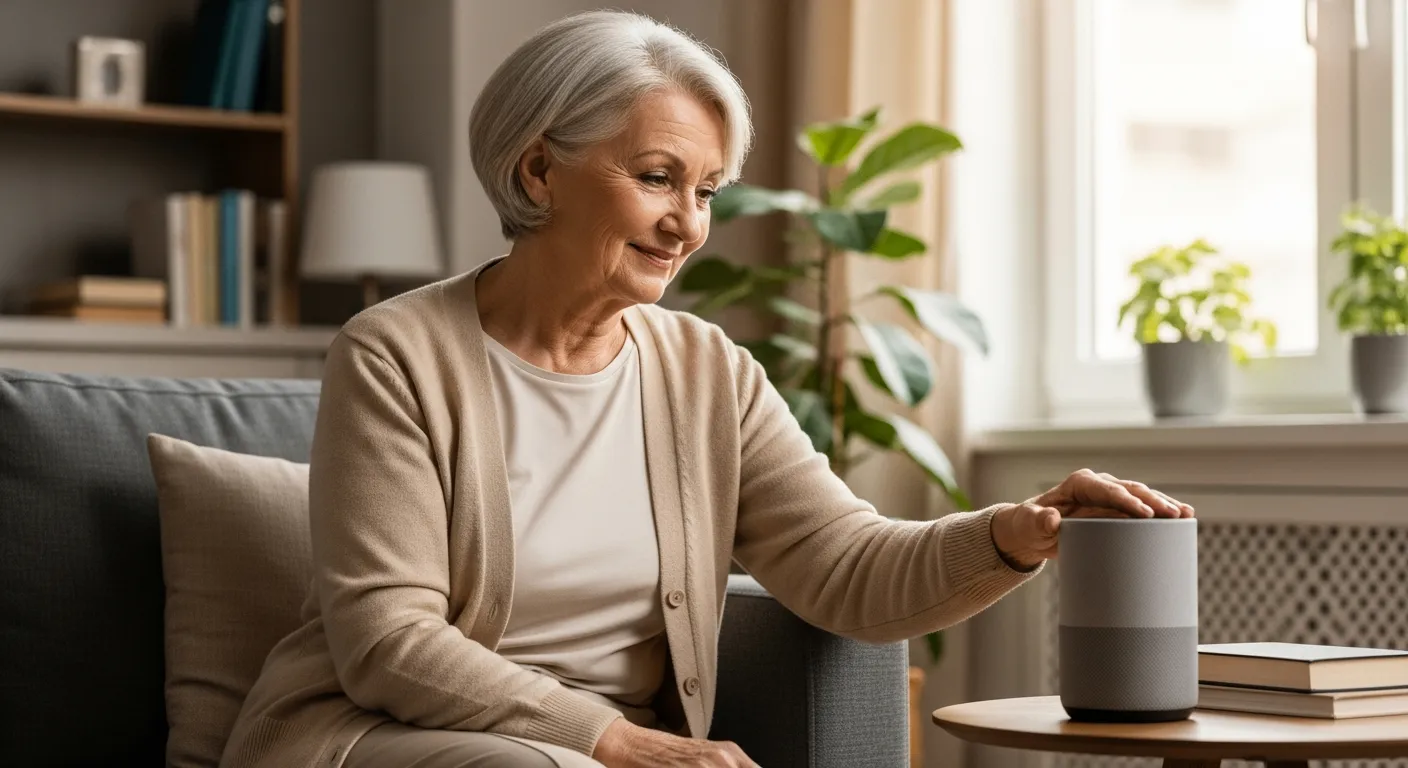
This hands-free operation is particularly beneficial for seniors who may have mobility issues or visual impairments. It allows them to control various aspects of their environment and access information without the need for physical interaction with devices.
The primary function of a smart speaker is to understand and execute voice commands, making them incredibly user-friendly, especially for those who may struggle with traditional interfaces. This accessibility opens up a world of possibilities, from controlling smart home devices to staying informed and entertained.
The ability to simply speak a command and have it executed can be a game-changer for seniors who find it difficult to use smartphones, tablets, or computers. It eliminates the need for complicated menus and small buttons, making technology much more approachable.
One of the key benefits of smart speakers is their ability to control smart home devices. Seniors can adjust the thermostat, turn on lights, or lock doors with simple voice commands, enhancing their safety and comfort.
Imagine the convenience of being able to adjust the temperature without getting out of bed or turning on the lights without fumbling for a switch in the dark. This level of control can significantly improve the quality of life for seniors, especially those with limited mobility.
Smart speakers also serve as a gateway to information, providing instant access to news, weather updates, and answers to almost any question. This can be particularly useful for seniors who want to stay informed about current events or need quick answers without having to navigate complex websites.
Having immediate access to information can be incredibly empowering for seniors. They can stay up-to-date on important news, check the weather forecast before planning their day, or quickly look up information on any topic that interests them.
Beyond these core functions, smart speakers can also be used for entertainment, communication, and even health management. They can play music, read audiobooks, make phone calls, and set medication reminders, making them versatile companions for seniors.
The versatility of smart speakers makes them a valuable tool for promoting independence and improving the overall well-being of seniors. They can provide assistance with a wide range of tasks, allowing seniors to maintain their autonomy and stay engaged with the world around them.
Choosing the Right Smart Speaker
Selecting the right smart speaker depends on individual needs and preferences. Two of the most popular options are Amazon Echo for seniors and Google Home.
The choice between these two platforms often comes down to personal preference and the existing technology ecosystem within the senior’s home. Both offer a range of features that can be beneficial, but their strengths lie in different areas.
Each offers unique features and capabilities, so understanding the differences is essential. Amazon Echo devices are known for their extensive compatibility with smart home devices and their wide range of skills, which are essentially apps for Alexa.
The vast library of Alexa skills allows users to customize their smart speaker to perform a wide variety of tasks, from playing games to ordering groceries. This flexibility can be particularly appealing to seniors who have specific interests or needs.
Google Home, on the other hand, excels in providing information and integrating with Google services like Gmail and Google Calendar. Consider what is most important: smart home control, information access, or ease of use.
For seniors who heavily rely on Google services, the seamless integration of Google Home can be a major advantage. They can easily access their emails, calendar appointments, and other important information with simple voice commands.
Evaluate factors such as the speaker’s size, sound quality, and ease of setup. Think about where the speaker will be placed and how it will be used.
A smaller speaker may be ideal for a bedside table, while a larger speaker with better sound quality may be more suitable for a living room. Consider the acoustics of the room and the senior’s hearing ability when choosing a speaker.
Another important factor to consider is the ease of setup and ongoing maintenance. Look for a smart speaker that is easy to configure and manage, with clear instructions and reliable customer support.
Ultimately, the best smart speaker for a senior is one that meets their individual needs and preferences, is easy to use, and provides valuable assistance with daily tasks. Take the time to research and compare different models to find the perfect fit.
Comparing Amazon Echo and Google Home
When choosing between Amazon Echo and Google Home, it’s important to consider the specific needs and preferences of the senior who will be using the device. Both offer unique advantages, but one may be better suited depending on their existing technology ecosystem and comfort level.
Consider the senior’s familiarity with technology and their comfort level with different interfaces. Some seniors may find the Amazon Echo’s skill-based system more intuitive, while others may prefer the Google Home’s seamless integration with Google services.
Amazon Echo devices are known for their broad compatibility with various smart home devices and a vast library of skills. Google Home devices integrate seamlessly with Google services like Gmail, Google Calendar, and YouTube, making them ideal for seniors who heavily rely on these platforms.
If the senior already uses a lot of smart home devices, the Amazon Echo’s extensive compatibility may be a significant advantage. On the other hand, if they are frequent users of Google services, the Google Home’s integration will likely be more beneficial.
| Feature | Amazon Echo | Google Home |
|---|---|---|
| Smart Home Compatibility | Extensive | Good |
| Information Access | Good | Excellent |
| Integration with Services | Amazon Services | Google Services |
| Voice Recognition | Good | Excellent |
| Ease of Use | Good | Good |
This table provides a quick overview of the key differences between the two platforms. However, it’s important to delve deeper into each feature to understand how it aligns with the senior’s specific needs and preferences.
Ultimately, the best choice depends on individual priorities and existing technology. Consider which ecosystem aligns best with their needs and which features are most important for enhancing their daily life.
Think about the tasks the senior will be using the smart speaker for most often. Will they primarily use it for controlling smart home devices, accessing information, or communicating with loved ones? The answer to this question will help narrow down the options.
By carefully evaluating these factors, you can select a smart speaker that will provide the most benefit and enjoyment for the senior in your life. Take the time to explore the options and choose wisely.
Don’t hesitate to read reviews, watch videos, and even try out the devices in person before making a decision. The more information you gather, the more confident you’ll be in your choice.
Setting Up Your Smart Speaker
Setting up a smart speaker is a straightforward process, but it’s important to follow the steps carefully to ensure everything works correctly. First, unpack the smart speaker and plug it into a power outlet.
Make sure the power outlet is easily accessible and that the speaker is placed on a stable surface. Avoid placing it near water or in direct sunlight.
Download the corresponding app on a smartphone or tablet: the Amazon Alexa app for Echo devices or the Google Home app for Google Home devices. Open the app and follow the on-screen instructions to connect the smart speaker to the Wi-Fi network.
The app will guide you through the process of connecting the speaker to your Wi-Fi network and linking it to your account. Ensure that you have your Wi-Fi password readily available.
During the setup process, you’ll be prompted to create or sign in to an account. This account will be linked to the smart speaker and used to access various services and features.
If the senior doesn’t already have an Amazon or Google account, you’ll need to create one for them. Be sure to choose a strong password and store it in a safe place.
Once connected to Wi-Fi and linked to an account, the smart speaker is ready to use. You can now customize settings, add skills or services, and begin exploring its capabilities.
Take some time to explore the app and familiarize yourself with the various settings and options. You can adjust the volume, set up voice profiles, and customize the speaker’s behavior to suit your needs.
Consider setting up voice recognition so that the smart speaker can recognize the senior’s voice. This will allow them to personalize their experience and access their own information and settings.
After the initial setup, it’s a good idea to test the smart speaker’s functionality by trying out some basic voice commands. This will help ensure that everything is working correctly and that the senior is comfortable using the device.
Tips for Easy Setup
To ensure a smooth and hassle-free setup process, consider these helpful tips. Before starting, make sure the Wi-Fi network is stable and has a strong signal.
A weak or unstable Wi-Fi signal can cause problems during the setup process. Try moving the smart speaker closer to the router or restarting the router if you’re experiencing connectivity issues.
Place the smart speaker in a central location where it can easily hear voice commands from all areas of the room. During setup, speak clearly and follow the app’s instructions carefully.
Avoid placing the smart speaker in a noisy environment or near other electronic devices that could interfere with its microphone. Speak in a normal tone of voice and enunciate clearly when giving commands.
If you encounter any issues, consult the device’s manual or visit the manufacturer’s website for troubleshooting tips. Many online resources and tutorials are available to guide you through the setup process.
The manufacturer’s website and online forums can be valuable resources for finding solutions to common problems. Don’t hesitate to search for answers online or contact customer support if you need assistance.
Consider setting up the smart speaker for the senior, as they may not be comfortable with technology. This can make the process much easier and more enjoyable for them.
If you’re setting up the smart speaker for a senior, be patient and take the time to explain each step of the process. Offer ongoing support and answer any questions they may have.
After the setup is complete, spend some time teaching the senior how to use the smart speaker and practice giving voice commands. This will help them become more comfortable and confident using the device.
Remember that the goal is to empower the senior to use the smart speaker independently. Provide them with the tools and knowledge they need to succeed, and celebrate their progress along the way.
Essential Voice Commands for Seniors
Mastering essential voice commands is key to unlocking the full potential of smart speakers. Seniors can use voice commands to perform a wide range of tasks, from setting reminders to making phone calls.
Learning a few basic voice commands can significantly improve a senior’s ability to use and benefit from a smart speaker. Start with the most common and useful commands and gradually introduce more advanced features.
Some basic commands include asking about the weather, playing music, setting alarms, and checking the news. For example, saying “Alexa, what’s the weather today?” or “Hey Google, play classical music” will prompt the speaker to provide the requested information or service.
These simple commands can help seniors stay informed, entertained, and organized. They can check the weather before going out, listen to their favorite music while relaxing, and set alarms to remind them of important appointments.
Smart speakers can also be used to make phone calls, which can be especially helpful in emergencies. By saying “Alexa, call [contact name]” or “Hey Google, call [contact name],” seniors can quickly connect with loved ones.
The ability to make phone calls with voice commands can be a lifesaver in emergency situations. Seniors can quickly reach out for help without having to fumble with a phone or remember phone numbers.
Setting reminders is another valuable feature, helping seniors remember appointments, medications, and other important tasks. Simply say “Alexa, remind me to take my medication at 8 AM” or “Hey Google, set a reminder for a doctor’s appointment tomorrow at 2 PM.”
Medication reminders can be particularly helpful for seniors who take multiple medications throughout the day. The smart speaker can provide timely reminders to ensure that they don’t miss a dose.
In addition to these essential commands, seniors can also use smart speakers to control smart home devices, set timers, create shopping lists, and much more. The possibilities are endless.
Encourage seniors to explore the various voice commands and discover new ways to use their smart speakers. The more they experiment, the more comfortable and confident they will become.
Commonly Used Voice Commands
Here are some of the most commonly used voice commands that can greatly benefit seniors. These commands cover a variety of tasks, from entertainment to communication and information retrieval.
These commands are designed to be simple, intuitive, and easy to remember. They cover a wide range of essential tasks that can help seniors stay independent and engaged.
Learning these commands can help seniors become more comfortable and confident using their smart speakers. This will enable them to take full advantage of the device’s capabilities.
Practice makes perfect. Encourage seniors to practice these commands regularly to become proficient and comfortable using them.
- “What’s the weather today?”
- “Play [artist/song/genre] music”
- “Set an alarm for [time]”
- “Call [contact name]”
- “Remind me to [task] at [time]”
- “What’s the news?”
- “Tell me a joke”
This list provides a starting point for seniors to learn and master essential voice commands. Encourage them to add more commands as they become more comfortable with the device.
These commands can be easily customized to fit individual needs and preferences. Seniors can explore different commands and discover new ways to use their smart speakers every day.
For example, seniors can customize the news sources they listen to or create personalized playlists of their favorite music. The possibilities are endless.
Encourage seniors to practice these commands and experiment with others to become proficient. This will help them integrate the smart speaker into their daily routine.
The more seniors use their smart speakers, the more they will discover new and creative ways to benefit from the device. Encourage them to be curious and explore all the possibilities.
Using Smart Speakers for Entertainment and Information
Smart speakers offer a wealth of entertainment and information options, providing seniors with endless opportunities for engagement. From listening to music and audiobooks to staying updated on current events, these devices can enhance their quality of life.
The ability to access a wide range of entertainment and information options can be particularly beneficial for seniors who may have limited mobility or social interaction.
Seniors can enjoy their favorite music by simply asking the smart speaker to play a specific artist, song, or genre. They can also listen to audiobooks, podcasts, and radio stations, providing hours of entertainment and mental stimulation.
Listening to music and audiobooks can be a great way for seniors to relax, reminisce, and engage their minds. It can also help reduce feelings of loneliness and isolation.
Smart speakers can also provide access to news and information, keeping seniors informed about local and global events. They can ask for the latest news headlines, weather updates, or traffic conditions, all with simple voice commands.
Staying informed about current events can help seniors feel more connected to the world around them and maintain a sense of purpose and engagement.
In addition to entertainment and information, smart speakers can also be used for educational purposes. Seniors can ask questions about a variety of topics, learn new skills, or even take virtual tours of museums and landmarks.
The ability to learn new things and explore different cultures can be incredibly stimulating for seniors, helping them maintain cognitive function and a sense of curiosity.
Smart speakers can also be used to play games, solve puzzles, and participate in trivia contests, providing opportunities for mental exercise and social interaction.
The entertainment and information options available through smart speakers can help seniors stay active, engaged, and connected to the world around them, improving their overall well-being and quality of life.
Enhancing Social Connectivity
Beyond entertainment and information, smart speakers can also play a crucial role in enhancing social connectivity for seniors. These devices make it easier than ever to stay in touch with family and friends, reducing feelings of isolation and loneliness.
Social isolation and loneliness are significant challenges for seniors, and smart speakers can provide a valuable tool for combating these issues.
Seniors can use smart speakers to make phone calls, send voice messages, and even video chat with loved ones. These features can help them maintain strong relationships and stay connected, even when they are unable to visit in person.
The ability to easily connect with family and friends can make a huge difference in a senior’s emotional well-being. It can provide a sense of belonging and reduce feelings of loneliness and isolation.
Smart speakers can also be used to participate in virtual social activities, such as online book clubs or virtual coffee gatherings. These activities provide opportunities for seniors to connect with others who share similar interests, fostering a sense of community and belonging.
Participating in virtual social activities can help seniors stay engaged, stimulated, and connected to others. It can also provide a sense of purpose and belonging.
By promoting social interaction and reducing isolation, smart speakers can have a significant positive impact on the mental and emotional well-being of seniors. These devices can help them feel more connected, engaged, and supported, improving their overall quality of life.
The social connectivity features of smart speakers can help seniors maintain strong relationships, build new connections, and stay active in their communities, even when they are unable to leave their homes.
Smart speakers can also be used to share photos, videos, and other content with family and friends, making it easier for seniors to stay connected and engaged in their loved ones’ lives.
The social benefits of smart speakers can be particularly valuable for seniors who live alone or have limited mobility. These devices can provide a lifeline to the outside world and help them stay connected to the people who matter most.
Conclusion
Smart speakers offer a wide array of benefits for seniors, from enhancing independence to promoting social connectivity. By providing voice-activated assistance, these devices empower seniors to stay connected, informed, and entertained.
The ability to control their environment, access information, and connect with loved ones can significantly improve a senior’s quality of life and sense of well-being.
Choosing the right smart speaker, setting it up properly, and mastering essential voice commands are key to unlocking its full potential. With a little patience and guidance, seniors can seamlessly integrate smart speakers into their daily routines, improving their quality of life.
By following the tips and advice provided in this article, you can help seniors get the most out of their smart speakers and experience the many benefits these devices have to offer.
The Amazon Echo for seniors and Google Home guide provided in this article can serve as a valuable resource for those looking to introduce smart speakers to their loved ones. Embrace the possibilities and discover how these innovative devices can make a positive impact on the lives of seniors.
Remember to be patient and supportive as seniors learn to use their smart speakers. Offer ongoing assistance and encouragement, and celebrate their successes along the way.
Ultimately, the goal is to empower seniors to live more independently, stay socially connected, and enjoy a higher quality of life through the use of technology. Smart speakers are a powerful tool in achieving this goal, offering a user-friendly and accessible way to enhance leisure and social connectivity.
By embracing technology and providing seniors with the tools and support they need, we can help them live more fulfilling and connected lives.
Smart speakers are just one example of how technology can improve the lives of seniors. As technology continues to evolve, we must continue to explore new ways to empower and support our aging population.
Let’s work together to create a world where technology enhances the lives of seniors and helps them stay connected, engaged, and independent for as long as possible.