
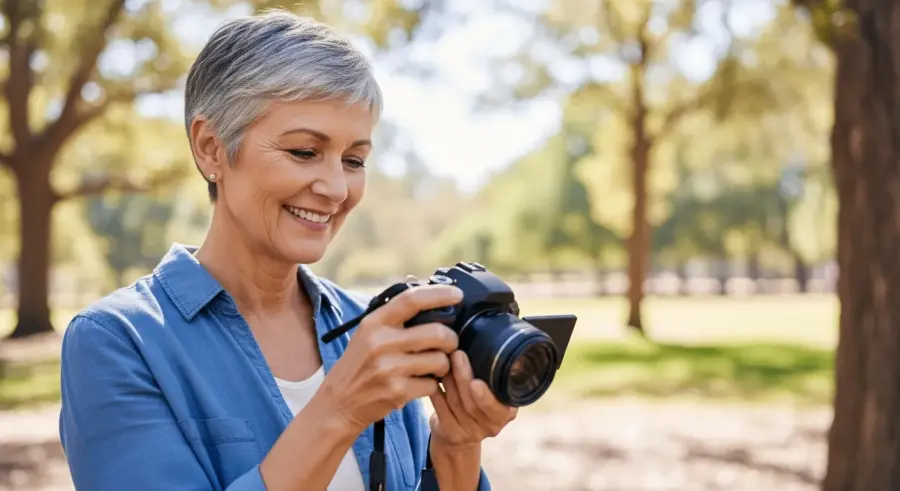
In an age where technology increasingly shapes our daily lives, the realm of photography has also undergone a significant transformation. Digital photography, once considered a complex and daunting field, has become increasingly accessible and user-friendly. For seniors, this presents a unique opportunity to engage in a creative and stimulating activity that can provide numerous benefits.
This article will explore the world of senior digital photography, offering guidance and inspiration for those looking to capture and share their unique perspectives. We’ll cover everything from choosing the right equipment to mastering basic techniques and sharing your creations with loved ones.
Whether you’re a seasoned photographer or a complete beginner, there’s something for everyone in the world of digital photography. So grab your camera or smartphone, and let’s embark on this exciting adventure together, discovering the joy and fulfillment that senior digital photography can bring.
Benefits of Digital Photography for Seniors
Digital photography offers a wide array of benefits for seniors, both tangible and intangible. It’s more than just snapping pictures; it’s about enhancing well-being and fostering connections.
One of the primary advantages is its ability to stimulate creativity and cognitive function. Engaging in a new hobby like senior digital photography can help keep the mind sharp and active.
The act of composing a shot, adjusting settings, and capturing a moment requires focus and attention to detail. This mental engagement can help improve memory and cognitive skills.
Beyond cognitive benefits, digital photography can also be a fantastic way to combat social isolation and loneliness. Joining a photography club or online forum can connect you with like-minded individuals.
Sharing your photos with family and friends is also a great way to stay connected and engaged. It provides a platform for sharing experiences and sparking conversations.
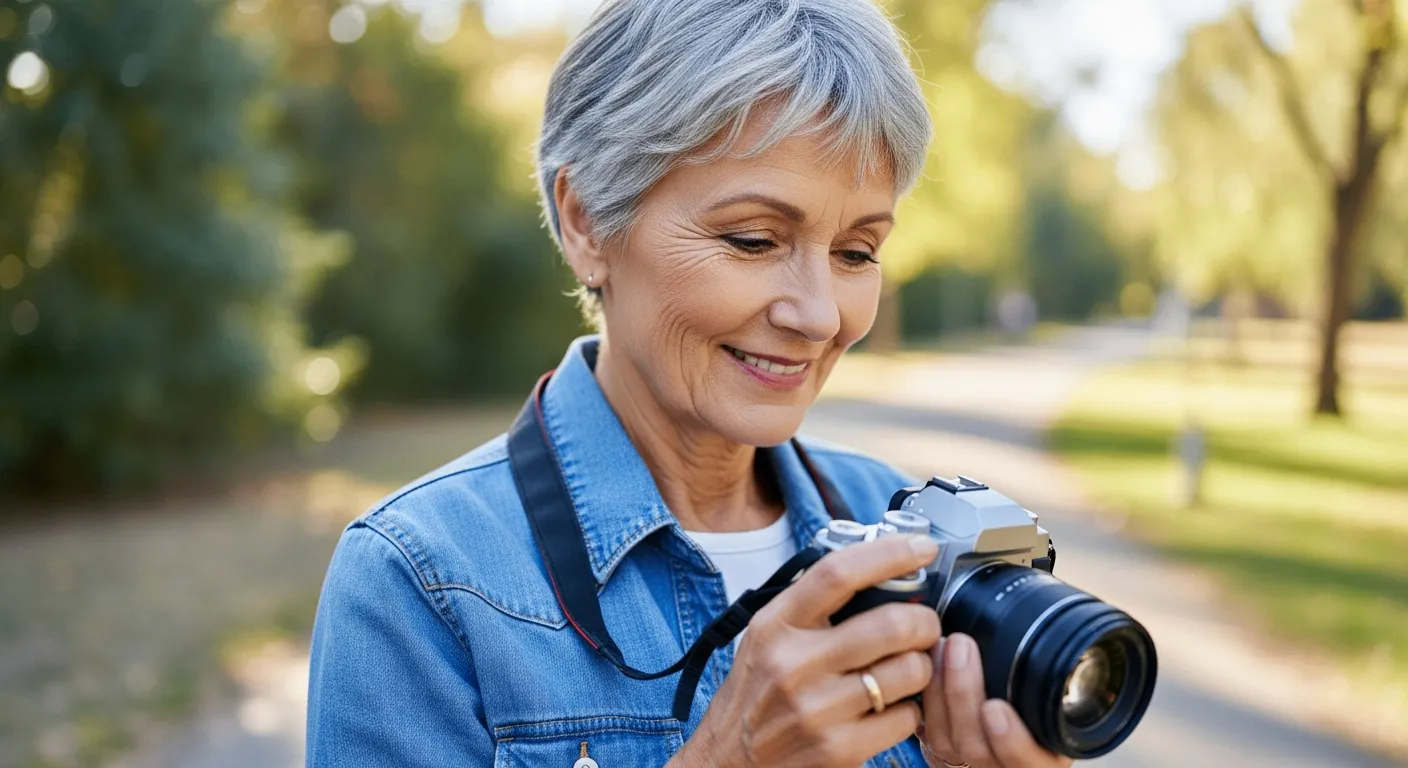
Moreover, digital photography can be a source of immense personal satisfaction and accomplishment. Learning a new skill and creating something beautiful can boost self-esteem and provide a sense of purpose.
The ability to capture precious memories and preserve them for future generations is also a significant benefit. These photos become family heirlooms, telling stories and connecting us to our past.
Finally, digital photography can be a great way to explore the world around you and appreciate its beauty. It encourages you to see things from a new perspective and find joy in everyday moments.
Consider the simple act of photographing a flower in your garden. The process encourages observation and appreciation of the intricate details often overlooked.
Furthermore, photography can be a wonderful way to document family history. Capturing portraits of loved ones and documenting important events creates a lasting legacy.
The creative outlet can also reduce stress and improve overall mood. Focusing on capturing the perfect shot can be a meditative and calming experience.
The sense of accomplishment derived from mastering a new skill can be incredibly rewarding. Sharing your photos and receiving positive feedback can further boost your confidence and self-esteem.
Many seniors find that photography provides a new way to interact with their grandchildren. It can be a shared activity that fosters intergenerational connections and creates lasting memories.
Digital photography can also be a great way to stay active and explore new places. Taking walks or day trips to capture interesting subjects can provide physical exercise and mental stimulation.
The act of learning new software and techniques associated with digital photography can also help maintain cognitive flexibility. This continuous learning process can contribute to overall brain health.
Photography can provide a sense of purpose and routine, especially for those who are retired. It can fill the void left by work and provide a new focus for their time and energy.
Ultimately, the benefits of digital photography for seniors extend far beyond simply taking pictures. It’s a holistic activity that can enhance physical, mental, and social well-being.
By embracing this creative outlet, seniors can enrich their lives and discover a new passion.
The ability to express oneself through visual storytelling is also a powerful benefit. Photography allows seniors to share their unique perspectives and experiences with the world.
Choosing a Digital Camera or Smartphone
Selecting the right equipment is a crucial first step in embarking on your digital photography adventure. The good news is that you don’t need to break the bank to get started.
The choice between a dedicated digital camera and a smartphone depends largely on your personal preferences and needs. Both options offer unique advantages and disadvantages.
Smartphones are incredibly convenient, as they are always with you and offer a wide range of features. Modern smartphones boast impressive camera capabilities, often rivaling those of entry-level digital cameras.
They are also user-friendly, with intuitive interfaces and a plethora of photo editing apps available. However, smartphones may lack the advanced features and manual controls of dedicated cameras.
Digital cameras, on the other hand, offer greater flexibility and control over your photography. They typically have larger sensors, which result in better image quality, especially in low-light conditions.
Digital cameras also offer a wider range of lenses and accessories, allowing you to customize your setup to suit your specific needs. However, they can be more expensive and require a greater understanding of photographic principles.
For beginners, a simple point-and-shoot camera or a mid-range smartphone with a good camera is often the best option. These devices are easy to use and provide excellent image quality for everyday photography.
Ultimately, the best way to decide is to try out both options and see which one feels more comfortable and intuitive for you. Consider factors like ease of use, image quality, and portability when making your decision about digital photography seniors.
When considering a smartphone, look for models with a good camera rating and positive reviews. Pay attention to features like optical image stabilization and low-light performance.
For digital cameras, consider the size and weight, especially if you have mobility issues. A lighter camera will be easier to carry and use for extended periods.
The size of the camera’s sensor is also an important factor to consider. Larger sensors generally produce better image quality, especially in challenging lighting conditions.
Consider cameras with intuitive menus and easy-to-reach controls. Avoid cameras with overly complicated interfaces that can be frustrating to use.
If you wear glasses, look for cameras with a diopter adjustment. This feature allows you to adjust the viewfinder to compensate for your vision.
Think about the types of photos you plan to take most often. If you enjoy taking landscapes, a camera with a wide-angle lens may be a good choice. If you prefer portraits, a camera with a telephoto lens may be more suitable.
Don’t forget to factor in the cost of accessories, such as extra batteries, memory cards, and a camera bag. These accessories can add significantly to the overall cost of your photography setup.
Consider purchasing a camera or smartphone from a reputable retailer with a good return policy. This will allow you to try out the device and return it if it doesn’t meet your needs.
Before making a purchase, read online reviews and compare different models. This will help you make an informed decision and choose the best device for your needs and budget.
Ultimately, the best camera or smartphone is the one that you feel most comfortable using and that inspires you to take great photos. Don’t be afraid to experiment and find what works best for you.
Basic Photography Techniques
Once you have your camera or smartphone, it’s time to start learning some basic photography techniques. You don’t need to be a professional to take great photos; a few simple tips can make a world of difference.
Understanding the basics of composition is essential for creating visually appealing images. Composition refers to the arrangement of elements within your frame.
| Technique | Description | Example |
|---|---|---|
| Rule of Thirds | Divide the frame into nine equal parts and place key elements along the lines or at the intersections. | Placing the horizon line along the top or bottom third of the frame in a landscape photo. |
| Leading Lines | Use lines to draw the viewer’s eye towards the subject. | A road leading to a distant mountain. |
| Symmetry | Create balance and harmony by using symmetrical elements in your composition. | A reflection in a still lake. |
| Framing | Use elements within the scene to frame the subject and draw attention to it. | Shooting a portrait through an archway. |
Experimenting with different angles and perspectives can also add interest to your photos. Try shooting from a low angle to make your subject appear larger and more imposing.
Alternatively, shoot from a high angle to get a broader view of the scene. Don’t be afraid to move around and try different viewpoints to find the most compelling composition.
Pay attention to the lighting in your photos. Good lighting can make a huge difference in the overall quality of your images.
Avoid shooting in direct sunlight, which can create harsh shadows and overexposed highlights. Instead, try shooting in the shade or during the golden hours (early morning and late afternoon), when the light is softer and more flattering.
When shooting indoors, try to use natural light whenever possible. Open the curtains or blinds and position your subject near a window.
If you need to use artificial light, avoid using the built-in flash on your camera or smartphone. This can create harsh, unflattering light.
Instead, try using a softbox or reflector to diffuse the light and create a more natural look. Understanding the exposure triangle (aperture, shutter speed, and ISO) can help you take better-exposed photos.
Aperture controls the amount of light that enters the camera lens. A wider aperture (lower f-number) creates a shallow depth of field, which is ideal for portraits.
Shutter speed controls the amount of time that the camera’s shutter is open. A faster shutter speed is used to freeze motion, while a slower shutter speed can be used to create motion blur.
ISO controls the sensitivity of the camera’s sensor to light. A lower ISO setting produces cleaner images, while a higher ISO setting is used in low-light conditions.
Practice regularly to improve your photography skills. The more you shoot, the better you’ll become at composing shots, adjusting settings, and capturing great images.
Don’t be afraid to experiment and try new things. Photography is a creative art form, so there’s no right or wrong way to do it.
Photo Editing Software and Apps
Photo editing is an integral part of the digital photography process. It allows you to enhance your images, correct imperfections, and add your personal touch.
There are numerous photo editing software and apps available, ranging from simple and user-friendly to complex and professional-grade. For beginners, it’s best to start with something easy to learn and use.
Many smartphones come with built-in photo editing tools that offer basic adjustments like brightness, contrast, and saturation. These tools are often sufficient for making simple enhancements to your photos.
For more advanced editing, there are a variety of apps available for both iOS and Android devices. Popular options include Snapseed, VSCO, and Adobe Lightroom Mobile.
These apps offer a wider range of features, such as selective adjustments, filters, and healing tools. If you prefer to edit your photos on a computer, there are several excellent software options available.
Adobe Photoshop Elements is a popular choice for beginners, as it offers a simplified version of Photoshop’s powerful features. Other options include GIMP, a free and open-source photo editor, and Luminar AI, which uses artificial intelligence to automate many editing tasks.
When editing your photos, it’s important to avoid overdoing it. The goal is to enhance the image, not to completely transform it. Start with small adjustments and gradually increase them until you achieve the desired effect.
Experiment with different settings and filters to find what works best for your style and preferences. Remember, there’s no right or wrong way to edit a photo, so have fun and be creative.
Learn to use the histogram, a graph that shows the distribution of tones in your image. Understanding the histogram can help you avoid overexposing or underexposing your photos.
Pay attention to the white balance in your photos. White balance refers to the color temperature of the light in your scene.
Incorrect white balance can make your photos look too warm (yellowish) or too cool (bluish). Most photo editing software and apps have a white balance adjustment tool that allows you to correct the color temperature of your images.
Learn to use the sharpening tool to enhance the details in your photos. However, be careful not to oversharpen your images, which can create unwanted artifacts.
Use the noise reduction tool to reduce the amount of noise in your photos. Noise is the grainy texture that can appear in images taken in low-light conditions.
However, be careful not to overdo the noise reduction, which can make your photos look soft and blurry. Consider using a graduated filter to adjust the exposure in different parts of your image.
This is particularly useful for landscape photography, where you may want to darken the sky and brighten the foreground. Use the healing tool to remove blemishes and distractions from your photos.
This tool can be used to remove dust spots, scratches, and other imperfections. Take advantage of online tutorials and resources to learn more about photo editing.
There are many free tutorials available on YouTube and other websites that can teach you the basics of photo editing. Practice regularly to improve your photo editing skills.
The more you edit, the better you’ll become at enhancing your images and creating stunning photos. Remember to save your edited photos in a high-resolution format, such as JPEG or TIFF.
Sharing Your Photos Online
One of the great joys of digital photography is the ability to share your creations with the world. There are numerous online platforms where you can showcase your photos and connect with other photographers.
Social media platforms like Facebook and Instagram are popular choices for sharing photos with friends and family. These platforms make it easy to upload your images and share them with your network.
- Create a dedicated photography account
- Use relevant hashtags to increase visibility
- Engage with other photographers’ work
- Join photography groups and communities
- Share your photos regularly
For more serious photographers, platforms like Flickr and 500px offer a more professional environment. These platforms allow you to showcase your work in high resolution and connect with a community of talented photographers.
Creating your own website or blog is another great way to showcase your photos and share your stories. This gives you complete control over the presentation of your work and allows you to build a personal brand.
When sharing your photos online, be mindful of copyright issues. If you’re using photos that you didn’t take yourself, make sure you have permission to use them.
Consider using a watermark to protect your photos from being used without your permission. A watermark is a small logo or text that is added to your photos to identify them as your own.
Be respectful of other people’s privacy when sharing photos online. Avoid sharing photos of people without their permission, especially if they are in a private or sensitive situation.
Think about the story you want to tell with your photos. A good photo tells a story and evokes emotions in the viewer. Write captions that provide context and add depth to your photos.
Engage with your audience by responding to comments and questions. This will help you build a community around your photography and connect with other photographers.
Participate in online photography challenges and contests. This is a great way to improve your skills and get your work seen by a wider audience.
Don’t be afraid to ask for feedback on your photos. Constructive criticism can help you identify areas for improvement and become a better photographer.
Be patient and persistent. Building a following online takes time and effort. Don’t get discouraged if you don’t see results immediately.
Continue to share your photos regularly and engage with your audience, and you’ll eventually build a loyal following. Remember to have fun and enjoy the process of sharing your photos with the world.
The online photography community can be a great source of inspiration and support. Connect with other photographers and learn from their experiences.
Printing and Displaying Your Photos
While sharing your photos online is a great way to connect with others, there’s something special about holding a physical print in your hands. Printing and displaying your photos allows you to enjoy them in a tangible way and share them with loved ones who may not be online.
You can print your photos at home using a photo printer or send them to a professional printing service. Photo printers offer the convenience of printing your photos on demand, but they can be expensive and require special paper and ink.
Professional printing services offer a wider range of options, such as different paper types, sizes, and finishes. They also typically provide better image quality and color accuracy.
Once you have your prints, there are many creative ways to display them. Framing your photos is a classic way to showcase your favorite images and protect them from damage.
You can also create photo albums or scrapbooks to preserve your memories and share them with family and friends. Photo albums are a great way to organize your photos chronologically or by theme.
Scrapbooks allow you to add captions, embellishments, and other mementos to create a personalized keepsake. Another option is to create a photo collage, which is a collection of photos arranged in a visually appealing way.
You can create a photo collage using a computer program or by hand, using scissors and glue. Display your photos on a digital photo frame, which is a device that displays a slideshow of your images.
Digital photo frames are a great way to showcase a large number of photos without taking up a lot of space. No matter how you choose to display your photos, the most important thing is to enjoy them and share them with the people you love. This can be especially rewarding with digital photography seniors.
When choosing a printing service, consider the quality of the prints, the price, and the turnaround time. Read online reviews and compare different services before making a decision.
If you’re printing your photos at home, make sure you use high-quality photo paper and ink. This will help ensure that your prints last for many years to come.
Consider using archival-quality materials to protect your photos from fading and damage. Archival-quality paper and ink are designed to resist the effects of light, humidity, and other environmental factors.
When framing your photos, choose a frame that complements the image and your home decor. Consider the size, color, and style of the frame.
Use acid-free matting to protect your photos from damage. Acid-free matting will prevent the acids in the frame from damaging your photos over time.
Hang your photos in a well-lit area, but avoid direct sunlight. Direct sunlight can cause your photos to fade and discolor over time.
Consider creating a themed photo display. For example, you could create a display of photos from a recent vacation or a collection of portraits of your family.
Get creative with your photo displays. Use unusual frames, create collages, or hang your photos in unexpected places.
Share your printed photos with family and friends. Give them as gifts or display them in your home for everyone to enjoy.
The act of printing and displaying your photos can bring back fond memories and create lasting connections. It’s a wonderful way to celebrate your life and share your experiences with others.
Conclusion
Digital photography offers a wealth of opportunities for seniors to engage in a fulfilling and stimulating activity. It’s a chance to explore your creativity, connect with others, and preserve precious memories.
Whether you’re using a smartphone or a dedicated camera, the possibilities are endless. Embrace the challenge, experiment with different techniques, and most importantly, have fun.
Remember that the journey of learning photography is a continuous process. There’s always something new to discover and experiment with.
Don’t be afraid to make mistakes. Mistakes are a part of the learning process and can help you grow as a photographer.
Seek out inspiration from other photographers. Look at their work and try to understand what makes it so compelling.
Attend photography workshops or classes. This is a great way to learn new techniques and connect with other photographers.
Join a photography club or online forum. This is a great way to share your work, get feedback, and learn from others.
Be patient and persistent. It takes time and effort to become a good photographer. Don’t get discouraged if you don’t see results immediately.
Continue to practice and experiment, and you’ll eventually achieve your photography goals. Most importantly, remember to enjoy the process.
Photography should be a fun and rewarding experience. Don’t put too much pressure on yourself to be perfect. Just relax and enjoy the process of capturing beautiful images.
So, grab your camera or smartphone and start exploring the world through the lens. You may be surprised at what you discover.
Digital photography can be a truly transformative experience for seniors. It can provide a sense of purpose, connection, and creativity that enriches their lives in countless ways.