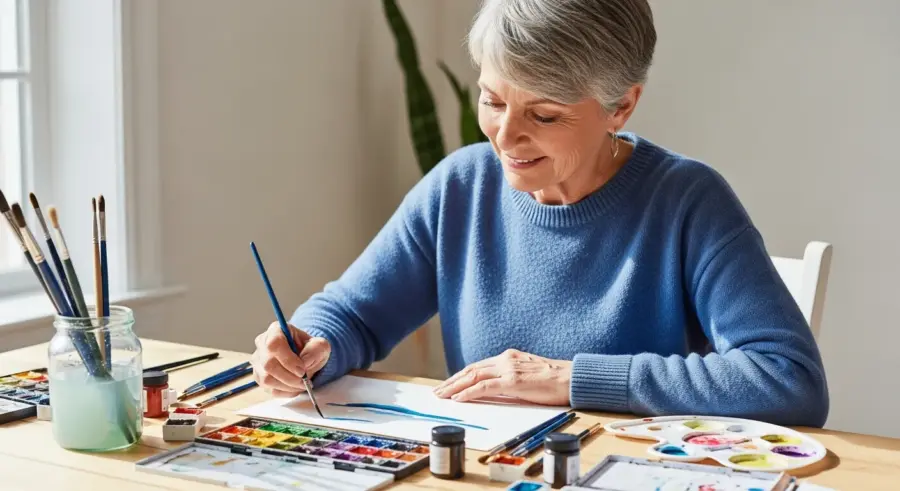
Watercolor painting is a fantastic hobby for seniors looking to explore their creative side. It’s a relaxing and accessible art form that can bring joy and a sense of accomplishment. Learning senior watercolor painting opens up a world of color and self-expression.
This article will guide you through everything you need to know to get started with watercolor painting. We’ll cover the benefits, essential supplies, basic techniques, easy projects, and where to find classes and resources.
Whether you’re a complete beginner or have some artistic experience, there’s something here for everyone. Get ready to unleash your inner artist and discover the joy of senior watercolor painting!
Benefits of Watercolor Painting for Seniors
Watercolor painting offers a multitude of benefits for seniors, both physically and mentally. It’s more than just a fun activity; it’s a way to improve overall well-being.
The act of painting can be incredibly therapeutic, reducing stress and anxiety. Focusing on the colors and brushstrokes allows the mind to quiet down, providing a sense of calm and relaxation.
Watercolor painting can enhance cognitive function and memory. Engaging in creative activities stimulates the brain, helping to maintain mental sharpness and improve concentration.
It also offers a wonderful opportunity for social interaction and connection. Joining a watercolor painting group or class provides a chance to meet new people, share experiences, and build friendships.
Beyond stress reduction, watercolor painting can offer a sense of purpose and accomplishment. Completing a painting, no matter how simple, provides a tangible result of your efforts.
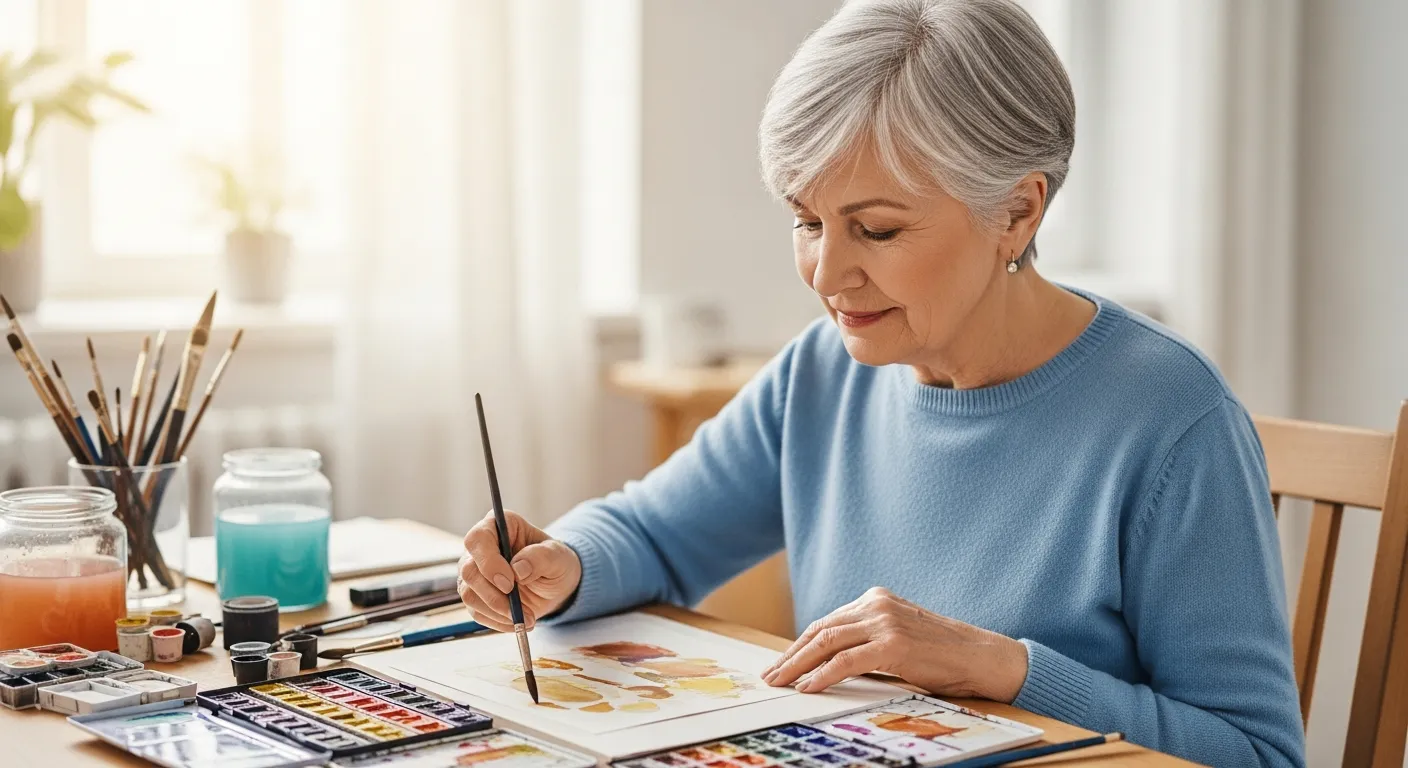
This feeling of accomplishment can boost self-esteem and confidence. It’s a reminder that you are capable of learning new things and creating something beautiful.
The gentle movements involved in watercolor painting can also improve fine motor skills and hand-eye coordination. This can be particularly beneficial for seniors who may be experiencing age-related decline in these areas.
Furthermore, watercolor painting can be adapted to suit individual needs and abilities. Seniors with limited mobility can paint at a table or even in bed, making it a truly accessible art form.
The vibrant colors and flowing nature of watercolor can be visually stimulating and uplifting. This can help to combat feelings of loneliness or isolation, especially for seniors who live alone.
Watercolor painting provides a creative outlet for self-expression. It allows seniors to explore their emotions, memories, and experiences in a safe and non-judgmental environment.
The process of creating art can be a powerful way to process emotions and gain new insights. It can also be a source of joy and fulfillment, enriching the lives of seniors in countless ways.
Finally, watercolor painting can be a fun and engaging way to stay active and connected to the world around you. It’s a hobby that can be enjoyed for years to come, providing a lifetime of learning and creative expression.
Essential Watercolor Supplies for Beginners
Starting with the right watercolor supplies is essential for a positive experience. Fortunately, you don’t need a lot to get started with senior watercolor painting.
A basic set of watercolor paints is a must-have. Look for a beginner-friendly set with a range of colors, including primary colors (red, yellow, blue) and some secondary colors (green, orange, purple).
Watercolor paper is also crucial, as regular paper will buckle and warp when wet. Choose a heavyweight paper specifically designed for watercolor, such as cold-pressed paper, which has a slightly textured surface that’s ideal for beginners.
You’ll also need a set of watercolor brushes in various sizes. Round brushes are versatile and great for detail work, while flat brushes are useful for washes and larger areas.
When choosing your watercolor paints, consider starting with a student-grade set. These sets are more affordable than professional-grade paints and are perfect for learning the basics.
For watercolor paper, look for a weight of at least 140 lb (300 gsm). This will ensure that the paper can withstand the water without buckling or tearing.
When selecting your brushes, consider purchasing a set that includes both synthetic and natural hair brushes. Synthetic brushes are more durable and affordable, while natural hair brushes hold more water and create smoother washes.
A good starting set might include a round brush in size 2 or 4, a round brush in size 6 or 8, and a flat brush in size 1/2 inch or 3/4 inch. These brushes will provide a good range of options for different techniques.
In addition to the basic supplies, you’ll also need a palette for mixing your paints. A plastic palette with wells is a good option for beginners.
You’ll also need a water container for cleaning your brushes and diluting your paints. A simple jar or cup will work just fine.
Finally, don’t forget to have some paper towels or a sponge on hand for blotting your brushes and cleaning up any spills. These simple supplies will make your watercolor painting experience much more enjoyable.
Investing in good quality supplies, even at the beginner level, will make a significant difference in your results. It will also make the learning process more enjoyable and rewarding.
Watercolor Paint Types
When selecting your watercolor paints, you’ll encounter two main types: tubes and pans. Each has its own advantages and disadvantages.
Tubes contain wet paint that you squeeze out onto a palette. They are generally more vibrant and easier to mix, but can be messier and require more cleanup.
Pans are small blocks of dry paint that you activate with water. They are more portable and convenient for travel, but may require more effort to get a strong color.
For beginners, a set of pans is often a good starting point due to their ease of use and portability. However, if you prefer brighter colors and don’t mind a bit more cleanup, tubes might be a better choice.
Within each type, there are also different grades of watercolor paints: student grade and professional grade. Student-grade paints are more affordable and use less pigment.
Professional-grade paints have a higher concentration of pigment, resulting in more vibrant and lightfast colors. Lightfastness refers to how resistant the colors are to fading over time.
While professional-grade paints are generally preferred by experienced artists, student-grade paints are a great option for beginners who are just starting out. They allow you to experiment with different colors and techniques without breaking the bank.
If you choose to use tube paints, consider investing in a palette with wells to hold the paint. This will make it easier to mix your colors and prevent them from drying out.
When using pan paints, be sure to activate the paint with water before you start painting. Use a wet brush to gently rub the surface of the pan until the paint becomes soft and creamy.
It’s also important to clean your palette and brushes regularly to prevent color contamination. This will help you to achieve cleaner and more vibrant colors in your paintings.
Ultimately, the best type of watercolor paint for you will depend on your personal preferences and budget. Experiment with both tubes and pans to see which you prefer.
Don’t be afraid to try different brands and grades of watercolor paints. The more you experiment, the better you’ll understand the nuances of each type and find the ones that work best for you.
Other Watercolor Supplies
In addition to paints, paper, and brushes, there are a few other supplies that can be helpful for watercolor painting. A palette is essential for mixing your paints.
You can use a plastic palette, a ceramic plate, or even a watercolor palette specifically designed for this purpose. A water container is needed for cleaning your brushes and diluting your paints.
| Supply | Description | Why You Need It |
|---|---|---|
| Watercolor Paper | Heavyweight, textured paper | Prevents buckling and warping |
| Watercolor Brushes | Round and flat brushes in various sizes | For detail work and washes |
| Watercolor Paints | Tubes or pans of assorted colors | The foundation of your artwork |
| Palette | A surface for mixing paints | Allows for color blending |
| Water Container | A jar or cup for cleaning brushes | Keeps brushes clean and ready to use |
| Paper Towels | For blotting brushes and cleaning up spills | Essential for controlling water |
Masking fluid can be used to protect areas of your paper from paint. This is useful for creating sharp edges or preserving white areas.
Watercolor pencils are another helpful tool. They can be used to sketch your subject before painting, or to add fine details after the paint has dried.
A kneaded eraser is ideal for lifting graphite from your paper without damaging the surface. It’s much gentler than a traditional eraser.
Artist’s tape can be used to secure your paper to a board or table. This will prevent the paper from moving while you’re painting.
A spray bottle filled with water can be used to re-wet your paints or to create special effects. Experiment with different spray patterns to see what you can create.
A light box can be helpful for tracing images onto your watercolor paper. This is especially useful for beginners who are not confident in their drawing skills.
Consider investing in a comfortable chair and a well-lit workspace. This will make your painting sessions more enjoyable and productive.
A magnifying glass can be helpful for seeing fine details. This is especially useful for seniors with vision impairments.
Finally, don’t forget to have a sketchbook on hand for practicing your techniques and experimenting with different ideas. A sketchbook is a great way to track your progress and develop your own unique style.
Basic Watercolor Techniques
Once you have your supplies, it’s time to learn some basic watercolor techniques. These techniques will help you create beautiful and expressive paintings.
The wet-on-wet technique involves applying wet paint to wet paper. This creates soft, blended effects, perfect for skies and backgrounds.
The wet-on-dry technique involves applying wet paint to dry paper. This creates crisp lines and sharp details, ideal for foreground elements and precise shapes.
Another important technique is layering, which involves applying multiple layers of paint to build up color and depth. Allow each layer to dry completely before applying the next.
Lifting is a technique where you remove paint from the paper using a clean, damp brush or a paper towel. This can be used to create highlights or to correct mistakes.
Dry brushing involves using a dry brush with a small amount of paint to create textured effects. This is useful for painting rocks, trees, or other rough surfaces.
Salt can be used to create interesting textures in your watercolor paintings. Sprinkle salt onto wet paint and let it dry. The salt will absorb some of the water and pigment, creating a unique pattern.
Masking fluid can be used to protect areas of your paper from paint. Apply the masking fluid to the areas you want to keep white, let it dry completely, and then paint over it. Once the paint is dry, carefully peel off the masking fluid to reveal the white areas.
Graded washes involve creating a smooth transition from one color to another. This is useful for painting skies, sunsets, or other areas where you want a subtle change in color.
Flat washes involve applying a single, even layer of paint to a large area. This is useful for painting backgrounds or other areas where you want a consistent color.
Splattering involves flicking paint onto the paper using a brush or your fingers. This can be used to create a variety of effects, such as rain, snow, or stars.
Experiment with different techniques to see what you can create. The more you practice, the better you’ll become at controlling the water and pigment and achieving the effects you want.
Don’t be afraid to make mistakes. Watercolor painting is all about learning and growing, so embrace the process and don’t worry about perfection.
Color Mixing for Beginners
Understanding color mixing is crucial for watercolor painting. By mixing different colors, you can create a wide range of hues and tones.
Start with the primary colors: red, yellow, and blue. Mixing these colors together will create the secondary colors: green, orange, and purple.
Experiment with different ratios of colors to create a variety of shades and tints. Adding white to a color will create a tint, while adding black will create a shade.
Don’t be afraid to experiment and play with different color combinations. The more you practice, the better you’ll become at creating the colors you want.
A color wheel is a helpful tool for understanding color relationships. It shows how different colors relate to each other and how they can be mixed to create new colors.
Complementary colors are colors that are opposite each other on the color wheel. When mixed together, they create a neutral gray or brown.
Analogous colors are colors that are next to each other on the color wheel. They create harmonious and pleasing color schemes.
Warm colors are colors that are associated with warmth and energy, such as red, orange, and yellow. Cool colors are colors that are associated with coolness and calm, such as blue, green, and purple.
When mixing colors, start with a small amount of each color and gradually add more until you achieve the desired hue. It’s easier to add more color than it is to take it away.
Keep a color mixing chart to record the different color combinations you create. This will help you to remember which colors you used and how you mixed them.
Don’t be afraid to mix colors directly on your paper. This can create interesting and unexpected effects.
Remember that the colors will appear lighter when they dry. So, mix your colors a little darker than you want them to appear in the final painting.
Ultimately, the best way to learn color mixing is to practice and experiment. The more you mix colors, the better you’ll understand how they interact with each other and how to create the colors you want.
Easy Watercolor Painting Projects for Seniors
Now that you’ve learned some basic techniques, it’s time to try some easy watercolor painting projects. These projects are perfect for beginners and will help you build your skills and confidence.
One simple project is painting a basic landscape. Start with a light wash of blue for the sky, then add a green field and some simple trees.
Another easy project is painting a simple flower. Choose a flower with a simple shape, like a daisy or a tulip, and focus on capturing the basic form and colors.
You can also try painting simple fruits or vegetables. Focus on capturing the basic shapes and colors, and don’t worry about being too precise.
Painting simple shapes like circles, squares, and triangles is a great way to practice your brush control and color mixing skills.
Try painting a simple sunset. Use a graded wash to create a smooth transition from orange to yellow to pink.
Paint a simple seascape with a blue sky, a sandy beach, and a few waves. Use a dry brush to create texture in the sand.
Try painting a simple portrait of a pet or a family member. Focus on capturing the basic features and expression.
Paint a simple still life with a few everyday objects, such as a cup, a book, and a flower. Focus on capturing the light and shadows.
Try painting a simple abstract painting using different colors and shapes. Let your creativity flow and don’t worry about creating a realistic image.
Paint a simple bookmark with a watercolor design. This is a great way to create a personalized gift for a friend or family member.
Try painting a simple greeting card with a watercolor design. This is a great way to send a personalized message to a loved one.
Remember to keep it simple and focus on having fun. The more you practice, the better you’ll become at watercolor painting.
Don’t be afraid to experiment and try new things. Watercolor painting is a journey of discovery, so embrace the process and enjoy the ride.
Painting Simple Landscapes
Landscapes are a great subject for watercolor painting, and you can create beautiful scenes with just a few basic techniques. Start by sketching a simple horizon line on your paper.
Then, use a light wash of blue to paint the sky, blending the color as you go. Add some clouds using a slightly darker shade of blue or gray.
Next, paint the ground using a green or brown wash. Add some simple trees or bushes using a darker shade of green, and don’t forget to add some shadows to create depth.
Finally, add some details like rocks, flowers, or a small body of water. Remember to keep it simple and focus on capturing the overall feeling of the scene.
When painting the sky, try using a wet-on-wet technique to create soft, blended clouds. This will give your sky a more realistic and atmospheric look.
For the ground, try using different shades of green and brown to create texture and depth. Add some dry brush strokes to simulate grass or rocks.
When painting trees, start with a light wash of green and then add darker shades to create shadows and details. Use a small brush to paint the branches and leaves.
To add depth to your landscape, use lighter colors for objects that are far away and darker colors for objects that are close up. This will create a sense of perspective.
Experiment with different color combinations to create different moods and effects. A warm color palette will create a sunny and cheerful landscape, while a cool color palette will create a more somber and dramatic landscape.
Don’t be afraid to leave some white space in your landscape. This will create highlights and add visual interest.
Try painting landscapes from different perspectives. Paint a landscape from a high vantage point to create a panoramic view, or paint a landscape from a low vantage point to create a more intimate and personal view.
Use reference photos to help you with your landscapes. Look for photos that inspire you and use them as a guide for your painting.
Most importantly, have fun and let your creativity flow. Watercolor painting is a great way to relax and express yourself, so enjoy the process and don’t worry about perfection.
Finding Local Watercolor Painting Classes and Groups
One of the best ways to improve your watercolor painting skills is to take a class or join a group. This provides an opportunity to learn from experienced instructors and connect with other artists.
Check your local community center or senior center for watercolor painting classes. Many of these centers offer affordable classes specifically designed for seniors.
- Community centers
- Senior centers
- Local art supply stores
- Colleges and universities
- Retirement communities
- Online search for local art groups
Art supply stores often host workshops and classes taught by local artists. These can be a great way to learn new techniques and try out different materials.
Colleges and universities may offer continuing education courses in watercolor painting. These courses can be more in-depth and challenging, but they can also provide a more comprehensive learning experience.
Retirement communities often have art programs and classes for their residents. These can be a convenient and social way to learn watercolor painting.
Search online for local art groups and organizations. These groups often host workshops, exhibitions, and other events for artists of all levels.
Ask your friends and family if they know of any local watercolor painting classes or groups. Word-of-mouth is often the best way to find hidden gems.
When choosing a class or group, consider your skill level and interests. Look for a class that is geared towards beginners if you are just starting out.
Also, consider the instructor’s experience and teaching style. Look for an instructor who is patient, knowledgeable, and able to provide helpful feedback.
Visit a class or group before signing up to get a feel for the atmosphere and the other participants. This will help you to decide if it’s a good fit for you.
Don’t be afraid to try different classes and groups until you find one that you enjoy. The most important thing is to find a supportive and encouraging environment where you can learn and grow as an artist.
Joining a watercolor painting class or group is a great way to meet new people, share your passion for art, and improve your skills. It’s also a lot of fun!
Online Watercolor Painting Resources
If you can’t find a local class or group, there are plenty of online resources available. Many websites and YouTube channels offer free watercolor painting tutorials.
Websites like Skillshare and Udemy offer a wide range of online watercolor painting courses. These courses often include video lessons, downloadable resources, and personalized feedback.
YouTube is also a great resource for free watercolor painting tutorials. Search for “watercolor painting for beginners” or “watercolor techniques seniors” to find a wealth of helpful videos.
Social media platforms like Instagram and Pinterest can also provide inspiration and ideas. Follow watercolor artists and browse their work to get inspired and learn new techniques.
Websites like Creativebug offer a variety of art and craft classes, including watercolor painting. These classes are taught by experienced instructors and cover a wide range of topics.
Online forums and communities can be a great place to connect with other watercolor painters. Share your work, ask questions, and get feedback from other artists.
Many watercolor artists offer online workshops and retreats. These can be a more immersive and intensive way to learn watercolor painting.
Look for online resources that are specifically designed for seniors. These resources may be more accessible and easier to understand.
Consider taking an online class with a live instructor. This will give you the opportunity to ask questions and get personalized feedback in real time.
Be sure to check the reviews and ratings of online courses and resources before signing up. This will help you to choose the best options for your needs.
Take advantage of free trials and introductory offers to try out different online resources before committing to a paid subscription.
Remember to be patient and persistent when learning online. It takes time and effort to develop your watercolor painting skills.
The internet is a vast resource for watercolor painting information and inspiration. Take advantage of all that it has to offer to learn and grow as an artist.
Tips for Senior Watercolor Painting
Here are a few tips to keep in mind as you embark on your senior watercolor painting journey. Start with simple projects and gradually work your way up to more complex ones.
Don’t be afraid to experiment and make mistakes. Watercolor painting is all about learning and growing, so embrace the process and don’t worry about perfection.
Take your time and enjoy the process. Watercolor painting is a relaxing and therapeutic activity, so savor the moment and let your creativity flow.
Most importantly, have fun! Watercolor painting should be an enjoyable experience, so relax, let go, and let your inner artist shine.
Use good quality materials, even if they are just student grade. This will make a big difference in your results.
Work in a well-lit area with plenty of space. This will help you to see your work clearly and avoid straining your eyes.
Use a comfortable chair and a table that is at a comfortable height. This will help you to avoid back pain and other discomfort.
Take breaks often to stretch your muscles and rest your eyes. This will help you to avoid fatigue and injury.
Don’t compare yourself to other artists. Everyone learns at their own pace, so focus on your own progress.
Be patient with yourself. It takes time and practice to develop your watercolor painting skills.
Join a watercolor painting class or group to get feedback and support from other artists.
Share your work with others. This will help you to build your confidence and get valuable feedback.
Most importantly, believe in yourself. You are capable of creating beautiful and meaningful art.
Conclusion
Watercolor painting is a rewarding and accessible hobby for seniors. It offers a multitude of benefits, from stress reduction to cognitive enhancement.
With the right supplies, basic techniques, and a little practice, you can create beautiful and expressive paintings. So grab your brushes, unleash your creativity, and discover the joy of senior watercolor painting!
Whether you choose to paint landscapes, flowers, or simple still life, the possibilities are endless. Embrace the journey and let your imagination soar as you explore the world of color and art.
Remember, the most important thing is to have fun and enjoy the process of creating something beautiful. Happy painting, and may your world be filled with brushstrokes of joy!
Watercolor painting can be a lifelong passion, providing endless opportunities for learning and growth. Continue to explore new techniques, experiment with different colors, and challenge yourself to create even more beautiful and expressive paintings.
Share your love of watercolor painting with others. Teach a class, mentor a beginner, or simply share your work with friends and family. Your passion can inspire others to discover the joy of art.
Don’t be afraid to sell your work. Even if you don’t consider yourself a professional artist, your paintings may be appreciated by others.