
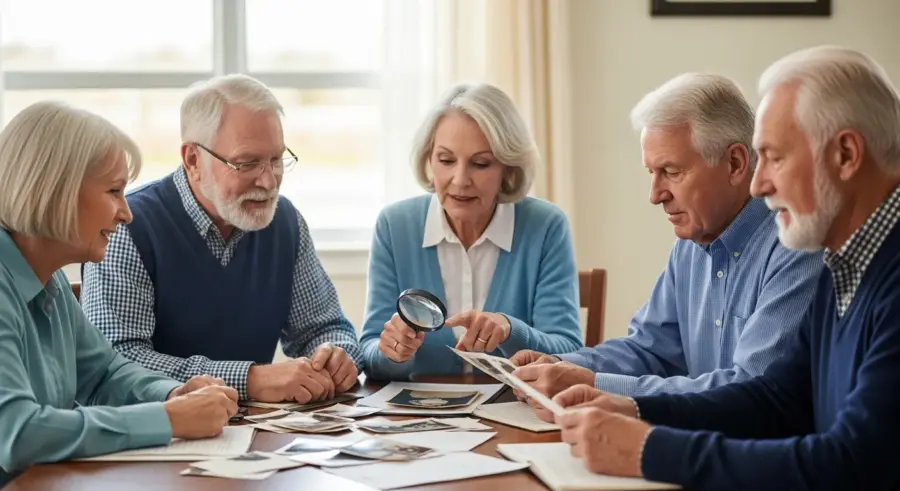
Do you ever wonder about the stories of those who came before you? Exploring your roots can be a fascinating and fulfilling pastime, especially during your retirement years.
Senior genealogy groups offer a wonderful way to connect with others who share this passion for family history research. These groups provide a supportive and engaging environment to learn, share, and uncover your ancestral past.
This article will guide you through the benefits of joining a senior genealogy group and how to find one. We will also look at resources for genealogical research and how to share your family tree and stories with others.
Why Genealogy is a Rewarding Hobby for Seniors
Genealogy is more than just tracing names and dates; it’s about discovering the lives, experiences, and legacies of your ancestors. For seniors, this hobby can be particularly rewarding, offering a unique blend of mental stimulation, social interaction, and personal fulfillment.
Imagine uncovering a long-lost story about your great-grandmother’s journey across the ocean or learning about a distant relative who played a role in a historical event. These discoveries can bring a sense of connection to the past and a deeper understanding of your own identity.
Genealogy provides a fantastic mental workout, requiring research, critical thinking, and problem-solving skills. It’s like piecing together a complex puzzle, and each new piece of information brings you closer to completing the picture.
This hobby can also be a great way to combat cognitive decline by keeping your mind sharp and engaged. Plus, the satisfaction of making a breakthrough in your research can be incredibly motivating and uplifting.
Beyond the mental benefits, genealogy offers a unique opportunity for personal reflection. Learning about the challenges and triumphs of your ancestors can provide a new perspective on your own life and experiences.
It can be a humbling experience to realize that you are part of a long line of individuals who have shaped the world in their own way. This awareness can foster a sense of gratitude and appreciation for the sacrifices and contributions of those who came before you.
Furthermore, genealogy can be a wonderful way to connect with your family on a deeper level. Sharing your research with relatives can spark conversations, uncover shared memories, and strengthen family bonds.
You might even discover distant cousins or relatives you never knew existed, expanding your family network and creating new connections. Ultimately, genealogy is a journey of self-discovery and connection that can enrich your life in countless ways.
The feeling of accomplishment that comes from successfully tracing your family history is unparalleled. It’s a testament to your dedication, perseverance, and intellectual curiosity.
As you delve deeper into your family’s past, you might uncover surprising facts, hidden talents, or even royal connections! The possibilities are endless, and the journey is always filled with unexpected twists and turns.
Benefits of Joining a Genealogy Group
While you can certainly pursue genealogy independently, joining a senior genealogy group offers numerous advantages. These groups provide a supportive and collaborative environment where you can learn from others, share your discoveries, and overcome research obstacles.
One of the primary benefits is access to a wealth of knowledge and experience. Seasoned genealogists can offer guidance, tips, and resources that can save you time and frustration in your family history research.
Genealogy groups often host workshops, presentations, and guest speakers who can teach you new research techniques and strategies. You can learn about different types of records, how to access them, and how to interpret the information they contain.
These groups also provide a sense of community and camaraderie. Sharing your passion with others who understand and appreciate it can be incredibly rewarding, especially if you’re new to genealogy for seniors.
Imagine having a group of like-minded individuals to bounce ideas off of or to help you decipher a difficult-to-read document. That’s the power of a genealogy group.
Furthermore, senior genealogy groups often organize field trips to local archives, libraries, and historical sites. These excursions provide opportunities to explore primary source materials firsthand and gain a deeper understanding of your ancestors’ lives.
You can also learn about local history and connect with other members of your community. The collaborative nature of genealogy groups fosters a sense of belonging and shared purpose.
Many groups also have mentoring programs, pairing experienced genealogists with newcomers to provide personalized guidance and support. This can be invaluable for those who are just starting their family history journey.
The shared experiences and mutual support within a genealogy group can help you stay motivated and engaged in your research. It’s a great way to overcome obstacles and celebrate your successes along the way.
Moreover, genealogy groups often have access to resources and databases that are not readily available to individual researchers. This can give you a significant advantage in your quest to uncover your family’s past.
By pooling their resources and expertise, genealogy groups can achieve much more than individual researchers working in isolation. The collective wisdom and shared passion of the group can lead to breakthroughs and discoveries that would not be possible otherwise.
Finding a Genealogy Group Near You
Locating a senior genealogy group in your area is easier than you might think. Many local libraries, senior centers, and historical societies host or sponsor genealogy groups.
These groups cater to a variety of skill levels and interests, so you’re sure to find one that’s a good fit for you. Here are some places to start your search for senior genealogy groups:
| Organization | Description | How to Find |
|---|---|---|
| Local Libraries | Often host genealogy groups or have genealogy sections with resources. | Check the library’s website or ask a librarian. |
| Senior Centers | May offer genealogy classes or host genealogy groups for seniors. | Contact your local senior center and inquire about their activities. |
| Historical Societies | Focus on preserving local history and often have genealogy resources. | Search online for historical societies in your area. |
| Genealogical Societies | Dedicated to promoting genealogical research and education. | Search online for genealogical societies in your state or region. |
Don’t hesitate to reach out to multiple groups to find one that aligns with your interests and schedule. Visiting a meeting or two will give you a sense of the group’s dynamics and whether it’s the right fit for you.
When searching online, use keywords such as “genealogy group,” “family history society,” or “ancestral research group” along with your city or county. This will help you narrow down your search and find groups that are located near you.
You can also check with local churches or religious organizations, as they sometimes host genealogy groups or have members who are interested in family history research. Networking with other seniors in your community can also lead you to genealogy groups or resources that you might not otherwise find.
Consider attending a local genealogy conference or workshop. These events provide opportunities to learn from experts, connect with other genealogists, and discover new resources. They can also be a great way to find out about local genealogy groups and organizations.
If you’re unable to find a genealogy group in your immediate area, consider joining an online genealogy forum or community. These online platforms can provide a similar sense of community and support as in-person groups, and they can connect you with genealogists from all over the world.
Many online genealogy forums have dedicated sections for specific regions or ethnic groups, making it easier to connect with researchers who share your interests. You can also participate in online discussions, ask questions, and share your research findings with others.
Don’t be afraid to start your own genealogy group if you can’t find one that meets your needs. Gather a few friends or neighbors who are interested in family history research and start meeting regularly to share your discoveries and support each other.
You can use online resources to facilitate your meetings, such as video conferencing tools and online collaboration platforms. With a little effort, you can create a thriving genealogy group that meets your specific interests and needs.
Resources for Genealogical Research
Genealogical research relies on a variety of resources, both online and offline. Understanding the types of records available and how to access them is crucial for successful family history research.
Here are some essential resources that senior genealogy groups often utilize: online databases, vital records, census records, immigration records.
Online databases like Ancestry.com and MyHeritage offer vast collections of digitized records, including census data, vital records, and immigration documents. These resources can be incredibly helpful for quickly searching and identifying potential ancestors.
Vital records, such as birth, marriage, and death certificates, provide essential information about your ancestors’ lives. You can typically obtain these records from state or county vital records offices.
Census records offer a snapshot of your ancestors’ lives at a particular point in time. They can provide information about their age, occupation, place of birth, and family members.
Immigration records document your ancestors’ arrival in a new country. These records can provide information about their place of origin, date of arrival, and reason for immigrating.
In addition to these essential resources, there are many other types of records that can be helpful for genealogical research. These include military records, land records, probate records, and church records.
Military records can provide information about your ancestors’ service in the armed forces, including their rank, unit, and battles they fought in. Land records document the ownership and transfer of property, which can provide clues about your ancestors’ movements and economic status.
Probate records document the distribution of a deceased person’s assets, which can provide information about their family members and financial affairs. Church records can provide information about your ancestors’ baptisms, marriages, and burials.
It’s important to use a variety of resources in your genealogical research to get a complete picture of your ancestors’ lives. Don’t rely on just one type of record, and be sure to cross-reference information from different sources to verify its accuracy.
Senior genealogy groups can provide guidance on how to access and interpret these various resources. They can also offer tips on how to overcome common research challenges.
Online Genealogy Tools and Databases
The digital age has revolutionized genealogy, making it easier than ever to access records and connect with relatives. Numerous online tools and databases can help you build your family tree and uncover your ancestral past.
Ancestry.com is one of the largest and most comprehensive online genealogy resources. It offers a vast collection of digitized records, including census data, vital records, immigration documents, and military records.
MyHeritage is another popular online genealogy platform that offers a similar range of resources. It also has unique features like DNA testing and photo enhancement tools.
FamilySearch is a free genealogy website operated by The Church of Jesus Christ of Latter-day Saints. It offers access to billions of records and a collaborative family tree that allows users to share information and connect with relatives.
Findmypast is a UK-based genealogy website that offers a wealth of records from the United Kingdom, Ireland, and other parts of the world. It’s a great resource for researching ancestors who immigrated from these regions.
Newspapers.com is a vast online archive of historical newspapers from around the United States. It’s a great resource for finding obituaries, marriage announcements, and other news articles about your ancestors.
Chronicling America is a free online database of historical newspapers from the United States, sponsored by the Library of Congress. It’s a great resource for researching ancestors who lived in the United States before the digital age.
Google Books is a vast online library of digitized books from around the world. It’s a great resource for finding local histories, biographies, and other books that may contain information about your ancestors.
Internet Archive is a non-profit digital library that offers access to a wide range of digitized materials, including books, audio recordings, and video recordings. It’s a great resource for finding historical documents and media related to your ancestors.
Cyndi’s List is a comprehensive directory of online genealogy resources. It’s a great place to start your search for specific types of records or information about your ancestors.
These online tools and databases can be invaluable for genealogical research, but it’s important to use them effectively. Be sure to use a variety of resources, cross-reference information from different sources, and document your findings carefully.
Sharing Your Family Tree and Stories
Once you’ve built your family tree and uncovered fascinating stories about your ancestors, sharing your research with others can be incredibly rewarding. It allows you to connect with relatives, preserve your family history for future generations, and contribute to the collective knowledge of your family.
Senior genealogy groups often provide opportunities to share your research with other members. You can present your findings, discuss your challenges, and receive feedback and suggestions from fellow genealogists.
- Create a family website or blog
- Share stories on social media
- Write a family history book
- Organize a family reunion
- Contribute to online genealogy databases
Sharing your family history can be a wonderful way to connect with younger generations. By sharing your research and stories, you can inspire them to learn more about their roots and appreciate their heritage.
Creating a family website or blog is a great way to share your research with a wider audience. You can post your family tree, stories about your ancestors, and photos and documents that you’ve collected.
Sharing stories on social media can be a fun and engaging way to connect with relatives and share your family history. You can post photos, stories, and questions about your ancestors on platforms like Facebook, Instagram, and Twitter.
Writing a family history book is a more ambitious project, but it can be a lasting legacy for your family. You can include your family tree, stories about your ancestors, and photos and documents that you’ve collected.
Organizing a family reunion is a great way to bring relatives together and share your family history in person. You can display your family tree, share stories about your ancestors, and organize activities that celebrate your family’s heritage.
Contributing to online genealogy databases can help other researchers find information about your ancestors. You can contribute to platforms like FamilySearch, Ancestry.com, and MyHeritage.
No matter how you choose to share your family history, the most important thing is to connect with others and preserve your family’s legacy for future generations. Sharing your research can be a rewarding and fulfilling experience that enriches your life and the lives of your relatives.
Overcoming Challenges in Genealogical Research
Genealogical research is not always easy; you’ll inevitably encounter challenges and roadblocks along the way. Records may be missing, illegible, or inaccurate, and you may struggle to find information about certain ancestors.
One of the most common challenges is dealing with incomplete or inaccurate records. Vital records, census data, and other historical documents may contain errors or omissions that can make it difficult to trace your ancestors.
Another challenge is deciphering old handwriting. Many historical documents are handwritten in cursive scripts that can be difficult to read, especially if the handwriting is faded or damaged.
Don’t be afraid to seek help from other genealogists, librarians, or archivists. They may have insights or suggestions that can help you overcome your research challenges.
When faced with incomplete or inaccurate records, try searching for alternative sources of information. Look for church records, land records, probate records, or other documents that may provide additional details about your ancestors.
If you’re struggling to decipher old handwriting, try using online resources like paleography tutorials or handwriting analysis tools. You can also consult with experienced genealogists who are familiar with historical handwriting styles.
Another common challenge is finding records for ancestors who lived in countries with limited or inaccessible records. In these cases, you may need to rely on alternative sources of information, such as family stories, oral histories, or immigration records.
It’s also important to be aware of the limitations of online genealogy databases. While these databases can be incredibly helpful, they don’t contain every record, and the information they provide may not always be accurate.
Always verify information from online sources with primary source documents whenever possible. Don’t rely solely on online databases to build your family tree.
Persistence and patience are key to overcoming challenges in genealogical research. Don’t give up easily, and be prepared to spend time and effort to find the information you’re looking for.
Tips for Successful Ancestral Research
Genealogical research can be a complex and time-consuming endeavor, but with the right approach, it can be incredibly rewarding. Here are some tips to help you conduct successful ancestral research and uncover your family history.
Start with what you know. Begin your research with yourself and your immediate family, and then work your way backward in time. Gather as much information as you can about each ancestor, including their full name, date of birth, place of birth, date of marriage, date of death, and place of death.
Be organized. Keep track of your research by creating a family tree and documenting your sources. Use a genealogy software program or online family tree platform to organize your information and create reports.
Be patient. Genealogical research takes time and effort, so don’t get discouraged if you don’t find answers right away. Keep searching, and eventually, you’ll uncover the information you’re looking for.
Document your sources carefully. Always cite the sources of your information, including the name of the record, the date it was created, and the location where it was found. This will help you verify the accuracy of your research and avoid making mistakes.
Use a variety of resources. Don’t rely on just one type of record to build your family tree. Use a variety of resources, including vital records, census data, immigration records, military records, and land records.
Cross-reference information from different sources. Compare information from different sources to verify its accuracy. If you find conflicting information, try to determine which source is the most reliable.
Be aware of common genealogical errors. Be aware of common errors that can occur in genealogical research, such as misspellings, inaccurate dates, and mistaken identities. Double-check your work carefully to avoid making these errors.
Seek help from experienced genealogists. Don’t be afraid to ask for help from experienced genealogists, librarians, or archivists. They can offer valuable insights and suggestions that can help you overcome your research challenges.
Attend genealogy conferences and workshops. Genealogy conferences and workshops are a great way to learn new research techniques and connect with other genealogists. They can also provide opportunities to access resources that are not readily available online.
The Role of DNA Testing in Genealogy
DNA testing has become an increasingly popular tool for genealogical research. It can help you confirm your family tree, discover new relatives, and learn more about your ethnic origins.
There are several different types of DNA tests available, each of which provides different types of information. Autosomal DNA tests are the most common type of DNA test for genealogy. They can help you find relatives on both your maternal and paternal sides of the family.
Mitochondrial DNA (mtDNA) tests trace your direct maternal line, while Y-DNA tests trace your direct paternal line. These tests can be helpful for confirming your family tree and learning more about your ancestors’ migrations.
DNA testing can be a valuable tool for genealogical research, but it’s important to understand the limitations of the tests and how to interpret the results. Senior genealogy groups can offer guidance and support in using DNA testing for family history research.
When choosing a DNA test, consider your research goals and the type of information you’re hoping to obtain. Autosomal DNA tests are generally the best choice for finding relatives and confirming your family tree.
Mitochondrial DNA and Y-DNA tests are more specialized and can be helpful for tracing your direct maternal or paternal lines. Be sure to read the fine print and understand the terms and conditions of the DNA testing company before you submit your sample.
Interpreting DNA test results can be complex, so it’s important to seek guidance from experienced genealogists or DNA experts. Senior genealogy groups often have members who are knowledgeable about DNA testing and can help you understand your results.
Be aware that DNA testing can sometimes reveal unexpected or surprising information about your family history. You may discover that you’re not related to certain relatives that you thought you were, or you may uncover previously unknown ancestors.
It’s important to be prepared for these possibilities and to handle any unexpected discoveries with sensitivity and respect. DNA testing can be a powerful tool for genealogical research, but it’s not a substitute for traditional research methods.
Ethical Considerations in Genealogy
As you delve into your family history, it’s important to be mindful of ethical considerations. Respecting the privacy of living individuals and handling sensitive information with care are essential aspects of responsible genealogical research.
Obtain consent before sharing information about living individuals, especially sensitive information like medical records or adoption records. Be mindful of the potential impact of your research on living relatives and avoid disclosing information that could cause them harm or distress.
When sharing your family history online, be sure to protect the privacy of living individuals by redacting sensitive information or using pseudonyms. Respect the privacy of deceased individuals by avoiding the disclosure of information that could be considered defamatory or disrespectful.
Genealogy is a powerful tool for connecting with the past, but it’s important to use it responsibly and ethically. By being mindful of these considerations, you can ensure that your research is both informative and respectful.
Be aware of the potential for misinformation or misinterpretation when sharing your family history. Always verify your information with primary source documents and avoid making assumptions or drawing conclusions that are not supported by evidence.
Respect the cultural heritage of your ancestors. Be sensitive to the customs, traditions, and beliefs of the cultures from which your ancestors came.
Avoid making generalizations or stereotypes about entire groups of people based on the actions or beliefs of individual ancestors. Be mindful of the potential for your research to impact the lives of living relatives.
Consider the potential consequences of your research before sharing it with others. If you’re unsure about whether to share certain information, seek guidance from experienced genealogists or ethicists.
Remember that genealogy is a journey of discovery, and it’s important to approach it with humility and respect. By being mindful of ethical considerations, you can ensure that your research is both informative and responsible.
Conclusion
Senior genealogy groups offer a wonderful opportunity to explore your family history, connect with others, and stay mentally active. By joining a group, you can tap into a wealth of knowledge, resources, and support that can enhance your genealogical research.
So, if you’re looking for a rewarding and engaging hobby, consider joining a senior genealogy group. You might just uncover some fascinating stories about your ancestors and discover a deeper connection to your past.
Genealogy is more than just a hobby; it’s a journey of self-discovery, connection, and legacy. It’s a way to honor your ancestors, learn about your heritage, and pass on your family’s stories to future generations.
Senior genealogy groups provide a supportive and encouraging environment for seniors to embark on this journey together. They offer a sense of community, shared purpose, and intellectual stimulation that can enrich your life in countless ways.
So, take the first step today and explore the world of genealogy. You might be surprised at what you discover!