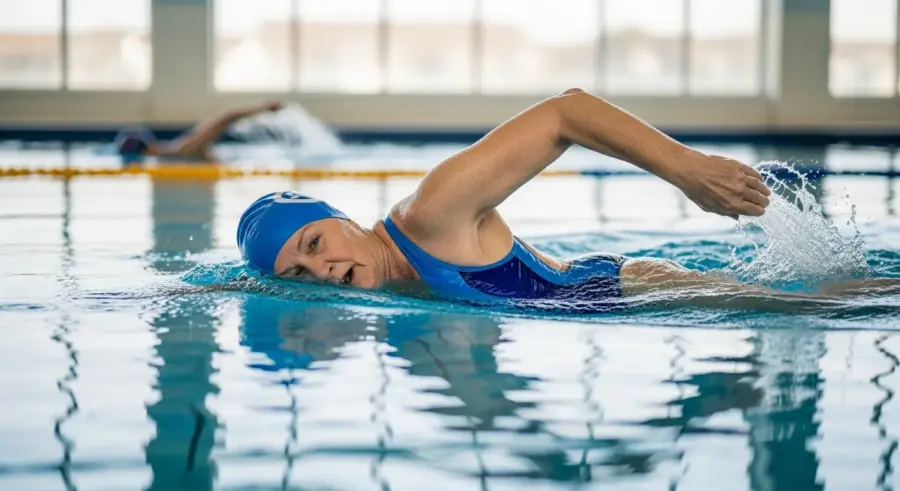
Staying active is crucial for maintaining good health as we age. Swimming offers a fantastic, low-impact way for seniors to exercise and socialize.
Whether you’re a seasoned swimmer or just starting out, incorporating senior swimming exercises into your routine can provide numerous benefits. This article will guide you through everything you need to know about swimming for seniors, from the health advantages to safety precautions.
We’ll cover essential swimming gear, beginner-friendly exercises, water aerobics routines, and tips for finding swimming classes and groups. Get ready to make a splash and discover the joy of swimming!
Health Benefits of Swimming for Seniors
Swimming offers a multitude of health benefits, especially for seniors. It’s a full-body workout that’s gentle on the joints, making it ideal for those with arthritis or other mobility issues.
The buoyancy of water reduces stress on the body, allowing for a greater range of motion and reduced risk of injury. Regular swimming can improve cardiovascular health, increase muscle strength and endurance, and enhance flexibility.
Swimming is also a great way to boost mental well-being. The rhythmic movements and the feeling of weightlessness can be incredibly relaxing, helping to reduce stress and anxiety.
Studies have shown that aquatic therapy elderly individuals participate in can improve mood and cognitive function. Plus, swimming can be a social activity, providing opportunities to connect with others and combat feelings of isolation.
Cardiovascular health is significantly improved through swimming. It helps lower blood pressure and improves circulation, reducing the risk of heart disease.
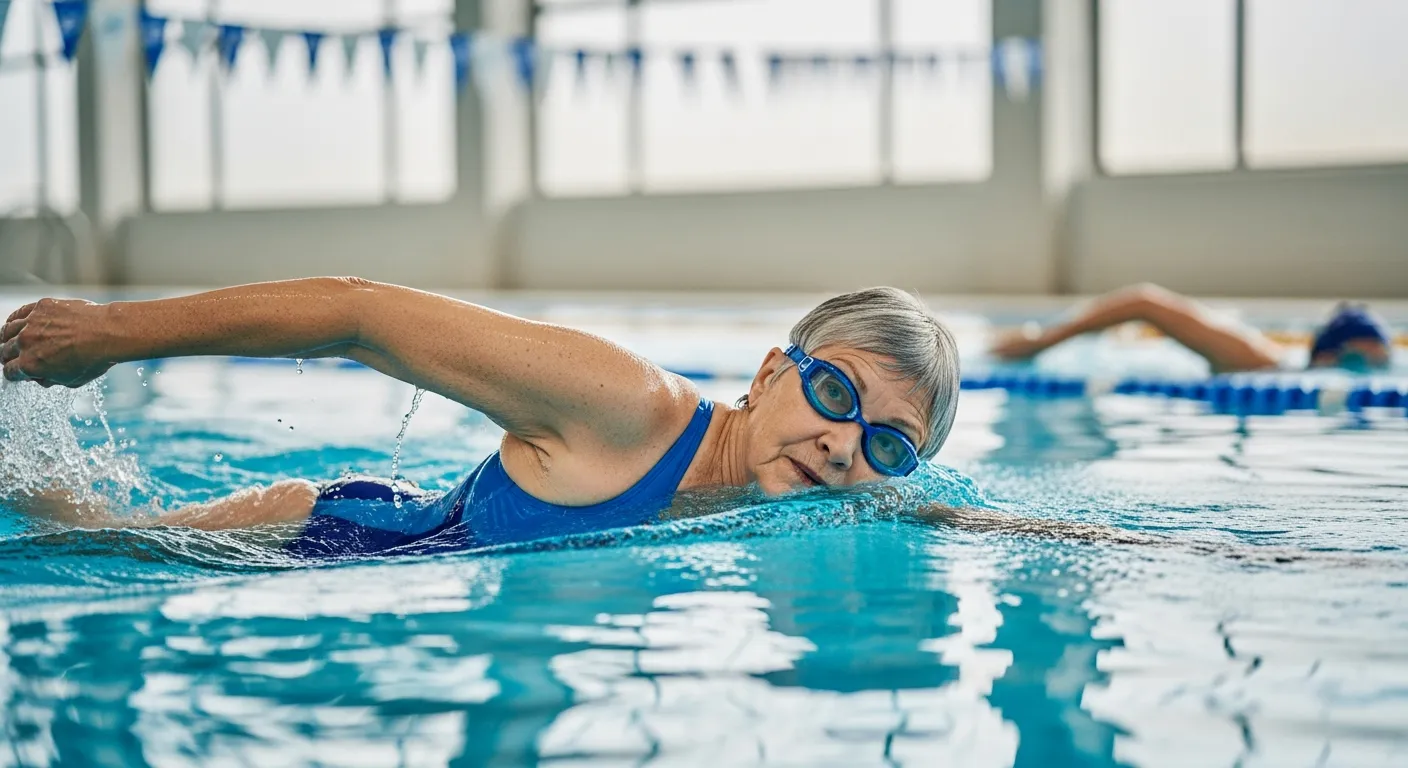
Swimming engages multiple muscle groups simultaneously. This leads to increased strength and endurance, making everyday tasks easier.
The increased flexibility from swimming can help prevent falls. It improves balance and coordination, vital for seniors.
Swimming can also help manage chronic pain conditions. It’s a low-impact exercise that can alleviate pain and stiffness associated with arthritis and fibromyalgia.
The mental health benefits of swimming are often overlooked. The repetitive nature of swimming can have a meditative effect, reducing stress and promoting relaxation.
Swimming releases endorphins, which have mood-boosting effects. This can help alleviate symptoms of depression and anxiety.
The social aspect of swimming can also be very beneficial. Joining a swimming group or class provides opportunities to connect with others and build social support.
Swimming can also improve sleep quality. Regular exercise, including swimming, can help regulate sleep patterns and promote restful sleep.
Improved lung capacity is another benefit of swimming. The breathing techniques used in swimming can strengthen respiratory muscles and improve lung function.
Swimming can help maintain a healthy weight. It’s a calorie-burning exercise that can help prevent obesity and related health problems.
The benefits of swimming extend beyond physical and mental health. It can also improve cognitive function and memory.
Swimming requires focus and coordination, which can help keep the mind sharp. Studies have shown that regular exercise can reduce the risk of cognitive decline and dementia.
Essential Swimming Gear for Seniors
Having the right gear can make your swimming experience more comfortable and enjoyable. A well-fitting swimsuit is essential for ease of movement in the water.
Consider a suit designed specifically for aquatic exercise, as these often provide extra support and coverage. Goggles are a must to protect your eyes from chlorine and improve visibility underwater.
Choose goggles that fit snugly around your eyes to prevent water leakage. A swim cap is also a good idea, as it helps to protect your hair from chlorine and reduces drag in the water.
If you’re concerned about slipping on the pool deck, invest in a pair of non-slip water shoes. For added comfort and support, especially if you have sensitive feet, consider wearing swim socks.
When selecting a swimsuit, prioritize comfort and functionality. Look for suits made from chlorine-resistant materials to ensure they last longer.
Consider a suit with a higher neckline and wider straps for added support and coverage. For men, swim trunks or briefs designed for aquatic exercise are a good choice.
Goggles are essential for protecting your eyes from chlorine and other irritants. Look for goggles with adjustable straps and a comfortable seal around the eyes.
Consider goggles with anti-fog coating to prevent them from fogging up during your swim. Some goggles also offer UV protection, which is important if you’re swimming outdoors.
Swim caps help protect your hair from chlorine and reduce drag in the water. Silicone swim caps are a good choice because they are durable and comfortable.
Latex swim caps are also an option, but they may not be as durable as silicone caps. If you have long hair, consider a swim cap that is designed to accommodate longer hairstyles.
Non-slip water shoes are essential for preventing slips and falls on the pool deck. Look for shoes with a good grip and a comfortable fit.
Water shoes can also protect your feet from rough surfaces and sharp objects. If you have sensitive feet, consider wearing swim socks inside your water shoes for added comfort.
Other useful swimming gear includes a towel, a water bottle, and sunscreen. A quick-drying towel is a good choice for drying off after your swim.
Staying hydrated is important, so bring a water bottle with you to the pool. If you’re swimming outdoors, be sure to apply sunscreen to protect your skin from the sun.
Consider bringing a small bag to carry your swimming gear. A mesh bag is a good choice because it allows your gear to air out and dry quickly.
If you have any medical conditions, such as diabetes or heart problems, consider wearing a medical alert bracelet. This can provide important information to first responders in case of an emergency.
Beginner-Friendly Swimming Exercises
Starting slow and gradually increasing the intensity is key when beginning any new exercise routine. These senior swimming exercises are designed to be gentle and effective for beginners.
Start with simple water walking, which involves walking laps in the shallow end of the pool. This helps to get your body used to the water and provides a gentle cardiovascular workout.
| Exercise | Description | Benefits |
|---|---|---|
| Water Walking | Walking laps in shallow water | Gentle cardio, improves balance |
| Arm Circles | Rotating arms forward and backward | Strengthens shoulders, improves flexibility |
| Leg Swings | Swinging legs forward and backward | Improves hip flexibility, strengthens legs |
| Flutter Kicks | Kicking legs while holding onto the pool edge | Strengthens legs and core |
Next, try arm circles, rotating your arms forward and backward while standing in chest-deep water. Leg swings, where you swing one leg forward and backward while holding onto the pool edge, are great for improving hip flexibility.
Finally, flutter kicks, performed by kicking your legs while holding onto the pool edge, will help strengthen your legs and core. Remember to listen to your body and take breaks when needed.
When starting with water walking, focus on maintaining good posture. Keep your head up, shoulders back, and core engaged.
Vary your walking speed to increase the intensity of the workout. You can also try walking sideways or backward to engage different muscle groups.
Arm circles are a great way to improve shoulder mobility and flexibility. Perform the circles slowly and deliberately, focusing on the range of motion.
You can also try varying the size of the circles to challenge your muscles in different ways. Leg swings are a good way to improve hip flexibility and range of motion.
Hold onto the pool edge for support and swing your leg forward and backward, keeping your knee straight. You can also try swinging your leg to the side to work different muscles.
Flutter kicks are a great way to strengthen your legs and core. Hold onto the pool edge and kick your legs up and down, keeping your knees straight.
Focus on engaging your core muscles to stabilize your body. As you get stronger, you can try performing flutter kicks without holding onto the pool edge.
Another beginner-friendly exercise is the noodle float. Hold a pool noodle under your arms and float on your stomach, kicking your legs to propel yourself through the water.
This exercise helps to improve cardiovascular fitness and strengthens your legs and core. You can also try floating on your back with the noodle under your knees.
Remember to breathe deeply and rhythmically throughout your workout. If you feel any pain, stop the exercise and rest.
It’s always a good idea to consult with your doctor before starting any new exercise program. They can help you determine what exercises are safe and appropriate for you.
Water Aerobics Routines for Seniors
Water aerobics seniors can participate in offers a more structured and dynamic workout compared to basic swimming exercises. These routines combine cardiovascular exercise with strength training, all while being gentle on the joints.
A typical water aerobics class might include exercises like marching in place, leg lifts, and arm raises, all performed in the water. You can also use water weights or noodles to increase the resistance and challenge your muscles further.
Try exercises like bicep curls with water weights or using a noodle to perform core twists. Water aerobics can be easily modified to suit different fitness levels, making it accessible for seniors of all abilities.
Many community centers and gyms offer water aerobics classes specifically designed for seniors. These classes provide a fun and social way to stay active and improve your overall fitness.
Marching in place in the water is a great way to get your heart rate up. Focus on lifting your knees high and swinging your arms.
Leg lifts can be performed by lifting one leg out to the side or forward, keeping your knee straight. Hold onto the pool edge for support if needed.
Arm raises can be performed by raising your arms forward, to the side, or overhead. Use water weights to increase the resistance and challenge your muscles further.
Bicep curls with water weights are a great way to strengthen your biceps muscles. Hold the weights with your palms facing up and curl them towards your shoulders.
Core twists can be performed by holding a noodle behind your neck and twisting your torso from side to side. Engage your core muscles to stabilize your body.
Another popular water aerobics exercise is the flutter kick with a kickboard. Hold onto a kickboard and kick your legs up and down, propelling yourself through the water.
This exercise is a great way to strengthen your legs and core. You can also try using the kickboard to perform arm exercises, such as pushing it forward and backward.
Water jogging is another effective cardiovascular exercise. Jog in place in the water, lifting your knees high and swinging your arms.
You can also try varying your jogging speed and intensity to challenge yourself further. Water aerobics classes often incorporate music to make the workout more fun and engaging.
The instructor will guide you through the exercises and provide modifications as needed. Be sure to listen to your body and take breaks when needed.
Water aerobics is a great way to stay active and improve your overall fitness. It’s a low-impact exercise that’s gentle on the joints, making it ideal for seniors of all abilities.
Swimming Pool Exercises for Rehabilitation
Swimming pool exercises are particularly beneficial for seniors recovering from injuries or surgeries. The buoyancy of the water supports the body, reducing the weight-bearing stress on joints and muscles.
Aquatic therapy elderly individuals receive often includes a variety of exercises tailored to specific rehabilitation needs. These may include range-of-motion exercises, such as shoulder rotations and hip extensions, to improve joint mobility.
Strengthening exercises, like leg raises and arm presses, can help rebuild muscle strength and endurance. Hydrostatic pressure, the pressure exerted by the water, can also reduce swelling and improve circulation.
Working with a physical therapist who specializes in aquatic therapy can ensure that you’re performing the exercises correctly and safely. They can create a personalized program that addresses your specific needs and goals.
Range-of-motion exercises are crucial for restoring joint mobility after an injury or surgery. These exercises involve moving your joints through their full range of motion.
Shoulder rotations can be performed by slowly rotating your arms forward and backward in the water. Hip extensions can be performed by extending your leg backward while holding onto the pool edge.
Strengthening exercises help rebuild muscle strength and endurance. Leg raises can be performed by lifting your leg forward, to the side, or backward while holding onto the pool edge.
Arm presses can be performed by pushing your arms forward or to the side against the resistance of the water. Aquatic therapy can also help improve balance and coordination.
Balance exercises can be performed by standing on one leg in the water or walking along a line. Coordination exercises can be performed by throwing and catching a ball in the water.
The hydrostatic pressure of the water can help reduce swelling and improve circulation. This is particularly beneficial for individuals recovering from injuries or surgeries.
The water also provides a gentle massage effect, which can help relieve pain and stiffness. Working with a physical therapist is essential for ensuring that you’re performing the exercises correctly and safely.
They can assess your individual needs and goals and develop a personalized aquatic therapy program. They can also monitor your progress and make adjustments to your program as needed.
Aquatic therapy is a safe and effective way to rehabilitate from injuries or surgeries. It’s a low-impact exercise that’s gentle on the joints, making it ideal for seniors.
The buoyancy of the water supports the body, reducing the weight-bearing stress on joints and muscles. This allows you to exercise with less pain and discomfort.
Swimming Safety Tips for Seniors
Safety should always be a top priority when swimming, especially for seniors. Before getting in the pool, make sure to warm up with some light stretches to prepare your muscles.
It’s also important to stay hydrated by drinking plenty of water before, during, and after your swim. Avoid swimming alone, if possible, and always let someone know where you’re going and when you expect to be back.
- Never swim alone
- Warm up before entering the pool
- Stay hydrated
- Know your limits
- Use appropriate assistive devices
Be aware of your physical limitations and avoid pushing yourself too hard. If you have any underlying health conditions, such as heart problems or diabetes, talk to your doctor before starting a swimming program.
Consider using assistive devices, such as pool noodles or kickboards, for added support and stability. Finally, be mindful of the pool environment and watch out for slippery surfaces or other hazards.
Warming up before swimming is crucial for preventing injuries. Perform light stretches, such as arm circles, leg swings, and torso twists.
These stretches will help prepare your muscles for the workout and reduce the risk of strains and sprains. Staying hydrated is essential for maintaining energy levels and preventing dehydration.
Drink plenty of water before, during, and after your swim. Avoid sugary drinks, as they can actually dehydrate you.
Swimming alone can be dangerous, especially for seniors. If possible, swim with a friend or family member.
If you must swim alone, let someone know where you’re going and when you expect to be back. Be aware of your physical limitations and avoid pushing yourself too hard.
Start slowly and gradually increase the intensity of your workout. If you feel any pain, stop the exercise and rest.
If you have any underlying health conditions, talk to your doctor before starting a swimming program. They can help you determine what exercises are safe and appropriate for you.
Assistive devices, such as pool noodles and kickboards, can provide added support and stability. Use these devices to help you stay afloat and perform exercises more easily.
Be mindful of the pool environment and watch out for slippery surfaces or other hazards. Wear non-slip water shoes to prevent slips and falls.
Be aware of the depth of the water and avoid swimming in areas that are too deep for you. If you’re not a strong swimmer, stay in the shallow end of the pool.
Never dive into shallow water, as this can cause serious injuries. If you’re feeling tired or unwell, don’t swim.
Adapting Strokes for Senior Swimmers
Modifying traditional swimming strokes can make them more accessible and comfortable for senior swimmers. The freestyle stroke, for example, can be adapted by focusing on a shorter reach and a higher elbow position to reduce strain on the shoulders.
The backstroke can be modified by keeping the head slightly elevated and using a wider arm movement to improve balance. The breaststroke can be adjusted by reducing the power of the kick and focusing on a more streamlined body position.
If you find the traditional strokes too challenging, consider using a modified sidestroke or elementary backstroke, which are often easier on the joints. These strokes involve simpler movements and require less coordination.
Working with a qualified swimming instructor can help you learn these modified strokes and ensure that you’re using proper technique. They can also provide personalized tips and adjustments based on your individual needs and abilities.
In freestyle, shortening the reach reduces the distance your arm travels, lessening the strain. A higher elbow position encourages a more efficient pull through the water.
For backstroke, keeping the head slightly elevated helps maintain a better body position. A wider arm movement provides more stability and reduces the risk of rolling.
Adjusting the breaststroke involves focusing on technique over power. A less forceful kick reduces strain on the knees and hips.
Maintaining a streamlined body position minimizes drag and makes the stroke more efficient. The sidestroke is a good alternative for those with limited mobility.
It involves a scissor kick and an alternating arm movement, which are generally easier on the joints. The elementary backstroke is another simple stroke that can be adapted for seniors.
It involves a simultaneous arm and leg movement, which requires less coordination than other strokes. When learning modified strokes, focus on proper technique.
Avoid rushing the movements and concentrate on maintaining a good body position. Listen to your body and take breaks when needed.
If you experience any pain, stop the exercise and rest. A qualified swimming instructor can provide personalized guidance and support.
They can assess your individual needs and abilities and develop a customized swimming program. They can also help you correct any errors in your technique.
Swimming is a great way to stay active and improve your overall health. By adapting the strokes to your individual needs, you can enjoy the benefits of swimming without putting too much strain on your body.
Benefits of Group Swimming Activities
Participating in group swimming activities can provide numerous social and emotional benefits for seniors. Swimming with others can create a sense of community and camaraderie, helping to combat feelings of loneliness and isolation.
Group classes and activities also offer opportunities for social interaction and friendship. Sharing a common interest in swimming can lead to meaningful connections and lasting relationships.
The encouragement and support of fellow swimmers can also motivate you to stay committed to your fitness goals. Seeing others achieve their goals can inspire you to push yourself further and overcome challenges.
Group swimming activities can also provide a sense of accountability. Knowing that others are counting on you to show up can make it easier to stick to your routine and avoid skipping workouts.
The social interaction in group swimming can boost your mood. Sharing experiences and laughter with others can alleviate stress and improve your overall well-being.
Group activities provide a structured environment for exercise. This can be especially helpful for seniors who struggle with motivation or self-discipline.
The shared goals and challenges in a group setting can foster a sense of teamwork. This can lead to stronger bonds and a more supportive environment.
Group swimming activities can also provide opportunities to learn new skills. You can learn from other swimmers and from the instructor.
The accountability of group swimming can help you stay on track with your fitness goals. Knowing that others are counting on you can motivate you to show up and participate.
Group swimming can also provide a sense of purpose. Helping others achieve their goals can give you a sense of accomplishment and satisfaction.
The social and emotional benefits of group swimming can extend beyond the pool. You may find that you have more energy and enthusiasm for other activities in your life.
Group swimming can also help improve your cognitive function. The social interaction and mental stimulation can help keep your mind sharp.
The camaraderie of group swimming can help you build lasting friendships. These friendships can provide support and companionship in all aspects of your life.
Group swimming is a fun and rewarding way to stay active and improve your overall well-being. It’s a great way to connect with others, build friendships, and achieve your fitness goals.
Finding Swimming Classes and Groups
Finding swimming classes and groups for seniors is easier than you might think. Many community centers, gyms, and YMCAs offer aquatic programs specifically designed for older adults.
Check with your local senior center or parks and recreation department for information on available classes and activities. You can also search online for “senior swimming exercises near me” to find options in your area.
When choosing a class or group, consider factors such as the instructor’s experience, the class size, and the pool environment. Look for classes that are taught by certified instructors who have experience working with seniors.
Visit the pool beforehand to make sure it’s clean, well-maintained, and accessible. Talk to other participants to get their feedback on the class and the instructor.
Community centers often offer a variety of swimming classes for seniors. These classes may include beginner swimming lessons, water aerobics, and aquatic therapy.
Gyms and YMCAs also offer a range of aquatic programs for seniors. These programs may include group fitness classes, lap swimming, and private swimming lessons.
Senior centers are a great resource for finding swimming classes and groups. They often offer discounted rates on aquatic programs for seniors.
Parks and recreation departments may also offer swimming classes and activities for seniors. These programs are often held at public pools and community centers.
Online searches can help you find swimming classes and groups in your area. Use keywords such as “senior swimming exercises,” “aquatic therapy for seniors,” and “water aerobics for seniors.”
When choosing a class or group, consider the instructor’s experience and qualifications. Look for instructors who are certified in water safety and aquatic fitness.
The class size is also an important factor to consider. Smaller classes allow for more individualized attention from the instructor.
The pool environment should be clean, well-maintained, and accessible. Make sure the pool is heated to a comfortable temperature.
Talk to other participants to get their feedback on the class and the instructor. Ask about their experiences and whether they would recommend the class.
Visiting the pool beforehand is a good way to assess the environment and meet the instructor. This will help you determine if the class is a good fit for you.
Conclusion
Swimming is a wonderful activity for seniors, offering a wide range of physical, mental, and social benefits. By following the tips and guidelines outlined in this article, you can safely and effectively incorporate swimming into your routine.
Remember to start slowly, listen to your body, and seek guidance from qualified professionals when needed. So, grab your swimsuit, goggles, and cap, and get ready to enjoy the many joys of senior swimming exercises!
The benefits of swimming are undeniable, making it an ideal exercise choice for seniors. From improving cardiovascular health to boosting mental well-being, swimming offers a holistic approach to fitness.
By taking the necessary precautions and adapting your swimming routine to your individual needs, you can enjoy a safe and rewarding experience. Embrace the water and discover the joy of swimming for a healthier and happier life.