
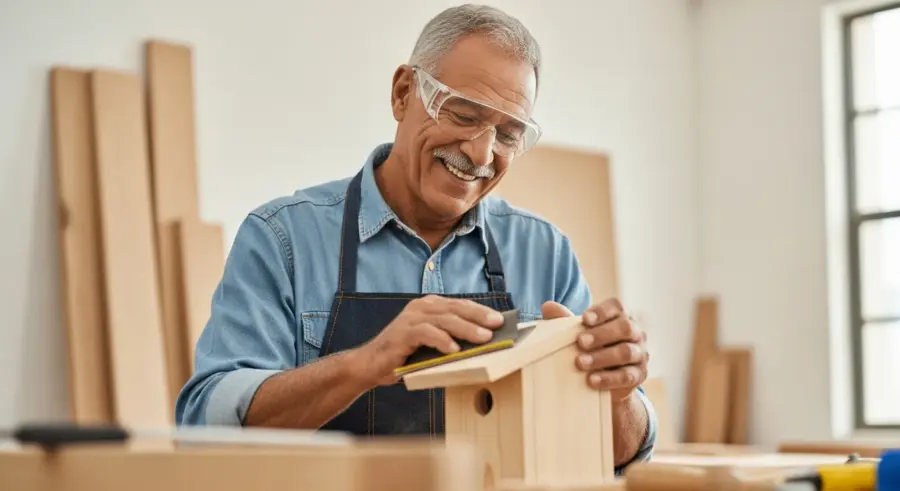
Woodworking is more than just a hobby; it’s a fulfilling activity that offers numerous benefits, especially for seniors. Engaging in senior woodworking projects can improve cognitive function, provide a sense of accomplishment, and foster social connections.
This guide will explore the many advantages of woodworking for seniors, suggest beginner-friendly projects, and provide essential woodworking safety tips. We will also cover how to find local classes and adapt woodworking to suit various physical limitations, ensuring a safe and enjoyable experience for everyone.
Whether you’re a seasoned craftsman or someone picking up a chisel for the first time, there’s something incredibly rewarding about creating something with your own hands. So, grab your safety glasses, and let’s get started with these easy woodworking plans!
Benefits of Woodworking for Seniors
Woodworking offers a unique blend of mental and physical stimulation, making it an ideal activity for seniors. The act of planning, measuring, and assembling wood projects can significantly enhance cognitive abilities.
Working with wood requires focus and attention to detail, which can help improve memory and concentration. The sense of accomplishment derived from completing a project boosts self-esteem and provides a positive emotional outlet.
Beyond the mental benefits, woodworking also provides a gentle form of physical exercise. Simple tasks like sanding, sawing, and hammering can improve hand-eye coordination and fine motor skills.
These activities help maintain dexterity and strength in the hands and arms, which can be particularly beneficial for seniors. Woodworking can also be a social activity, providing opportunities to connect with others who share a similar interest, reducing feelings of isolation and loneliness.
The cognitive benefits extend beyond just memory and concentration. Problem-solving skills are constantly engaged as you navigate the challenges of a project. This mental workout can help maintain sharpness and prevent cognitive decline.

Furthermore, the act of creating something tangible provides a sense of purpose and fulfillment. This can be especially important for seniors who may be retired or experiencing other life transitions. The satisfaction of seeing a project come to fruition is a powerful motivator.
The physical benefits are also noteworthy. While woodworking isn’t a strenuous workout, it does require movement and engagement of various muscle groups. This helps maintain strength and flexibility, which are crucial for seniors’ overall health.
The repetitive motions involved in sanding and finishing can also improve circulation and reduce stiffness in the hands and joints. The social aspect of woodworking, whether through classes or clubs, cannot be overstated. It provides a sense of community and belonging, combating loneliness and promoting mental well-being.
Essential Woodworking Tools for Beginners
Starting woodworking doesn’t require a massive investment in expensive tools. A few essential items will allow you to tackle a variety of senior woodworking projects safely and efficiently.
Begin with a good quality hand saw for cutting wood to size, along with a measuring tape and combination square for accurate measurements. A basic set of chisels is essential for shaping wood and creating joinery.
You’ll also need a workbench or sturdy table to work on, along with clamps to hold pieces together while gluing or fastening. Don’t forget safety glasses, a dust mask, and work gloves to protect yourself from injury and dust.
As you progress, you might consider adding power tools like a drill, sander, and jigsaw to your collection. However, it’s best to start with hand tools to develop a feel for the wood and learn basic techniques before moving on to more advanced equipment.
When selecting hand tools, prioritize quality over quantity. A well-made hand saw will last for years and provide cleaner, more accurate cuts than a cheap one. Similarly, a set of sharp chisels will make shaping wood much easier and safer.
Consider investing in a comfortable workbench that is the right height for you. This will help prevent back pain and fatigue while you’re working. Clamps are essential for holding pieces together while glue dries, ensuring strong and accurate joints.
There are many different types of clamps available, so choose a variety that will suit your needs. When it comes to power tools, start with the basics and gradually add more as your skills and project complexity increase. A drill is useful for creating holes and driving screws, while a sander will help you achieve a smooth finish.
A jigsaw is a versatile tool for cutting curves and intricate shapes. Remember to always read the manufacturer’s instructions carefully before using any power tool, and always wear appropriate safety gear.
Simple Woodworking Projects to Get Started
When starting out with woodworking, it’s best to begin with simple projects that allow you to practice basic skills. These easy woodworking plans are perfect for beginners and provide a satisfying sense of accomplishment.
A birdhouse is a classic beginner project that requires basic cutting, drilling, and assembly skills. A simple wooden box can be used for storage or decoration and provides practice in measuring, cutting, and joining wood.
| Project | Skills Required | Materials Needed |
|---|---|---|
| Birdhouse | Cutting, Drilling, Assembly | Wood, Nails/Screws, Glue |
| Wooden Box | Measuring, Cutting, Joining | Wood, Nails/Screws, Glue |
| Picture Frame | Cutting, Joining, Finishing | Wood, Glass/Acrylic, Fasteners |
| Small Shelf | Cutting, Sanding, Finishing | Wood, Screws, Brackets |
A picture frame is another excellent project to practice cutting accurate angles and creating clean joints. A small shelf is a practical project that can be used to display items or store small objects, requiring skills in cutting, sanding, and finishing wood.
When building a birdhouse, consider using cedar or redwood, as these woods are naturally resistant to rot and insects. You can find free birdhouse plans online or in woodworking magazines. A wooden box can be customized with different sizes, shapes, and finishes.
Experiment with different types of wood and joinery techniques to create unique and functional boxes. Picture frames are a great way to showcase your favorite photos or artwork. Practice cutting accurate miters and creating tight-fitting joints for a professional-looking frame.
A small shelf can be used in any room of the house to display books, plants, or other decorative items. Choose a wood that complements your decor and finish it with a stain or paint that you love. Remember to take your time and focus on accuracy and precision.
These simple projects are designed to be fun and rewarding, so don’t be afraid to experiment and make mistakes. The most important thing is to learn and enjoy the process.
Woodworking Safety Guidelines for Seniors
Safety should always be a top priority when engaging in woodworking, especially for seniors. It’s essential to take precautions to prevent injuries and ensure a safe and enjoyable experience.
Always wear safety glasses to protect your eyes from flying debris, and use a dust mask to avoid inhaling sawdust. Wear work gloves to protect your hands from splinters and sharp edges, and ensure adequate lighting in your workspace to prevent accidents.
Keep your tools sharp and in good working condition, and always use the right tool for the job. Secure your workpiece with clamps to prevent it from moving while you’re working on it.
Take breaks to avoid fatigue, and never work when you’re feeling tired or unwell. If you have any physical limitations, adapt your projects and techniques to suit your abilities, and don’t hesitate to ask for help when needed.
Before starting any project, take a few minutes to assess your workspace and identify any potential hazards. Make sure your work area is well-ventilated to prevent the buildup of sawdust and fumes. Keep your floors clean and free of debris to avoid slips and falls.
When using power tools, always follow the manufacturer’s instructions carefully. Never remove safety guards or attempt to modify tools in any way. Use push sticks or other safety devices to keep your hands away from blades and cutting edges.
Be aware of your surroundings and avoid distractions while working. If you need to take a break, turn off your tools and step away from your work area. Store your tools properly when you’re not using them, and keep them out of reach of children and pets.
If you have any medical conditions that may affect your ability to work safely, consult with your doctor before starting any woodworking project. Remember, safety is always the most important consideration. A little extra caution can go a long way in preventing accidents and injuries.
Finding Woodworking Classes and Communities
Joining a woodworking class or community can provide valuable learning opportunities and social connections. Local community centers often offer woodworking classes for seniors, taught by experienced instructors.
These classes provide a structured learning environment and access to tools and equipment. Online forums and social media groups dedicated to woodworking can connect you with other enthusiasts, allowing you to share ideas, ask questions, and get feedback on your projects.
- Check local community centers
- Search online forums and groups
- Visit woodworking supply stores
- Inquire at local high schools or colleges
- Attend woodworking shows and events
Woodworking supply stores sometimes offer workshops and demonstrations, providing hands-on learning experiences. Local high schools or colleges may also offer woodworking classes to the community, providing access to advanced equipment and techniques.
When choosing a woodworking class, consider your skill level and interests. Look for classes that are specifically designed for beginners or seniors. Check the class schedule and make sure it fits your availability.
Ask about the instructor’s experience and qualifications. Read reviews from other students to get an idea of the class quality. Online forums and social media groups can be a great resource for finding local woodworking communities.
Search for groups that are active and welcoming to new members. Attend local woodworking shows and events to meet other enthusiasts and learn about new products and techniques. Networking with other woodworkers can open up new opportunities and provide valuable support.
Don’t be afraid to reach out and ask questions. Most woodworkers are happy to share their knowledge and experience. Building connections with other woodworkers can make the hobby even more enjoyable and rewarding.
Adapting Woodworking for Physical Limitations
Woodworking can be adapted to suit various physical limitations, ensuring that everyone can enjoy this rewarding activity. If you have arthritis or limited hand strength, consider using tools with ergonomic handles that are easier to grip.
Adaptive tools like clamps with large handles and spring-loaded scissors can also make woodworking more accessible. If you have difficulty standing for long periods, use a comfortable chair or stool while working.
Consider breaking down projects into smaller, more manageable steps to avoid overexertion. Use lightweight materials like balsa wood or foam board for projects that require less strength and endurance.
Don’t hesitate to ask for help with tasks that are difficult or painful, and always listen to your body and take breaks when needed. With a little creativity and adaptation, woodworking can be a fulfilling and enjoyable activity for people of all abilities.
There are many different types of adaptive tools available to make woodworking more accessible. Look for tools with large, comfortable grips that are easy to hold and manipulate. Consider using power tools instead of hand tools to reduce strain on your hands and wrists.
Adjust your workbench height to a comfortable level to avoid back pain. Use a rolling cart or other mobile storage to keep your tools within easy reach. If you have limited mobility, consider using a reacher tool to grab items that are out of reach.
Don’t be afraid to modify your projects to make them easier to complete. Simplify the design or use different materials that are easier to work with. Break down complex tasks into smaller, more manageable steps.
Ask for help from friends, family members, or other woodworkers. There are many resources available to help you adapt woodworking to your individual needs. With a little creativity and perseverance, you can overcome any physical limitations and enjoy the many benefits of woodworking.
The Therapeutic Benefits of Wood Craft Ideas
Beyond the tangible benefits of creating beautiful objects, wood craft ideas offer significant therapeutic advantages. The repetitive motions involved in sanding and carving can be meditative, reducing stress and anxiety.
The focus required for woodworking can help quiet the mind and promote a sense of calm. Successfully completing a project, no matter how small, provides a sense of accomplishment and boosts self-esteem.
The tactile nature of working with wood can be grounding and comforting, providing a connection to the natural world. Woodworking can also be a form of self-expression, allowing you to create unique and personal items that reflect your individual style and creativity.
Whether you’re creating a decorative piece for your home or a thoughtful gift for a loved one, the act of woodworking can be a powerful way to enhance your emotional well-being. These wood craft ideas are more than just projects; they’re a pathway to relaxation and self-discovery.
The act of focusing on a woodworking project can be a welcome distraction from everyday worries and stressors. The sense of accomplishment that comes from creating something tangible can be incredibly rewarding and boost self-confidence. Working with wood can be a very tactile and sensory experience.
The feel of the wood in your hands, the smell of the sawdust, and the sound of the tools can all be very calming and grounding. Woodworking can also be a great way to express your creativity and individuality. You can create unique and personal items that reflect your own style and taste.
Giving your creations as gifts can be a wonderful way to show your loved ones how much you care. The therapeutic benefits of woodworking can be especially helpful for seniors who may be experiencing feelings of loneliness, isolation, or depression. The act of creating something beautiful and useful can provide a sense of purpose and meaning.
The social interaction that comes from participating in woodworking classes or clubs can also be very beneficial. Connecting with others who share your interests can help reduce feelings of isolation and promote a sense of community.
Expanding Your Skills with Intermediate Projects
Once you’ve mastered the basics, it’s time to explore more challenging projects that will further develop your woodworking skills. A small table or nightstand is a great next step, requiring more precise measurements and joinery techniques.
Building a set of drawers involves learning to create accurate joints and fitting them into a frame. A simple cabinet is another excellent project that combines various woodworking skills, including cutting, joining, and finishing.
Consider taking an intermediate woodworking class to learn new techniques and gain access to more advanced equipment. Experiment with different types of wood and finishing techniques to expand your knowledge and creativity.
Don’t be afraid to challenge yourself with more complex designs and intricate details. With practice and perseverance, you’ll be amazed at what you can create with your own hands.
When tackling a small table or nightstand, focus on creating strong and stable joints. Mortise and tenon joints, dovetail joints, and rabbet joints are all excellent choices for this type of project. Take your time and ensure that your measurements are accurate.
Building a set of drawers requires precision and attention to detail. Make sure your drawer boxes are square and that they fit snugly into the frame. Use drawer slides to ensure smooth and easy operation. A simple cabinet can be customized with different doors, shelves, and hardware.
Experiment with different types of wood to create a unique and eye-catching piece. Consider adding decorative elements such as moldings, carvings, or inlays. Taking an intermediate woodworking class can provide you with the guidance and support you need to tackle more challenging projects.
You’ll learn new techniques, gain access to advanced equipment, and receive feedback from experienced instructors. Remember to be patient and persistent. Woodworking is a skill that takes time and practice to develop. Don’t get discouraged if you make mistakes. Learn from them and keep moving forward.
The Social Aspects of Senior Woodworking Projects
Woodworking is not just a solitary activity; it can also be a fantastic way to connect with others and build lasting friendships. Joining a woodworking club or community provides opportunities to share your passion with like-minded individuals.
You can learn from experienced woodworkers, exchange ideas, and collaborate on projects. Working on group projects can foster teamwork and communication skills, while also providing a sense of camaraderie.
Attending woodworking shows and events is another great way to meet other enthusiasts and stay up-to-date on the latest trends and techniques. Sharing your creations with others can be incredibly rewarding, whether you’re giving them as gifts or selling them at craft fairs.
The social aspects of woodworking can enhance your overall well-being, reducing feelings of isolation and promoting a sense of belonging. These senior woodworking projects are more than just crafts; they’re a bridge to new friendships and shared experiences.
Woodworking clubs and communities offer a supportive and encouraging environment for woodworkers of all skill levels. You can find clubs that focus on specific types of woodworking, such as carving, turning, or furniture making. Participating in group projects can be a great way to learn new skills and techniques.
You’ll have the opportunity to work alongside experienced woodworkers and learn from their expertise. Attending woodworking shows and events is a great way to see the latest tools and equipment, as well as to admire the work of other woodworkers. You can also take workshops and demonstrations to learn new skills.
Selling your creations at craft fairs can be a rewarding way to share your passion with others and earn some extra income. Giving your woodworking projects as gifts is a thoughtful way to show your loved ones how much you care. The social aspects of woodworking can be especially beneficial for seniors who may be feeling isolated or lonely.
Joining a woodworking club or community can provide a sense of belonging and purpose. You’ll have the opportunity to connect with others who share your interests and build lasting friendships. Woodworking can be more than just a hobby; it can be a way to enrich your life and connect with others.
Conclusion
Woodworking offers a wealth of benefits for seniors, from cognitive stimulation to physical exercise and social connections. Starting with simple projects and following safety guidelines, anyone can enjoy this rewarding activity.
Whether you’re creating a birdhouse, a wooden box, or a small shelf, the sense of accomplishment and creative expression is truly fulfilling. So, embrace the joy of woodworking and discover the many ways it can enrich your life.
Remember to start slowly and gradually increase the complexity of your projects as your skills improve. Don’t be afraid to experiment with different types of wood and finishing techniques. The most important thing is to have fun and enjoy the process.
Woodworking can be a lifelong hobby that provides endless opportunities for learning and creativity. It’s a great way to stay active, engaged, and connected with others. So, grab your tools and get started on your woodworking journey today!