

The golden years offer a unique opportunity to explore new passions and rekindle old ones. Many seniors discover the joy of singing, and what better way to do so than by joining a senior choir group? It’s an activity that combines the love of music with the benefits of social interaction, creating a harmonious experience for everyone involved.
If you’re looking for a fulfilling and engaging activity, joining a choir might be the perfect fit. Senior choir groups offer a supportive environment where you can express yourself, make new friends, and enjoy the many advantages that singing brings.
This article will guide you through everything you need to know about senior choir groups, from the health benefits to finding a group near you, and even some vocal tips to help you shine. Get ready to harmonize and socialize your way to a happier, healthier you with elderly singing groups.
The Benefits of Singing in a Choir for Seniors
Singing in a choir is more than just a fun activity; it’s a holistic workout for your mind and body. The benefits extend far beyond the joy of creating music, impacting your physical, mental, and emotional well-being.
For seniors, these advantages can be especially profound, offering a unique way to stay active and engaged. Let’s explore some of the key benefits of joining a senior choir.
Singing is a fantastic cardiovascular exercise. It improves blood circulation and lung capacity, which is particularly beneficial for seniors looking to maintain their physical health.
The deep breathing involved in singing helps to strengthen respiratory muscles and increase oxygen levels in the blood. This can lead to improved stamina and overall physical endurance.
Participating in senior choir groups can significantly boost your mental well-being. Singing releases endorphins, which are natural mood lifters that can help reduce stress and anxiety.
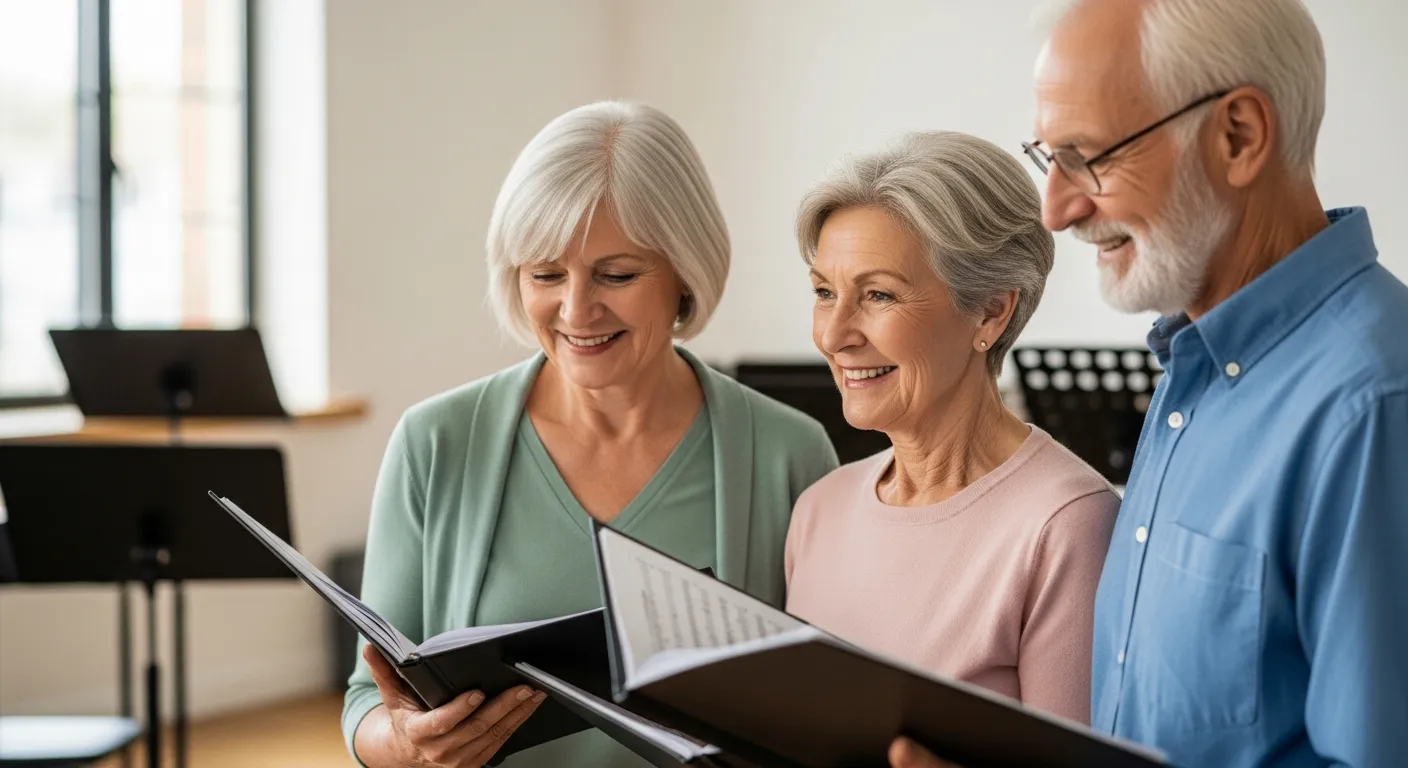
The cognitive engagement required to learn and remember songs can also improve memory and mental acuity. It’s a fun and effective way to keep your mind sharp and active.
Beyond the physical and mental benefits, singing in a choir fosters a strong sense of community. The shared experience of creating music together can lead to meaningful connections and friendships.
This social interaction can combat feelings of loneliness and isolation, which are common challenges for seniors. Choir provides a supportive environment where you can connect with others who share your passion for music.
Singing can also improve your mood and boost your self-esteem. The act of expressing yourself through music can be incredibly empowering.
As you learn new songs and improve your vocal skills, you’ll gain a sense of accomplishment and confidence. This can have a positive impact on your overall outlook and quality of life.
Furthermore, participating in choir can provide a sense of purpose and belonging. Knowing that you’re contributing to something larger than yourself can be incredibly fulfilling.
The shared goal of creating beautiful music together fosters a sense of unity and teamwork. It’s a wonderful way to stay active, engaged, and connected in your golden years.
Singing in a choir can also enhance your cognitive function. Learning new songs and harmonies requires focus, memory, and mental agility.
This mental workout can help to keep your mind sharp and improve your cognitive abilities. It’s a fun and engaging way to challenge yourself and maintain your mental fitness.
Finally, singing can be a great way to relieve stress and promote relaxation. The act of singing releases endorphins, which have mood-boosting and stress-reducing effects.
The deep breathing involved in singing can also help to calm your nervous system and promote a sense of well-being. It’s a natural and effective way to unwind and de-stress.
Finding Choir Groups in Your Area
Ready to join a senior choir group but not sure where to start? Finding the right choir can seem daunting, but with a few simple steps, you can discover a group that fits your interests and skill level.
Here are some practical tips to help you locate senior choir groups in your local community. Start by checking with local community centers, senior centers, and recreational departments.
| Resource | Description | Benefits |
|---|---|---|
| Senior Centers | Offer a variety of activities, including choir groups | Convenient, often free or low-cost, social opportunities |
| Community Centers | Provide diverse programs for all ages, including senior-specific choirs | Inclusive, accessible, promotes community engagement |
| Churches and Religious Organizations | Many have established choirs that welcome seniors | Spiritual connection, supportive community, traditional music |
| Universities and Colleges | Some music departments offer community choirs or senior programs | High-quality instruction, diverse repertoire, intergenerational interaction |
These organizations often host a variety of activities tailored to seniors, and choir groups are a popular option. They provide a convenient and accessible way to get involved in music.
Another great resource is your local church or religious organization. Many churches have established choirs that welcome seniors and offer a supportive community.
These choirs often focus on traditional hymns and spiritual music, providing a meaningful and uplifting experience for participants. It’s a great way to combine your love of music with your faith.
Don’t overlook universities and colleges in your area. Some music departments offer community choirs or senior programs that are open to the public.
These programs often provide high-quality instruction and a diverse repertoire, ranging from classical to contemporary music. You may even have the opportunity to interact with younger musicians, fostering intergenerational connections.
Online directories and search engines can also be helpful in finding senior choir groups. Websites like Meetup.com and community bulletin boards often list local groups and activities.
Use keywords like “senior choir,” “elderly singing group,” or “community choir” along with your city or town to narrow your search. Be sure to read reviews and testimonials to get a sense of the group’s atmosphere and quality.
When you find a choir group that interests you, reach out to the contact person or director to learn more. Ask about the group’s rehearsal schedule, repertoire, and membership requirements.
Many choirs offer a trial period or open rehearsal where you can attend and see if the group is a good fit for you. This is a great way to experience the choir firsthand and meet the other members.
Consider your own musical preferences and skill level when choosing a choir. Some choirs are more casual and welcoming to beginners, while others are more demanding and require prior musical experience.
Choose a group that aligns with your interests and abilities to ensure a positive and enjoyable experience. Don’t be afraid to try out a few different choirs before making a commitment.
What to Expect in a Senior Choir Rehearsal
Walking into your first senior choir rehearsal can be an exciting but nerve-wracking experience. Knowing what to expect can help ease any anxiety and allow you to fully enjoy the experience.
Here’s a glimpse into what a typical rehearsal might look like, from warm-ups to the final performance run-through. Rehearsals usually begin with vocal warm-ups.
These exercises are designed to prepare your voice for singing, improve breath control, and enhance vocal range. Common warm-ups include humming, scales, and simple vocal exercises led by the choir director.
After warm-ups, the choir director will typically lead the group in rehearsing the songs selected for the current performance. This involves working through each piece, section by section, focusing on melody, harmony, and rhythm.
The director will provide guidance on proper vocal technique, phrasing, and interpretation. They may also offer historical context or background information about the songs to enhance your understanding and connection to the music.
Choir rehearsals are also a great opportunity to socialize and connect with fellow choir members. During breaks and after rehearsals, you can chat, share stories, and build friendships with people who share your love of music.
The rehearsal environment is typically supportive and encouraging. The choir director will create a positive atmosphere where everyone feels comfortable participating and expressing themselves.
Don’t be afraid to ask questions or seek clarification if you’re unsure about something. The director and other choir members are there to help you learn and grow as a singer.
Rehearsals may also include sight-reading exercises, where you’ll be asked to sing a piece of music you’ve never seen before. This can be challenging, but it’s a great way to improve your musical skills and expand your repertoire.
The choir director will often divide the choir into sections, such as sopranos, altos, tenors, and basses, to work on specific harmonies. This allows each section to focus on their individual parts and ensure that the overall sound is balanced and harmonious.
As the performance date approaches, rehearsals will become more focused on refining the songs and perfecting the overall performance. This may involve practicing transitions, dynamics, and stage presence.
The goal is to ensure that everyone is confident and prepared to deliver a memorable performance. Remember to bring your music, a pencil, and a positive attitude to each rehearsal.
Active participation and a willingness to learn are key to getting the most out of your choir experience. Embrace the opportunity to grow as a singer and connect with fellow music lovers.
Vocal Techniques for Seniors
Maintaining your vocal health and improving your singing technique is essential for enjoying your time in a senior choir. While some seniors may have years of singing experience, others may be new to vocal performance.
Regardless of your experience level, there are several vocal techniques you can practice to enhance your singing ability. Proper posture is the foundation of good vocal technique.
Stand or sit tall with your shoulders relaxed and your chest open, which allows for optimal breath support and vocal resonance. Avoid slouching, as this can restrict your breathing and negatively impact your vocal quality.
Diaphragmatic breathing, or belly breathing, is crucial for singers of all ages. Place one hand on your chest and the other on your abdomen, and focus on expanding your abdomen as you inhale.
This technique ensures that you’re using your diaphragm to support your breath, which results in a fuller, more controlled sound. Practice this breathing technique regularly to improve your breath control and vocal stamina.
Vocal exercises are essential for maintaining vocal health and improving your singing technique. Simple exercises like humming, lip trills, and scales can help warm up your vocal cords and improve your vocal range.
Pay attention to your vocal health and avoid straining your voice. If you experience any pain or discomfort while singing, stop immediately and rest your voice.
Stay hydrated by drinking plenty of water, as this helps to keep your vocal cords lubricated. Avoid smoking and excessive alcohol consumption, as these can irritate your vocal cords and negatively impact your singing ability.
Work on your vocal projection to ensure that your voice carries throughout the room. Practice speaking and singing with a clear, resonant tone, and focus on projecting your voice from your diaphragm.
Pay attention to your articulation and pronunciation to ensure that your words are clear and understandable. Practice enunciation exercises to improve your clarity and diction.
Listen to recordings of professional singers to learn from their techniques and styles. Pay attention to their phrasing, dynamics, and vocal expression, and try to incorporate these elements into your own singing.
Consider taking private vocal lessons to receive personalized instruction and guidance. A vocal coach can help you identify and correct any technical issues and develop your vocal potential.
Be patient and persistent in your vocal training. It takes time and effort to develop your vocal skills, but with consistent practice, you can achieve significant improvements.
Most importantly, enjoy the process of singing and expressing yourself through music. Singing should be a joyful and fulfilling experience, so relax, have fun, and let your voice soar.
Preparing for a Performance
The culmination of all your hard work in rehearsals is the final performance. Preparing for a performance involves more than just knowing the songs; it requires attention to detail and a commitment to excellence.
Here are some tips to help you shine on stage and deliver a memorable performance. Make sure you are well-rested and hydrated before the performance.
- Review the music thoroughly
- Practice your vocal parts
- Attend all rehearsals
- Visualize a successful performance
- Prepare your attire
Adequate sleep and hydration are essential for maintaining vocal health and energy levels. Avoid caffeine and alcohol, as they can dehydrate your vocal cords and negatively impact your performance.
Before the performance, take some time to warm up your voice and body. Gentle stretches and vocal exercises can help relax your muscles and prepare your vocal cords for singing.
Practice your vocal parts individually to ensure that you’re confident and comfortable with your performance. Pay attention to the nuances of the music, such as dynamics, phrasing, and articulation.
Attend all rehearsals leading up to the performance to ensure that you’re in sync with the rest of the choir. This is also an opportunity to receive feedback from the choir director and make any necessary adjustments.
Visualize a successful performance to boost your confidence and reduce anxiety. Imagine yourself singing beautifully, connecting with the audience, and enjoying the experience.
Prepare your attire well in advance to avoid any last-minute stress. Make sure your clothing is comfortable, appropriate for the occasion, and allows for freedom of movement.
On the day of the performance, arrive early to allow yourself plenty of time to relax and prepare. This will also give you an opportunity to socialize with your fellow choir members and build camaraderie.
Before going on stage, take a few deep breaths to calm your nerves and focus your mind. Remember to maintain good posture and make eye contact with the audience.
During the performance, focus on the music and your connection with the other singers. Let the joy of singing shine through your voice and expression.
Don’t be afraid to make mistakes; everyone makes them from time to time. If you do happen to slip up, just keep singing and try to recover gracefully.
Most importantly, remember to enjoy the experience and celebrate your accomplishments. Performing in a choir is a rewarding and fulfilling experience, so savor every moment.
The Social Aspect of Choir
Beyond the musical benefits, joining a senior choir group offers a wealth of social opportunities. The sense of community and camaraderie that develops within a choir can be incredibly rewarding.
It provides a supportive environment where you can connect with others who share your passion for singing. Choir rehearsals and performances provide regular opportunities for social interaction.
You’ll have the chance to meet new people, share stories, and build friendships with fellow choir members. These connections can help combat feelings of loneliness and isolation, which are common among seniors.
Many choirs organize social events outside of rehearsals, such as potlucks, holiday parties, and outings to local concerts. These events provide additional opportunities to socialize and strengthen bonds with your fellow choir members.
Being part of a choir gives you a sense of purpose and belonging. Knowing that you’re contributing to something larger than yourself can be incredibly fulfilling.
The shared goal of creating beautiful music together fosters a sense of unity and teamwork. This can lead to increased self-esteem and a greater sense of overall well-being.
The social connections you make in choir can extend beyond the rehearsal room. You may find yourself spending time with your fellow choir members outside of choir activities, such as going to lunch, attending cultural events, or simply chatting on the phone.
These friendships can provide emotional support, companionship, and a sense of belonging, which are all essential for maintaining a healthy and fulfilling life.
Choir can also provide opportunities to learn from others and expand your horizons. You may encounter people from different backgrounds, cultures, and experiences, which can broaden your perspective and enrich your life.
The shared experience of creating music together can break down barriers and foster understanding and empathy. It’s a wonderful way to connect with others on a deeper level and build meaningful relationships.
Furthermore, choir can provide opportunities to give back to your community. Many choirs perform at local hospitals, nursing homes, and community events, bringing joy and entertainment to those who may not otherwise have access to it.
This can be a incredibly rewarding experience, knowing that you’re using your musical talents to make a positive impact on the lives of others. It’s a great way to stay active, engaged, and connected to your community.
The social aspect of choir is just as important as the musical aspect. It’s a place where you can connect with others, build friendships, and experience the joy of creating music together.
So, if you’re looking for a way to enhance your social life and connect with others who share your passion for music, consider joining a senior choir group. It’s an opportunity to make new friends, build lasting relationships, and experience the many benefits of social interaction.
Conclusion
Joining senior choir groups is a fantastic way to harmonize your life with music, social connections, and personal growth. From improving your physical and mental health to building lasting friendships, the benefits are numerous and far-reaching.
So, if you’re looking for a fulfilling and engaging activity, consider joining a choir for seniors. It’s an opportunity to express yourself, stay active, and enjoy the many joys that singing brings.
Embrace the opportunity to learn new skills, connect with others, and experience the joy of creating music together. Senior choir groups offer a unique and rewarding experience that can enhance your quality of life in countless ways.
Don’t hesitate to reach out to local organizations and explore the available options. There’s a choir out there waiting for you, ready to welcome you with open arms and harmonious voices.
So, take the first step and embark on a musical journey that will enrich your life and bring joy to your heart. Join a senior choir group and discover the many wonders that await you.