
As we age, maintaining independence and safety in our homes becomes increasingly important. Luckily, technology offers innovative solutions to help seniors live comfortably and securely. Smart home devices for elderly are transforming the way we approach senior care, providing tools that enhance both quality of life and peace of mind.
This article will explore the various smart home technologies available and how they can benefit seniors. We’ll discuss everything from voice assistants to smart lighting and security systems.
Whether you’re a senior looking to embrace new technology or a caregiver seeking ways to improve the well-being of a loved one, this guide will provide valuable insights and practical tips. Let’s examine how these devices can make a real difference in the lives of seniors.
Understanding Smart Home Technology
Smart home technology refers to devices that can be controlled remotely, often via a smartphone, tablet, or voice command. These devices connect to a home network, allowing for automation and increased convenience.
For seniors, this technology can simplify daily tasks and provide an added layer of security. The ability to control lights, thermostats, and security systems from anywhere can be particularly beneficial.
One of the primary advantages of smart home devices for elderly is their ease of use. Many devices are designed with simple interfaces and voice control options, making them accessible for those who may not be tech-savvy.
Furthermore, smart home technology can be customized to meet individual needs, ensuring that seniors receive the specific support they require. This adaptability makes it a valuable tool for enhancing independence and overall well-being.
The core of smart home technology lies in its ability to connect devices and automate processes. This interconnectivity allows for a seamless and responsive living environment, tailored to the individual.
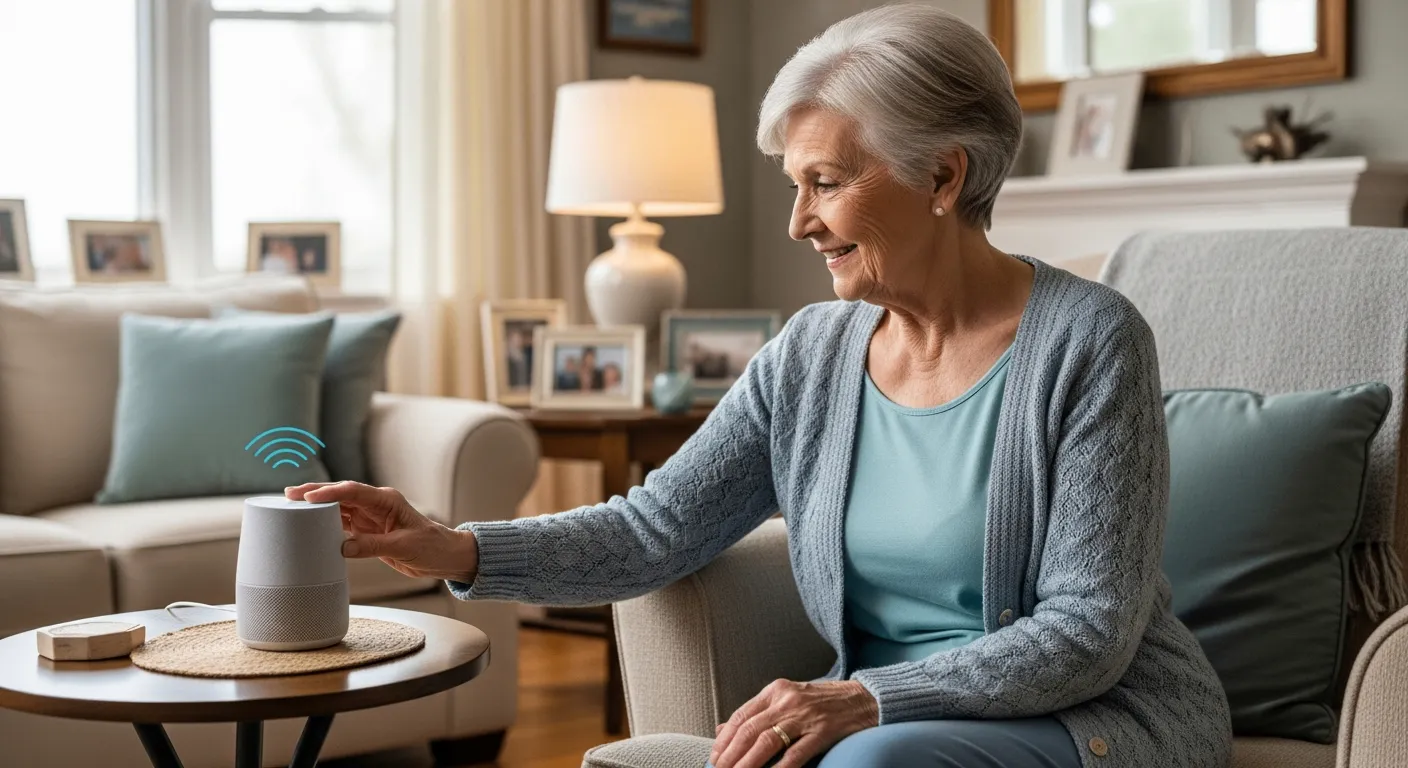
Imagine a home where the lights adjust automatically based on the time of day, or where the thermostat regulates the temperature to maintain optimal comfort. These are just a few examples of how smart home technology can improve the lives of seniors.
Beyond convenience, smart home technology also offers significant safety benefits. Smart security systems can provide peace of mind, while fall detection devices can alert caregivers in case of an emergency.
The integration of these technologies can create a safer and more supportive environment for seniors, allowing them to live independently for longer.
Setting Up Your Smart Home Devices
Setting up smart home devices might seem daunting, but with a few simple steps, it can be a straightforward process. Start by identifying the specific needs and challenges you or your loved one face.
Consider which devices would be most beneficial, such as voice assistants for hands-free control or smart lighting for improved visibility. Next, ensure you have a stable and reliable Wi-Fi connection.
Most smart home devices require a Wi-Fi network to function properly. Once you have a solid connection, follow the manufacturer’s instructions for each device.
Typically, this involves downloading an app, creating an account, and connecting the device to your Wi-Fi network. Don’t hesitate to ask for assistance from family members, friends, or professional installers if needed.
Begin by creating a comprehensive plan. This plan should outline the specific areas of the home you want to automate and the devices you intend to use.
Prioritize devices based on their potential impact on safety and convenience. For example, a smart security system might be a higher priority than a smart coffee maker.
When setting up your devices, pay close attention to the placement of sensors and cameras. Ensure that they are positioned to provide optimal coverage without compromising privacy.
Consider using a professional installer for complex setups, such as security systems or whole-house automation. A professional can ensure that the devices are installed correctly and that the system is functioning properly.
After the initial setup, take the time to familiarize yourself with the devices and their features. Practice using voice commands and navigating the smartphone apps.
Regularly update the software on your smart home devices to ensure that they are protected against security vulnerabilities. Check for updates in the device’s app or on the manufacturer’s website.
Using Voice Assistants for Everyday Tasks
Voice assistants like Amazon Alexa and Google Assistant can be incredibly useful tools for seniors. These devices allow for hands-free control of various smart home functions.
Seniors can use voice commands to turn on lights, adjust the thermostat, play music, make phone calls, and even get answers to questions. This can be particularly helpful for those with mobility issues or limited dexterity.
| Task | Alexa Command | Google Assistant Command |
|---|---|---|
| Turn on lights | “Alexa, turn on the lights” | “Okay Google, turn on the lights” |
| Adjust thermostat | “Alexa, set the temperature to 72 degrees” | “Okay Google, set the temperature to 72 degrees” |
| Play music | “Alexa, play classical music” | “Okay Google, play classical music” |
| Make a phone call | “Alexa, call [contact name]” | “Okay Google, call [contact name]” |
Voice assistants can also be programmed to provide reminders for medications, appointments, and other important tasks. This feature ensures that seniors stay on track with their daily routines and helps prevent missed appointments or forgotten medications.
Voice assistants can be customized to suit individual preferences and needs. You can set up personalized routines that combine multiple actions into a single command.
For example, a “Good Morning” routine could turn on the lights, play the news, and provide a weather forecast. Similarly, a “Good Night” routine could turn off the lights, lock the doors, and set the thermostat to a comfortable sleeping temperature.
Voice assistants can also be used to control entertainment devices, such as TVs and radios. Seniors can use voice commands to change channels, adjust the volume, or select their favorite music.
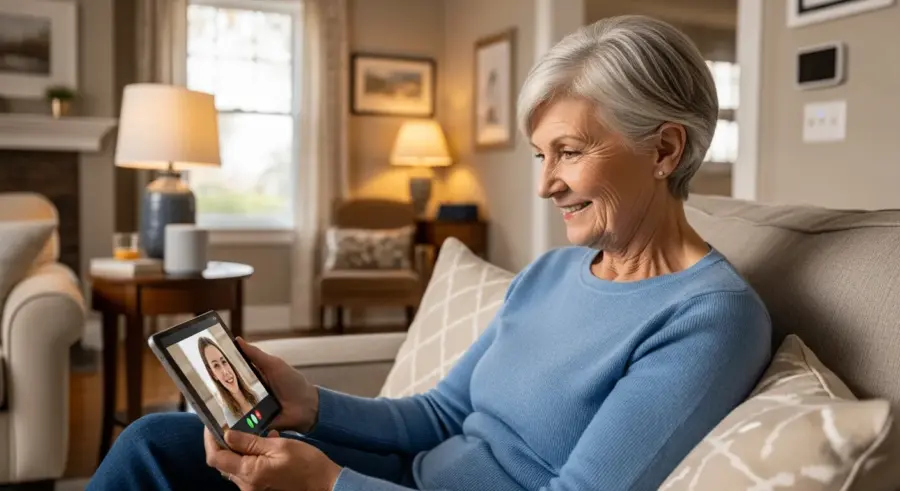
This can be particularly helpful for those with limited mobility or dexterity, who may find it difficult to use traditional remote controls. Voice assistants can also be used to make video calls to family and friends.
This feature can help seniors stay connected with their loved ones, even when they are unable to visit in person. Voice assistants can also provide access to a wealth of information and resources.
Seniors can use voice commands to ask questions about current events, health information, or local services. This can help them stay informed and engaged with the world around them.
Enhancing Safety with Smart Home Security Systems
Smart home security systems offer an added layer of protection for seniors living alone. These systems typically include components such as door and window sensors, motion detectors, and security cameras.
When a sensor is triggered, the system sends an alert to the homeowner’s smartphone or tablet, allowing them to quickly assess the situation. Some systems also offer professional monitoring services, where a security company monitors the home 24/7 and can dispatch emergency services if needed.
Smart locks are another valuable security feature, allowing seniors to remotely lock and unlock their doors. This can be useful for letting in caregivers or family members without having to fumble with keys.
Additionally, video doorbells allow seniors to see who is at the door before opening it, reducing the risk of scams or unwanted visitors. These security measures can significantly enhance the safety and peace of mind for seniors living independently.
Smart security systems can be customized to meet the specific needs of seniors. For example, you can set up geofencing, which creates a virtual boundary around the home.
When a senior crosses this boundary, the system can send an alert to a caregiver, ensuring that they are aware of the senior’s whereabouts. Smart security systems can also be integrated with other smart home devices.
For example, if a smoke detector is triggered, the system can automatically turn on the lights and unlock the doors, making it easier for the senior to escape. Security cameras can be placed both inside and outside the home.
Indoor cameras can be used to monitor the senior’s well-being, while outdoor cameras can deter burglars and provide evidence in case of a crime. Some security systems also offer panic buttons, which can be used to summon help in case of an emergency.
These buttons can be worn as a pendant or bracelet, allowing seniors to quickly call for assistance, even if they are unable to reach a phone. Regular maintenance is essential to ensure that the security system is functioning properly.
Check the batteries in the sensors and cameras regularly, and test the system periodically to ensure that it is working as expected. It is also important to keep the system’s software up to date to protect against security vulnerabilities.
Improving Comfort with Smart Lighting and Thermostats
Smart lighting and thermostats can significantly improve the comfort and convenience of seniors’ homes. Smart lighting systems allow for remote control of lights, enabling seniors to easily turn lights on or off without having to get up.
This is particularly helpful for those with mobility issues or visual impairments. Smart thermostats allow for precise temperature control, ensuring that the home is always at a comfortable temperature.
- Set schedules for lighting and temperature
- Adjust settings remotely via smartphone
- Use voice commands for hands-free control
- Monitor energy usage to save money
- Receive alerts for extreme temperature changes
Seniors can set schedules for their lights and thermostats, ensuring that their home is always well-lit and comfortable, even when they are away. These features can enhance the overall quality of life and promote a sense of well-being.
Smart lighting systems can also be programmed to adjust the brightness and color temperature of the lights throughout the day. For example, you can set the lights to be brighter and cooler in the morning to help seniors wake up, and dimmer and warmer in the evening to help them relax.
Smart thermostats can learn seniors’ preferences and automatically adjust the temperature accordingly. This can help them save energy and money without sacrificing comfort. Smart thermostats can also be integrated with other smart home devices.
For example, if a senior opens a window, the thermostat can automatically turn off the heating or cooling system to prevent energy waste. Smart lighting and thermostats can also be controlled remotely by caregivers.
This allows caregivers to ensure that the senior’s home is always comfortable and safe, even when they are not physically present. Smart lighting can also be used to create a safer environment for seniors.
For example, you can install motion-activated lights in hallways and bathrooms to prevent falls at night. Smart thermostats can also provide alerts if the temperature in the home becomes too high or too low, which can be a sign of a medical emergency.
The Role of Smart Plugs in Senior Care
Smart plugs are simple devices that can turn any ordinary appliance into a smart device. By plugging an appliance into a smart plug, seniors can control it remotely using a smartphone or voice assistant.
This can be particularly useful for appliances that are difficult to reach or operate, such as lamps, fans, or space heaters. For example, a senior could use a voice command to turn on a lamp across the room, eliminating the need to walk over and flip a switch.
Smart plugs can also be used to automate tasks, such as turning off a coffee maker after a certain amount of time or turning on a fan when the temperature reaches a certain level. This automation can help seniors maintain a comfortable and safe living environment with minimal effort.
Additionally, smart plugs can provide peace of mind for caregivers, who can remotely check whether certain appliances have been turned off, reducing the risk of fire hazards or energy waste. The flexibility and convenience of smart plugs make them a valuable addition to any smart home setup for seniors.
Smart plugs can be used to control a variety of appliances, including lamps, fans, coffee makers, and space heaters. They can also be used to control devices that are plugged into wall outlets, such as electric blankets and air conditioners.
Smart plugs can be controlled remotely using a smartphone app or a voice assistant. This allows seniors to turn appliances on and off from anywhere in the home, or even from outside the home.
Smart plugs can also be programmed to turn appliances on and off automatically based on a schedule. This can be useful for tasks such as turning on a lamp at sunset or turning off a coffee maker after a certain amount of time.
Smart plugs can also be used to monitor energy usage. This can help seniors save money on their electricity bills by identifying appliances that are using too much energy. Smart plugs are relatively inexpensive and easy to install.
They can be a valuable addition to any smart home setup for seniors, providing increased convenience, safety, and energy savings. When choosing smart plugs, it is important to select models that are compatible with the senior’s existing smart home ecosystem.
It is also important to choose models that are easy to use and that have safety features such as surge protection and overload protection.
Smart Home Devices for Medication Management
Medication management is a critical aspect of senior care, and smart home devices can play a significant role in ensuring that seniors take their medications on time. Smart pill dispensers are designed to release medications at predetermined times, alerting the senior when it’s time to take their pills.
These dispensers can be programmed to dispense the correct dosage and can also send notifications to caregivers if a dose is missed. Some smart pill dispensers even include video conferencing capabilities, allowing caregivers to visually confirm that the senior has taken their medication.
In addition to pill dispensers, voice assistants can also be used to set reminders for medication times. Seniors can simply ask their voice assistant to remind them to take their medication at a specific time each day.
These reminders can be customized to include the name of the medication and any specific instructions. By leveraging smart home devices for medication management, seniors can maintain their independence while ensuring that they adhere to their medication schedules.
Smart pill dispensers can also help to prevent medication errors. By dispensing the correct dosage at the correct time, they can reduce the risk of seniors taking too much or too little medication.
Some smart pill dispensers also include features such as medication tracking and reporting. This allows caregivers to monitor the senior’s medication adherence and to identify any potential problems.
Voice assistants can also be used to provide information about medications. Seniors can ask their voice assistant about the purpose of a medication, its side effects, or its interactions with other medications.
This can help them to better understand their medications and to take them safely. Smart home devices can also be used to refill prescriptions automatically.
When a senior’s medication supply is running low, the smart home system can automatically order a refill from the pharmacy. This can help to ensure that seniors never run out of their medications.
When choosing smart home devices for medication management, it is important to select models that are easy to use and that have features that meet the senior’s specific needs. It is also important to consult with a healthcare professional to ensure that the devices are appropriate for the senior’s medical condition.
Fall Detection Technology in Smart Homes
Falls are a leading cause of injury among seniors, and smart home technology offers several solutions to help detect and prevent falls. Wearable fall detection devices, such as smartwatches and pendants, can automatically detect when a fall occurs and alert emergency services or caregivers.
These devices use sensors to monitor movement and can detect sudden impacts or changes in orientation. Some smart home systems also include motion sensors that can detect unusual patterns of movement, such as a senior lying on the floor for an extended period of time.
These sensors can be strategically placed throughout the home to provide comprehensive coverage. In addition to detection, smart home technology can also help prevent falls by improving lighting and reducing clutter.
Smart lighting systems can be programmed to automatically turn on when a senior gets out of bed at night, reducing the risk of tripping in the dark. By implementing fall detection technology, smart homes can provide a safer and more secure environment for seniors.
Fall detection devices can provide peace of mind for both seniors and their caregivers. Knowing that help will be automatically summoned in the event of a fall can reduce anxiety and improve quality of life.
Some fall detection devices also include GPS tracking, which can be helpful if a senior wanders off or becomes lost. Smart home systems can also be used to create a fall-risk profile for each senior.
This profile can be used to identify seniors who are at high risk of falling and to implement preventative measures. Preventative measures might include improving lighting, removing clutter, and installing grab bars in bathrooms.
Smart home systems can also be used to monitor seniors’ activity levels. This can help caregivers to identify changes in activity that may be indicative of a health problem or an increased risk of falling.
When choosing fall detection technology, it is important to select devices that are comfortable to wear and easy to use. It is also important to choose devices that have a long battery life and that are reliable.
Regularly test the fall detection devices to ensure they are working correctly. Also, ensure that seniors and caregivers understand how the system works and what to do in the event of a fall.
Integrating Smart Home Devices with Caregiver Support
Smart home devices can be seamlessly integrated with caregiver support systems to provide enhanced monitoring and assistance for seniors. Many smart home devices offer remote monitoring capabilities, allowing caregivers to check in on their loved ones from anywhere.
Caregivers can use smartphone apps to view live video feeds from security cameras, monitor temperature settings, and receive alerts for unusual activity. Some smart home systems also allow caregivers to communicate directly with seniors through voice assistants or video conferencing.
This can be particularly useful for providing reassurance or assistance during emergencies. In addition to remote monitoring, smart home devices can also automate certain tasks, such as turning off appliances or adjusting the thermostat, reducing the burden on caregivers.
By integrating smart home technology with caregiver support, seniors can maintain their independence while receiving the assistance they need to stay safe and comfortable. This collaborative approach can improve the overall quality of care and provide peace of mind for both seniors and their caregivers.
Caregivers can use smart home devices to monitor seniors’ medication adherence, sleep patterns, and activity levels. This information can help them to identify potential health problems early on and to provide timely intervention.
Smart home devices can also be used to create a personalized care plan for each senior. This plan can include reminders for medications, appointments, and other important tasks. Smart home devices can also be used to connect seniors with their families and friends.
Video conferencing capabilities allow seniors to stay in touch with their loved ones, even when they are unable to visit in person. Social interaction is crucial for maintaining mental and emotional well-being.
Smart home devices can also be used to provide entertainment and stimulation for seniors. Voice assistants can play music, read audiobooks, and provide access to a wealth of information and resources.
When integrating smart home devices with caregiver support, it is important to ensure that the system is secure and that the senior’s privacy is protected. Caregivers should only have access to the information they need to provide care.
Also, seniors should be informed about how the system works and what information is being shared with caregivers.
Considerations Before Implementing Smart Home Technology
Before diving into smart home technology, it’s important to consider a few key factors. First, evaluate the senior’s comfort level with technology.
Not all seniors are tech-savvy, so it’s crucial to choose devices that are easy to use and understand. Consider the senior’s specific needs and challenges.
What tasks do they struggle with the most? Which safety concerns are most pressing? Selecting devices that address these specific issues will provide the greatest benefit.
Finally, think about the overall cost of implementing smart home technology. While some devices are relatively inexpensive, others can be quite costly. It’s important to set a budget and prioritize the most essential features.
Consider the potential for increased social isolation. While smart home technology can provide many benefits, it can also reduce the need for human interaction.
It is important to ensure that seniors continue to have opportunities for social engagement. Think about the potential for technology to fail. Smart home devices are not always reliable.
It is important to have a backup plan in case of a power outage or a system failure. Also, consider the potential for security breaches. Smart home devices can be vulnerable to hacking.
It is important to take steps to protect the system from unauthorized access. This includes using strong passwords, keeping software up to date, and being careful about what information is shared online.
Take the time to research different smart home devices and systems before making a purchase. Read reviews and compare features to find the best options for the senior’s needs and budget. Consider consulting with a professional installer.
An installer can help to assess the senior’s needs, recommend appropriate devices, and install the system correctly. By carefully considering these factors, you can ensure that smart home technology is implemented in a way that benefits seniors and enhances their quality of life.
Conclusion
Smart home devices for elderly offer a wide range of benefits, from enhancing safety and security to improving comfort and convenience. By understanding the available technologies and carefully selecting devices that meet individual needs, seniors can maintain their independence and enjoy a higher quality of life.
As technology continues to evolve, the potential for smart homes to support seniors will only continue to grow. Embracing these innovations can make a significant difference in the lives of seniors and their caregivers.
The key to successful implementation lies in careful planning, thoughtful device selection, and ongoing support. By taking the time to understand the senior’s needs and preferences, you can create a smart home environment that is both safe and enjoyable.
Remember to prioritize ease of use and reliability when choosing devices. Also, provide ongoing training and support to ensure that the senior feels comfortable and confident using the technology.
Smart home technology is not a replacement for human interaction, but rather a tool that can enhance the lives of seniors and their caregivers. By embracing these innovations, we can create a future where seniors can live independently and safely in their own homes for as long as possible.