


Do you find yourself gazing up at the night sky, wondering about the stars and planets above? Perhaps you’ve always been curious about astronomy but never knew where to start. For seniors, astronomy offers a fascinating and accessible hobby that can spark curiosity and foster social connections.
Exploring the cosmos can be a rewarding experience, and there are many ways to get involved, from joining senior astronomy clubs to using telescopes for beginners. This article will guide you through the benefits of astronomy, the essential equipment, how to find local clubs, and useful resources to ignite your passion for the stars.
Whether you’re a complete novice or have some prior knowledge, there’s a universe of possibilities waiting to be discovered. So, let’s reach for the stars and explore the exciting world of astronomy together, focusing on how senior astronomy clubs can bring this hobby to life.
Benefits of Astronomy for Seniors
Astronomy is more than just a hobby; it’s an enriching activity with numerous benefits for seniors. Engaging with the cosmos can provide mental stimulation, social interaction, and a sense of wonder.
One of the primary advantages is the cognitive workout it provides. Learning about celestial objects, understanding astronomical concepts, and tracking night sky events keeps the mind sharp and engaged.
Astronomy also offers opportunities for social interaction through senior astronomy clubs. These clubs provide a platform to connect with like-minded individuals, share knowledge, and participate in group stargazing sessions.
Furthermore, astronomy can inspire a sense of awe and perspective. Contemplating the vastness of the universe can be a humbling and uplifting experience, providing a unique sense of connection to something larger than ourselves.
The mental stimulation derived from astronomy can also help to improve memory and concentration. As we age, it’s vital to keep our minds active and engaged, and astronomy provides a fun and challenging way to do just that.
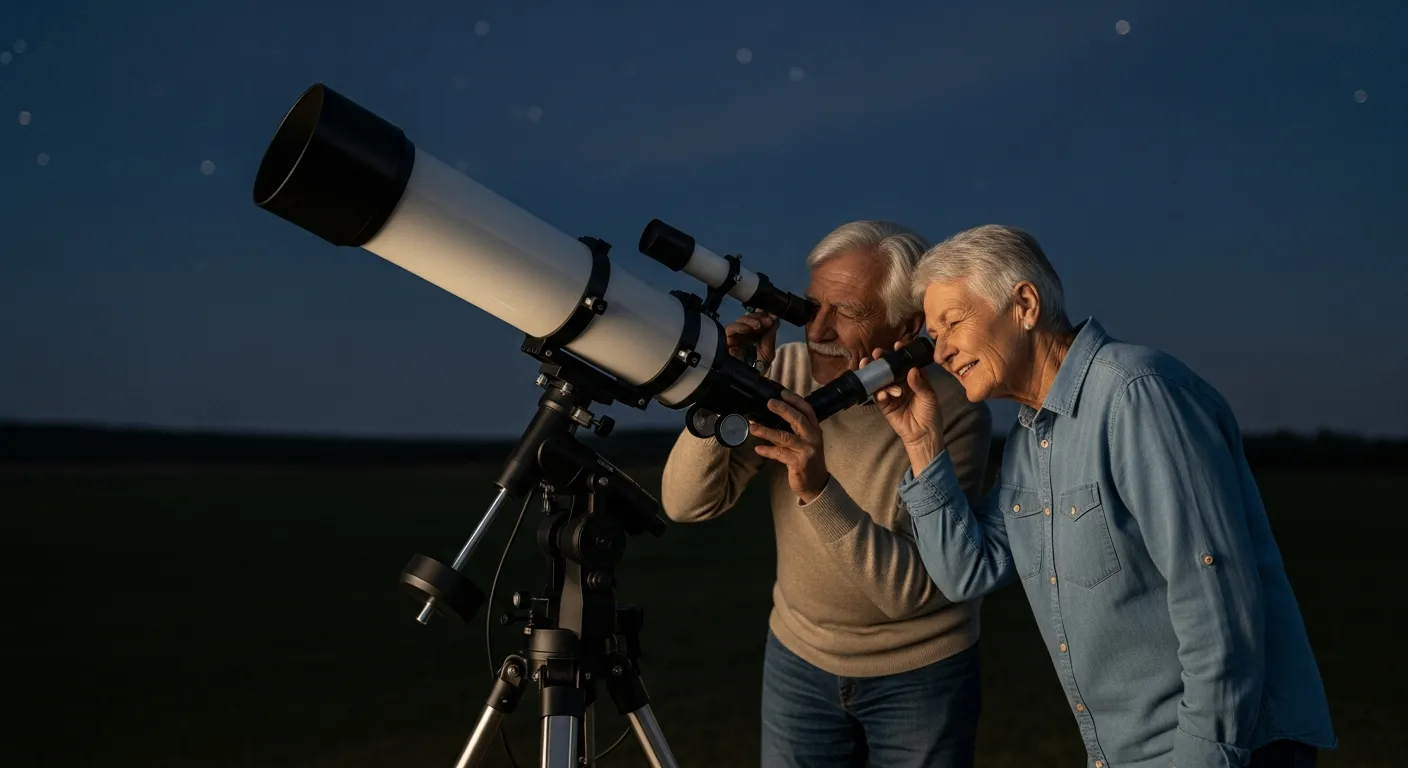
Senior astronomy clubs offer a supportive community where members can learn from each other and share their experiences. This social aspect can combat feelings of loneliness and isolation, which are common among seniors.
Astronomy can also foster a sense of lifelong learning and curiosity. There’s always something new to discover in the universe, and this constant stream of new information can keep seniors engaged and motivated.
Moreover, the act of stargazing can be incredibly relaxing and therapeutic. Spending time outdoors, away from the stresses of daily life, can help to reduce anxiety and improve overall well-being.
The sense of wonder that astronomy inspires can also be deeply meaningful. Reflecting on our place in the vast cosmos can provide a sense of perspective and help us to appreciate the beauty and fragility of our planet.
Finally, astronomy is a hobby that can be enjoyed at any age and any level of ability. Whether you’re a seasoned astronomer or a complete beginner, there’s always something new to learn and explore.
Essential Astronomy Equipment for Beginners
Embarking on your astronomical adventures doesn’t require a fortune in equipment. Starting with the basics can be both affordable and effective, allowing you to gradually expand your toolkit as your interest grows.
One of the most important pieces of equipment is a good pair of binoculars. Binoculars are excellent for beginners because they are easy to use and provide a wide field of view, perfect for scanning the night sky.
When choosing binoculars, look for models with a magnification of 7x to 10x and an objective lens diameter of 50mm. These specifications provide a good balance between magnification and light-gathering ability, making it easier to see fainter objects.
While binoculars are great for an initial view, many astronomers eventually move on to telescopes for beginners. These instruments offer higher magnification and greater detail, allowing you to observe planets, nebulae, and galaxies with stunning clarity.
A planisphere, or star wheel, is another useful tool for beginners. It’s a rotating star chart that allows you to see which constellations are visible at any given time of year.
A red flashlight is essential for preserving your night vision. White light can temporarily blind you, making it difficult to see faint objects in the sky.
Consider purchasing a comfortable chair or blanket for your stargazing sessions. You’ll be spending a lot of time looking up, so it’s important to be comfortable.
Don’t forget a notebook and pen for recording your observations. You can use this to track what you’ve seen and make notes about your experiences.
Finally, a good astronomy guidebook can be a valuable resource. These books provide information about constellations, planets, and other celestial objects.
Remember that you don’t need to buy everything at once. Start with the basics and gradually add more equipment as your interest and budget allow.
Types of Telescopes for Beginners
Selecting the right telescope can seem daunting, but understanding the basic types can simplify the process. There are three primary types of telescopes: refractors, reflectors, and catadioptric telescopes.
Refractor telescopes use lenses to focus light and are known for their sharp images and ease of maintenance. They are a good choice for observing planets and the Moon, but can be more expensive for larger apertures.
| Telescope Type | Pros | Cons |
|---|---|---|
| Refractor | Sharp images, low maintenance | Can be expensive for larger apertures |
| Reflector | Large aperture for price, good for faint objects | Requires more maintenance, can have coma |
| Catadioptric | Compact, versatile | More expensive, can have complex optics |
| Dobsonian | Simple to use, large aperture | Bulky, not ideal for astrophotography |
Reflector telescopes use mirrors to focus light and offer larger apertures for the price, making them ideal for observing faint objects like nebulae and galaxies. However, they require occasional maintenance to align the mirrors (a process called collimation).
Catadioptric telescopes combine lenses and mirrors to create a compact and versatile instrument. They are a good choice for both planetary and deep-sky observing, but can be more expensive than refractors or reflectors.
Another popular type of telescope for beginners is the Dobsonian telescope. This is a type of reflector telescope that is mounted on a simple, easy-to-use base.
Dobsonian telescopes are known for their large apertures and affordability, making them a great value for the price. They are particularly well-suited for observing faint deep-sky objects.
When choosing a telescope, consider your budget, observing goals, and level of experience. It’s also a good idea to consult with experienced astronomers or visit a local astronomy club for advice.
Don’t be afraid to start with a smaller, less expensive telescope and upgrade later as your skills and interests grow. The most important thing is to get out there and start observing the night sky!
Remember to also consider the portability of the telescope. If you plan to travel to dark sky locations, a smaller, more portable telescope may be a better choice.
Understanding the Night Sky
Navigating the night sky can feel overwhelming at first, but with a few basic concepts, you’ll be identifying constellations and planets in no time. Start by familiarizing yourself with the brightest stars and constellations visible from your location.
Use a star chart or astronomy app to help you locate these celestial landmarks. These tools provide a map of the sky and can show you the positions of stars, planets, and other objects at any given time.
One of the easiest constellations to find is Ursa Major, also known as the Big Dipper. Its distinctive shape makes it a great starting point for locating other constellations, such as Polaris, the North Star.
Another helpful tip is to learn about the changing positions of the planets. Planets appear to wander across the sky, unlike the fixed stars, and can often be identified by their steady glow.
Understanding the concept of magnitude is also important. Magnitude is a measure of the brightness of a celestial object, with lower numbers indicating brighter objects.
Familiarize yourself with the different types of celestial objects, such as stars, planets, nebulae, and galaxies. Each type of object has its own unique characteristics and observing challenges.
Learn about the celestial coordinate system, which is used to locate objects in the sky. This system uses right ascension and declination, similar to longitude and latitude on Earth.
Pay attention to the phases of the Moon, which can affect your ability to see faint objects. The full Moon can wash out the sky with its brightness, making it difficult to see fainter stars and nebulae.
Practice using your star chart or astronomy app to identify objects in the sky. The more you practice, the easier it will become to navigate the night sky.
Don’t be afraid to ask for help from experienced astronomers. They can provide valuable tips and guidance, and help you to learn more about the night sky.
Finding Local Astronomy Clubs and Observatories
Joining a local astronomy club is an excellent way to deepen your knowledge and connect with fellow enthusiasts. Senior astronomy clubs are particularly beneficial, offering a supportive environment for learning and sharing experiences.
To find a club near you, start by searching online for “astronomy clubs near me” or “senior astronomy clubs.” Websites like the Astronomical League and local science museums often list affiliated clubs in your area.
Attending club meetings is a great way to meet other astronomy enthusiasts and learn about upcoming events. Many clubs organize stargazing sessions, workshops, and lectures, providing valuable learning opportunities.
Visiting a local observatory is another fantastic way to experience astronomy firsthand. Observatories often host public viewing nights, where you can look through powerful telescopes and learn from knowledgeable staff.
Contact your local community center or senior center to see if they offer any astronomy programs or activities. They may be able to connect you with local astronomy clubs or observatories.
Check with local colleges and universities to see if they have astronomy departments that offer public outreach programs. These programs may include lectures, workshops, and stargazing events.
Consider volunteering at a local observatory or planetarium. This is a great way to learn more about astronomy and share your passion with others.
Attend astronomy conferences and workshops. These events provide opportunities to learn from experts in the field and network with other astronomy enthusiasts.
Join online astronomy forums and communities. These online platforms provide a space to ask questions, share observations, and connect with other astronomy enthusiasts from around the world.
Don’t be afraid to reach out to local astronomy clubs and observatories. They are often eager to welcome new members and share their knowledge with others.
Astronomy Apps and Resources for Seniors
In today’s digital age, astronomy apps and online resources can greatly enhance your stargazing experience. These tools provide real-time information about the night sky, helping you identify celestial objects and plan your observing sessions.
Many astronomy apps are designed with user-friendly interfaces, making them accessible for seniors. These apps often include features like augmented reality, which overlays a virtual map of the sky onto your phone’s camera view.
- SkyView Lite (Free)
- Star Walk 2 (Paid)
- Night Sky (Free with in-app purchases)
- Stellarium Mobile (Paid)
- SkySafari (Paid)
Websites like NASA’s website and Sky & Telescope offer a wealth of information, including articles, images, and videos. These resources can help you stay up-to-date on the latest astronomical discoveries and events.
Consider subscribing to astronomy magazines like Astronomy and Sky & Telescope. These magazines provide in-depth articles, observing tips, and news about the latest astronomical discoveries.
Watch astronomy documentaries and videos. These resources can provide a visual and engaging way to learn about astronomy.
Listen to astronomy podcasts. These podcasts offer a convenient way to learn about astronomy while you’re on the go.
Take online astronomy courses. Many universities and educational institutions offer online astronomy courses that you can take from the comfort of your own home.
Use online planetarium software to explore the night sky from different locations and times. This software can help you plan your observing sessions and identify celestial objects.
Explore online image galleries of astronomical objects. These galleries can provide inspiration and help you to appreciate the beauty of the universe.
Night Sky Events to Watch For
The night sky is full of exciting events that can be observed with the naked eye or through binoculars. From meteor showers to lunar eclipses, there’s always something new to see.
Meteor showers occur when the Earth passes through a stream of debris left behind by a comet. These events can produce dozens of meteors per hour, creating a spectacular display.
Lunar eclipses happen when the Earth passes between the Sun and the Moon, casting a shadow on the lunar surface. These events can turn the Moon a reddish color, earning them the nickname “blood moons.”
Another exciting event is the appearance of comets, which are icy bodies that release gas and dust as they approach the Sun. Comets can be visible to the naked eye for several weeks, providing a unique opportunity for observation.
Solar eclipses occur when the Moon passes between the Sun and the Earth, blocking the Sun’s light. These events are rare and can only be seen from a narrow path on the Earth’s surface.
Planetary conjunctions occur when two or more planets appear close together in the sky. These events can be visually stunning and offer a great opportunity for observation.
The aurora borealis, or Northern Lights, is a spectacular display of light in the sky caused by charged particles from the Sun interacting with the Earth’s atmosphere. These events are most often seen in high-latitude regions.
The Milky Way is our galaxy, and it can be seen as a faint band of light stretching across the sky on clear, dark nights. It’s best viewed from locations away from city lights.
Keep an eye out for variable stars, which change in brightness over time. These stars can be observed with binoculars or a telescope, and their changing brightness can be tracked over time.
Use an astronomy calendar or app to keep track of upcoming night sky events. This will help you plan your observing sessions and make sure you don’t miss anything exciting.
Stargazing Tips and Safety
To make the most of your stargazing sessions, it’s important to follow a few simple tips. First, find a location away from city lights, as light pollution can make it difficult to see fainter objects.
Allow your eyes to adjust to the darkness for at least 20 minutes before you start observing. This will allow your pupils to dilate, making it easier to see faint stars and nebulae.
Dress warmly, even on summer nights, as temperatures can drop significantly after sunset. Bring a comfortable chair or blanket to sit on, and consider using a red flashlight to preserve your night vision.
Finally, always be aware of your surroundings and take necessary safety precautions. Avoid stargazing in unsafe areas, and let someone know where you’re going and when you expect to be back.
Bring a friend or family member with you, especially if you’re stargazing in a remote location. This can provide an extra layer of safety and make the experience more enjoyable.
Check the weather forecast before you head out. You’ll want to make sure that the sky is clear and that there are no storms in the area.
Bring insect repellent to protect yourself from mosquitoes and other biting insects. These can be particularly bothersome during the summer months.
Stay hydrated by bringing plenty of water or other non-alcoholic beverages. It’s important to stay hydrated, especially if you’re stargazing for an extended period of time.
Be respectful of your surroundings. Avoid making loud noises or disturbing wildlife.
Clean up after yourself. Pack out all of your trash and leave the stargazing location as you found it.
Conclusion
Astronomy offers a captivating and rewarding hobby for seniors, providing mental stimulation, social connections, and a sense of wonder. From understanding the night sky to joining senior astronomy clubs, there are numerous ways to get involved and explore the cosmos.
Whether you’re using telescopes for beginners or simply gazing up with your naked eye, the universe is full of mysteries waiting to be discovered. So, embrace your curiosity, reach for the stars, and embark on an astronomical adventure that can enrich your life in countless ways.
The journey into the cosmos is a continuous one, filled with endless possibilities for learning and discovery. Remember to share your newfound knowledge and passion with others, inspiring them to look up and wonder at the universe.
Astronomy is more than just a hobby; it’s a connection to something larger than ourselves, a reminder of our place in the vast expanse of space and time. Embrace the journey, and let the stars be your guide.