

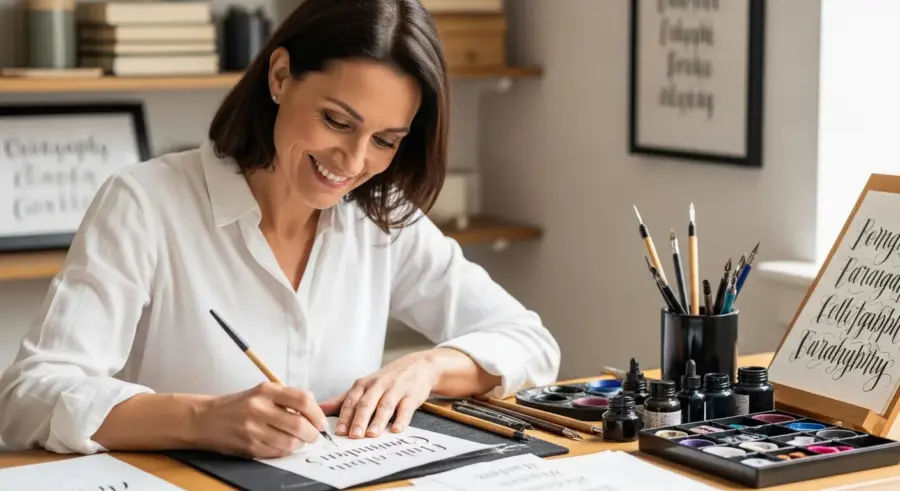
Calligraphy, the art of beautiful writing, has captivated people for centuries. It offers a unique blend of artistic expression and mindful practice, making it an ideal hobby for seniors seeking creative outlets and mental stimulation.
If you’re looking for a fulfilling activity that enhances cognitive function and provides a sense of accomplishment, then senior calligraphy classes might be perfect for you. These classes offer a supportive environment to learn hand lettering techniques and explore your artistic potential.
In this guide, we’ll explore the numerous benefits of calligraphy for seniors, the essential supplies you’ll need to get started, and the basic techniques to master. We will also look at how to find local and online resources, as well as some creative projects to inspire you.
Benefits of Learning Calligraphy for Seniors
Engaging in creative activities like calligraphy offers a multitude of benefits for seniors. These benefits extend beyond artistic expression to encompass cognitive, emotional, and social well-being.
One key advantage is the enhancement of cognitive function. The act of learning and practicing calligraphy requires focus, memory, and hand-eye coordination, all of which contribute to maintaining and improving cognitive abilities.
Calligraphy can also serve as a therapeutic tool for seniors. The repetitive and mindful nature of the practice can reduce stress and anxiety, promoting a sense of calm and relaxation.
Furthermore, senior calligraphy classes provide opportunities for social interaction and community building. These classes offer a chance to connect with like-minded individuals, share experiences, and form new friendships.
The sense of accomplishment derived from creating beautiful pieces of art can significantly boost self-esteem and confidence. Displaying or gifting your calligraphy work can bring joy and a sense of pride in your abilities.
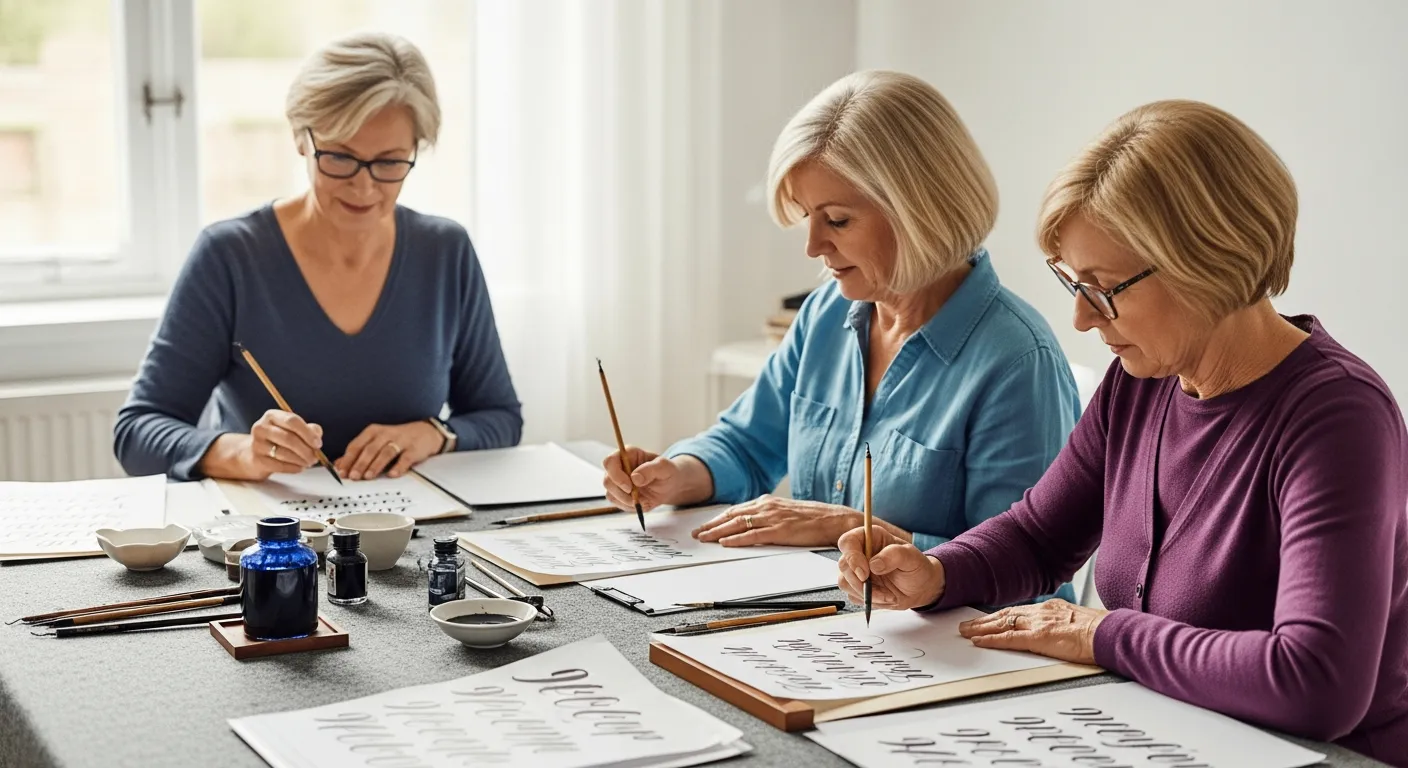
Calligraphy can also improve fine motor skills and hand strength, which are important for maintaining independence as we age. The precise movements required in calligraphy help to keep hands and fingers nimble and flexible.
Learning calligraphy can also be a great way to explore a new hobby and expand your horizons. It opens doors to other art forms and creative endeavors, enriching your life with new experiences.
Finally, the practice of calligraphy can provide a sense of purpose and fulfillment in retirement. It offers a structured and engaging activity that can fill leisure time and provide a sense of accomplishment.
The focus required for calligraphy can also sharpen concentration skills. This is especially helpful in combating age-related cognitive decline.
Beyond the mental benefits, calligraphy offers a creative outlet for self-expression. Seniors can explore their artistic side and create beautiful works of art.
The act of creating something beautiful can be incredibly satisfying. It provides a sense of purpose and accomplishment.
Calligraphy can also be a wonderful way to connect with history and tradition. Many calligraphy styles have rich historical roots.
Learning about these styles can be a fascinating journey into the past. It can also provide a deeper appreciation for the art form.
Social interaction in calligraphy classes can combat feelings of loneliness and isolation. This is especially important for seniors who may live alone.
Sharing a common interest with others can lead to lasting friendships. It also creates a supportive community.
The act of teaching calligraphy to others can also be incredibly rewarding. Sharing your knowledge and skills with others can provide a sense of purpose and fulfillment.
Calligraphy can also be adapted to suit different skill levels and physical abilities. There are many different tools and techniques that can be used to make calligraphy accessible to everyone.
For example, seniors with arthritis may find brush pens easier to use than traditional dip pens. There are also adaptive tools available to help with grip and stability.
Essential Calligraphy Supplies for Beginners
Starting your calligraphy adventure requires a few essential supplies. Investing in quality materials will make the learning process more enjoyable and yield better results.
First, you’ll need a good calligraphy pen. There are several types to choose from, including dip pens, fountain pens, and brush pens, each offering a different writing experience.
Dip pens, with their interchangeable nibs, are a classic choice for calligraphy for beginners, allowing for a wide range of line widths and styles. Fountain pens offer convenience and portability, as they don’t require constant dipping in ink.
Brush pens are a popular option for modern calligraphy and hand lettering techniques, providing a flexible tip that creates varying line thicknesses with ease. A set of calligraphy inks is also crucial.
India ink is a reliable choice for its rich color and permanence, while colored inks can add vibrancy and personality to your work. You’ll also need suitable paper for calligraphy.
Smooth, non-absorbent paper is ideal for preventing ink bleed and ensuring clean lines. Practice pads specifically designed for calligraphy are readily available and offer a great surface for honing your skills.
A ruler and pencil are essential for creating guidelines and ensuring consistent letter heights and spacing. A light box can also be helpful for tracing templates and practicing letterforms.
Finally, consider investing in a calligraphy guidebook or workbook. These resources provide valuable instruction, practice exercises, and inspiration for various calligraphy styles.
When selecting a dip pen, consider the type of nib you want to use. Different nibs are designed for different styles of calligraphy.
For example, a pointed nib is ideal for Copperplate and Spencerian calligraphy. A broad-edged nib is better suited for Gothic and Italic calligraphy.
Fountain pens are a great option for beginners because they are easy to use and maintain. They also provide a consistent ink flow, which can help to improve your writing.
When choosing a fountain pen, look for one with a broad nib. This will allow you to create thick and thin lines with ease.
Brush pens are a versatile tool that can be used for a variety of calligraphy styles. They are also a great option for beginners because they are easy to control.
When selecting a brush pen, look for one with a flexible tip. This will allow you to create a wide range of line widths.
In addition to pens, ink is another essential supply for calligraphy. There are many different types of ink available, each with its own unique properties.
India ink is a popular choice for calligraphy because it is permanent and waterproof. It is also available in a variety of colors.
Calligraphy paper is specially designed to prevent ink from bleeding and feathering. This will help you to create clean and crisp lines.
When selecting calligraphy paper, look for a smooth, non-absorbent surface. This will allow the ink to flow smoothly and prevent it from spreading.
Calligraphy Pen and Ink Guide
Choosing the right pen and ink can significantly impact your calligraphy experience. Here’s a guide to help you select the best options for your needs and preferences.
Dip pens offer a wide range of nib options, allowing you to experiment with different line widths and styles. Nibs are available in various shapes and sizes, each producing a unique effect on the page.
| Pen Type | Ink Type | Paper Type |
|---|---|---|
| Dip Pen | India Ink | Smooth Calligraphy Paper |
| Fountain Pen | Calligraphy Ink Cartridges | Lined Paper |
| Brush Pen | Water-Based Ink | Tracing Paper |
| Felt Tip Pen | Permanent Ink | Card Stock |
Fountain pens provide a convenient and mess-free alternative to dip pens, making them ideal for on-the-go calligraphy. Look for fountain pens specifically designed for calligraphy, as they often feature a broader nib and ink flow system.
When using dip pens, it’s essential to select the right nib for your desired style. Pointed nibs are excellent for creating elegant, flowing scripts like Copperplate.
Broad-edged nibs, on the other hand, are perfect for bolder, more geometric scripts like Gothic or Italic. Experimenting with different nibs can unlock a whole new world of calligraphic possibilities.
The type of ink you choose is just as crucial as the pen itself. India ink is a popular choice due to its rich, dark color and permanence.
However, it’s important to note that India ink can be quite thick, so it may require some dilution with distilled water for optimal flow. Calligraphy inks, specifically formulated for fountain pens, offer a smoother and more consistent flow.
These inks are typically less prone to clogging and feathering, making them a great choice for fountain pen calligraphy. For brush pens, water-based inks are generally recommended.
Water-based inks are less likely to damage the delicate brush tips and offer a wide range of vibrant colors. When choosing paper, opt for a smooth, non-absorbent surface.
This will prevent the ink from bleeding and feathering, resulting in clean, crisp lines. Calligraphy paper is specifically designed for this purpose, but you can also use smooth drawing paper or Bristol board.
For practice, tracing paper can be a cost-effective option. It allows you to trace letterforms and practice your strokes without wasting expensive calligraphy paper.
Felt tip pens are a great option for creating bold, graphic lettering. Permanent inks are ideal for felt tip pens as they will not bleed or fade over time.
Card stock is a good choice of paper for felt tip pens as it is thick and durable. This will help to prevent the ink from bleeding through the paper.
Basic Calligraphy Techniques and Strokes
Mastering the basic techniques and strokes is essential for developing your calligraphy skills. These foundational elements will form the building blocks of your letterforms and overall style.
Start by practicing basic strokes, such as thick downstrokes and thin upstrokes. These strokes are created by varying the pressure on your pen, applying more pressure for thick lines and less pressure for thin lines.
Consistency is key in calligraphy, so focus on maintaining a steady hand and consistent pressure throughout each stroke. Use guidelines to ensure uniform letter heights and spacing, which will contribute to the overall neatness and legibility of your work.
Pay attention to the angle of your pen, as this will affect the slant and appearance of your letters. Experiment with different angles to find a style that suits your taste and hand.
Practice connecting individual strokes to form complete letterforms. Start with simple letters and gradually progress to more complex ones as your skills improve.
Don’t be afraid to experiment with different letterforms and styles. Calligraphy offers a wide range of possibilities, from traditional scripts to modern interpretations.
Regular practice is essential for developing muscle memory and improving your technique. Set aside dedicated time each day or week to practice your calligraphy skills.
Be patient with yourself, as learning calligraphy takes time and effort. Don’t get discouraged by mistakes; instead, view them as opportunities to learn and improve.
Proper posture and pen grip are crucial for comfortable and controlled writing. Sit upright with your feet flat on the floor and your shoulders relaxed.
Hold the pen gently but firmly, avoiding a tight grip that can cause fatigue. Practice your strokes on a consistent basis to build muscle memory.
Start with basic drills, such as practicing straight lines, curves, and circles. These drills will help you develop control over your pen and improve your consistency.
Use guidelines to maintain consistent letter heights and spacing. Guidelines can be drawn with a ruler and pencil or purchased pre-printed on calligraphy paper.
Pay attention to the x-height, which is the height of the lowercase letters. Maintaining a consistent x-height will improve the overall legibility and appearance of your work.
Experiment with different letterforms and styles to find what you enjoy. There are many different calligraphy scripts to choose from, each with its own unique characteristics.
Try Copperplate, Spencerian, Gothic, Italic, or modern calligraphy. Don’t be afraid to mix and match different styles to create your own unique look.
Use a light box to trace letterforms and practice your strokes. This can be a helpful way to learn new scripts and improve your technique.
Watch online tutorials and videos to learn from experienced calligraphers. There are many free resources available online that can provide valuable instruction and inspiration.
Join a calligraphy community or forum to connect with other artists and share your work. This can be a great way to get feedback, learn new techniques, and stay motivated.
Finding Local Calligraphy Classes and Workshops
Attending local calligraphy classes and workshops can provide valuable instruction and support. These classes offer a structured learning environment and the opportunity to receive feedback from experienced instructors.
Check with your local community centers, senior centers, and art centers for calligraphy classes specifically designed for seniors. These classes often cater to beginners and provide a relaxed and supportive atmosphere for learning.
Contact local calligraphy guilds or societies to inquire about workshops and events in your area. These organizations often host workshops led by renowned calligraphers, providing an opportunity to learn from the best.
Browse online event calendars and listings for calligraphy workshops and classes in your city or region. Websites like Eventbrite and Meetup often feature local workshops and classes on a variety of topics, including calligraphy.
Visit local art supply stores and bookstores to inquire about calligraphy classes or workshops they may offer. Many art supply stores host workshops taught by local artists, providing a convenient way to learn new skills.
Consider forming a calligraphy group with friends or neighbors. This can be a fun and affordable way to learn calligraphy together, sharing tips, resources, and encouragement.
Don’t be afraid to try out different classes and instructors until you find one that suits your learning style and preferences. Each instructor has their own unique approach to teaching calligraphy, so it’s important to find someone who resonates with you.
Remember to check the class schedule, location, and fees before enrolling. Make sure the class fits your budget and schedule, and that the location is convenient for you to access.
When researching local classes, consider the skill level of the class. Some classes are designed for beginners, while others are more advanced.
Choose a class that is appropriate for your current skill level to avoid feeling overwhelmed or bored. Ask about the instructor’s experience and qualifications.
A qualified instructor will be able to provide you with valuable guidance and feedback. Find out what materials are included in the class fee.
Some classes may provide all the necessary materials, while others may require you to purchase them separately. Consider the class size.
Smaller classes typically allow for more individualized attention from the instructor. Ask about the class format.
Some classes may be lecture-based, while others may be more hands-on. Choose a format that suits your learning style.
Read reviews of the class or instructor online. This can give you a better idea of what to expect.
Talk to other students who have taken the class. Get their feedback and ask them any questions you may have.
Visit the class location before enrolling. Make sure the space is comfortable and conducive to learning.
Trust your gut. If something doesn’t feel right, don’t enroll in the class.
Online Calligraphy Resources for Seniors
If you’re unable to attend local classes, numerous online resources can help you learn calligraphy from the comfort of your own home. These resources offer a flexible and convenient way to develop your skills at your own pace.
Websites like Skillshare and Udemy offer a wide range of online calligraphy courses, catering to beginners and advanced learners alike. These courses often include video tutorials, downloadable resources, and opportunities for feedback from instructors.
YouTube is a treasure trove of free calligraphy tutorials, offering step-by-step instructions on various techniques and styles. Search for channels dedicated to calligraphy or hand lettering to find a wealth of valuable content.
- Online calligraphy courses on Skillshare or Udemy
- Free YouTube tutorials
- Calligraphy apps for practice
- Online calligraphy communities and forums
- Digital calligraphy templates
Online calligraphy communities and forums provide a platform to connect with fellow calligraphers, share your work, and ask questions. These communities offer a supportive and encouraging environment for learning and growth.
When choosing online resources, consider your learning style. Some people prefer video tutorials, while others prefer written instructions.
Choose resources that are presented in a way that is easy for you to understand and follow. Look for resources that offer a variety of learning materials.
This could include video tutorials, downloadable worksheets, and practice exercises. Check the credentials of the instructor or creator of the resource.
Make sure they have experience and expertise in calligraphy. Read reviews of the resource before you start using it.
This can give you a better idea of what to expect and whether it is a good fit for you. Start with beginner-level resources.
Even if you have some experience with calligraphy, it’s always a good idea to start with the basics. This will help you build a strong foundation and avoid developing bad habits.
Practice regularly. The more you practice, the better you will become at calligraphy.
Set aside dedicated time each day or week to practice your skills. Don’t be afraid to experiment.
Calligraphy is a creative art form, so don’t be afraid to try new things and develop your own unique style. Be patient with yourself.
Learning calligraphy takes time and effort. Don’t get discouraged if you don’t see results immediately.
Creative Calligraphy Projects to Try
Once you’ve mastered the basic techniques, unleash your creativity with a variety of calligraphy projects. These projects offer a fun and engaging way to practice your skills and create beautiful pieces of art.
Create personalized greeting cards for birthdays, holidays, or special occasions. Add a personal touch to your cards with handwritten messages and decorative flourishes.
Design custom invitations for weddings, parties, or other events. Calligraphy adds an elegant and sophisticated touch to any invitation, making it truly memorable.
Write out your favorite quotes or poems in calligraphy. Frame your work and display it in your home or give it as a thoughtful gift.
Create hand-lettered signs for your home or garden. Add a personal touch to your space with custom signs that reflect your personality and style.
Personalize everyday items with calligraphy, such as mugs, journals, or tote bags. Add your name, initials, or a favorite quote to create unique and personalized items.
Experiment with different calligraphy styles and mediums. Try writing with different types of pens, inks, and paper to discover new effects and techniques.
Participate in calligraphy challenges or collaborations with other artists. This is a great way to push your boundaries, learn from others, and gain exposure for your work.
Most importantly, have fun and let your creativity flow. Calligraphy is a journey of self-expression, so embrace the process and enjoy the ride.
Consider creating a calligraphy-themed scrapbook or journal. This is a great way to document your progress and showcase your work.
You can also use calligraphy to create personalized gifts for friends and family. A handwritten letter, a framed quote, or a personalized mug are all thoughtful and unique gifts.
Try creating calligraphy art for your home. A framed piece of calligraphy can add a touch of elegance and sophistication to any room.
You can also use calligraphy to decorate your walls with inspiring quotes or patterns. Explore the art of envelope addressing.
Calligraphy can add a special touch to your correspondence. Practice writing addresses in a beautiful and legible style.
Create custom labels for your pantry or spice jars. This is a fun and practical way to use your calligraphy skills.
Design your own personalized stationery. This is a great way to add a touch of elegance to your everyday correspondence.
Try creating calligraphy-themed greeting cards to mail to loved ones. These cards can be used for birthdays, holidays, or just to say hello.
Create personalized name tags for events or gatherings. This is a great way to add a personal touch to any occasion.
Design custom bookmarks for your favorite books. This is a fun and practical way to use your calligraphy skills.
Advanced Hand Lettering Techniques
As you become more comfortable with basic calligraphy, you can explore advanced hand lettering techniques. These techniques add depth and complexity to your work, allowing you to create truly stunning pieces of art.
Experiment with flourishing, adding decorative swirls and embellishments to your letterforms. Flourishing can add elegance and personality to your calligraphy, making it stand out.
Learn about different calligraphy scripts, such as Copperplate, Spencerian, and Gothic. Each script has its own unique characteristics and requires specific techniques to master.
Explore the art of illumination, adding color and gold leaf to your calligraphy. Illumination can transform your work into a dazzling and eye-catching masterpiece.
Practice combining different calligraphy styles and techniques. This allows you to create unique and personalized pieces of art that reflect your individual style.
Study the work of master calligraphers for inspiration and guidance. Analyze their techniques and try to incorporate them into your own work.
Attend advanced calligraphy workshops or classes to learn from experienced instructors. These classes offer in-depth instruction on specific techniques and styles.
Remember that mastering advanced techniques takes time and practice. Be patient with yourself and continue to hone your skills through dedication and perseverance.
Explore different types of paper and surfaces. Experiment with writing on vellum, parchment, or even fabric.
Learn about the history and origins of different calligraphy styles. This can give you a deeper appreciation for the art form and inspire your own work.
Study the principles of design and composition. This will help you create more visually appealing and balanced pieces of calligraphy.
Experiment with different color palettes and combinations. This can add depth and dimension to your work.
Learn about the art of gilding and how to apply gold leaf to your calligraphy. This can add a touch of luxury and elegance to your work.
Explore the use of different tools and materials. Try using quills, brushes, or even twigs to create unique and interesting effects.
Learn about the art of calligraphy restoration and conservation. This can help you preserve and protect your own work and the work of others.
Consider teaching calligraphy to others. This is a great way to share your knowledge and passion for the art form.
Participate in calligraphy exhibitions and competitions. This is a great way to showcase your work and get feedback from other artists.
Continue to challenge yourself and push your boundaries. The more you experiment and explore, the more you will grow as a calligrapher.
Conclusion
Senior calligraphy classes offer a rewarding and enriching experience for seniors seeking creative outlets and mental stimulation. From enhancing cognitive function to fostering social connections, the benefits of learning calligraphy are numerous.
By acquiring the necessary supplies, mastering basic techniques, and exploring creative projects, you can embark on a fulfilling journey of artistic expression. Whether you choose to attend local classes or learn online, the world of calligraphy awaits, ready to unlock your creative potential and bring beauty to your life.
So, gather your supplies, find a class or online resource, and begin your calligraphic adventure today. You might be surprised at the beautiful creations you can make.
Remember to be patient with yourself and enjoy the process of learning. The journey is just as important as the destination.
Calligraphy is more than just writing; it’s an art form that can bring joy, relaxation, and a sense of accomplishment. Embrace the opportunity to express yourself creatively and discover the beauty of calligraphy.