
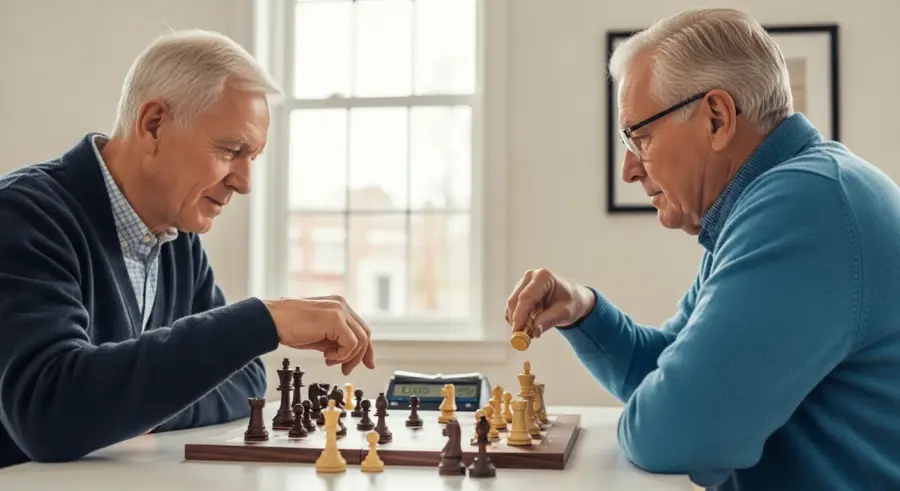
As we gracefully age, maintaining an active and engaged lifestyle becomes increasingly important. One fantastic way to keep your mind sharp and socialize with others is by joining senior chess clubs.
Chess offers a unique blend of mental stimulation and social interaction, making it an ideal pastime for seniors. In this article, we will explore the numerous benefits of playing chess, how to find local clubs, and even delve into online platforms for those who prefer virtual matches.
Whether you’re a seasoned player or a complete beginner, there’s a world of chess waiting for you. So, let’s checkmate boredom and discover the exciting world of senior chess clubs together.
Benefits of Playing Chess for Seniors
Chess is more than just a game; it’s a workout for your brain. Engaging in regular chess matches can significantly improve cognitive functions in seniors.
Studies have shown that chess can enhance memory, improve concentration, and boost problem-solving skills. These mental benefits are especially valuable as we age, helping to keep our minds sharp and agile.
Beyond the cognitive advantages, chess provides a wonderful opportunity for social interaction. Joining a senior chess club allows you to connect with like-minded individuals who share your passion for the game.
These clubs often become close-knit communities, offering a sense of belonging and camaraderie. Regular meetings and tournaments provide a chance to forge new friendships and combat feelings of loneliness or isolation.
Playing chess can also be incredibly therapeutic. The strategic thinking and focus required can help reduce stress and anxiety.
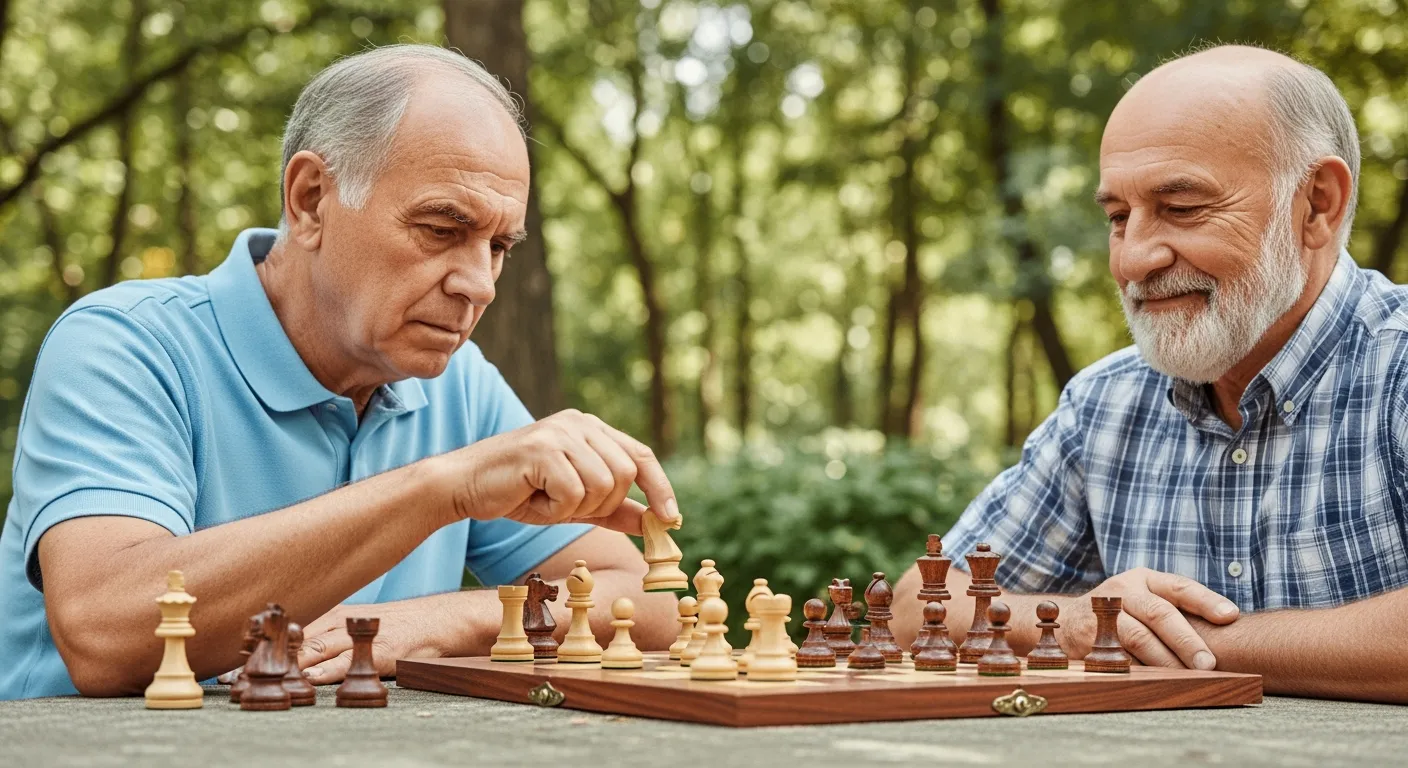
The sense of accomplishment after winning a game, or even learning a new strategy, can boost self-esteem and provide a positive mental outlook. Chess offers a constructive and engaging way to channel your energy and emotions.
Chess is a game that can be enjoyed regardless of physical limitations. Unlike many other hobbies, chess requires no strenuous physical activity, making it accessible to seniors with mobility issues.
Whether you’re playing in person or online, chess can be adapted to suit your individual needs and abilities. The inclusive nature of chess makes it a perfect pastime for seniors seeking intellectual stimulation and social connection.
The cognitive benefits of chess extend beyond just memory and concentration. Chess helps improve critical thinking and decision-making skills.
These are essential skills that can be applied to various aspects of daily life, from managing finances to solving everyday problems. Chess encourages strategic planning and foresight.
It forces you to think several steps ahead, anticipate your opponent’s moves, and develop a comprehensive plan to achieve your goals. This type of mental exercise can help maintain cognitive flexibility and adaptability.
The social benefits of joining a senior chess club are equally significant. Loneliness and social isolation are common challenges faced by seniors.
Chess clubs provide a welcoming and supportive environment where seniors can connect with others, share their experiences, and build meaningful relationships. The shared interest in chess creates a natural bond between members.
It fosters a sense of community and belonging. Regular meetings and events provide opportunities for social interaction and engagement.
This can help combat feelings of loneliness and improve overall well-being. The therapeutic benefits of chess can also have a positive impact on mental health.
The focus and concentration required during a chess game can help distract from worries and anxieties. The sense of accomplishment after mastering a new strategy or winning a game can boost self-confidence and improve mood.
Chess provides a healthy and engaging way to cope with stress and promote emotional well-being. The accessibility of chess makes it an ideal hobby for seniors with varying physical abilities.
Whether you have limited mobility or other physical challenges, chess can be adapted to suit your needs. Online chess platforms offer a convenient way to play from the comfort of your own home.
Adaptive equipment, such as large-print chessboards or computer programs with adjustable font sizes, can make the game more accessible for those with visual impairments. The inclusive nature of chess ensures that everyone can participate and enjoy the benefits of this timeless game.
How to Find Local Chess Clubs
Finding local senior chess clubs is easier than you might think. One of the best places to start your search is online.
Websites like the US Chess Federation (USCF) often have directories of affiliated clubs. You can also use general search engines like Google or Bing, typing in “senior chess clubs near me” to find local options.
Senior centers are another excellent resource for finding chess clubs. Many senior centers offer a variety of activities and programs, including chess clubs specifically for seniors.
Check with your local senior center to see if they have a chess club or can connect you with one in the area. Libraries are also great places to inquire about local chess clubs.
Some libraries host chess clubs or have bulletin boards where local groups advertise their meetings. Community centers and recreational facilities often offer a range of activities, including chess.
These centers are designed to bring people together and provide opportunities for social interaction and recreation. Contact your local community center to see if they have a chess club or know of any in the vicinity.
Don’t underestimate the power of word-of-mouth. Talk to your friends, neighbors, and acquaintances to see if they know of any senior chess clubs in the area.
Sometimes the best leads come from personal connections. You might be surprised to find that someone you know is already involved in a local chess group.
When searching online, be specific with your keywords. Try using phrases like “chess club for seniors [your city]” or “senior chess group [your county].”
This will help narrow down your search results and make it easier to find relevant clubs. Check local newspapers and community newsletters.
These publications often feature announcements about local events and activities, including chess clubs. Look for advertisements or articles about senior chess clubs in your area. Contact local schools and universities.
Some schools and universities have chess clubs that are open to the public, including seniors. Check with the school’s activities department or student organizations to see if there are any chess clubs you can join. Visit local coffee shops and bookstores.
These establishments often have bulletin boards where local groups can post announcements. Look for flyers or posters about senior chess clubs in your area. Attend local community events and festivals.
These events are a great way to meet people and learn about local activities. Talk to people you meet and ask if they know of any senior chess clubs in the area. Consider starting your own chess club.
If you can’t find an existing club that meets your needs, consider starting your own. This can be a rewarding way to connect with other seniors and share your passion for chess.
You can start by posting flyers in local community centers and libraries, or by creating a group on social media. Partner with a local senior center or community organization.
These organizations may be able to provide space and resources for your chess club. They can also help you promote your club to their members. Don’t be afraid to reach out and ask for help.
Online Chess Platforms for Seniors
For seniors who prefer to play chess from the comfort of their own homes, online chess platforms offer a convenient and accessible option. These platforms provide a virtual space to play chess with people from all over the world.
They also offer a variety of features, such as tutorials, puzzles, and forums, to enhance your chess experience. Here’s a comparison of popular platforms:
| Platform | Features | Cost |
|---|---|---|
| Chess.com | Live chess, puzzles, lessons, forums | Free (basic), Premium options |
| Lichess.org | Free, open-source, live chess, puzzles, studies | Completely free |
| Internet Chess Club (ICC) | Live chess, lessons, tournaments | Subscription-based |
| Chess24 | Live chess, video lessons, analysis tools | Free (limited), Premium options |
Chess.com is one of the most popular online chess platforms. It offers a wide range of features, including live chess games, puzzles, lessons, and forums.
The platform has a user-friendly interface and a large community of players, making it easy to find opponents of all skill levels. Lichess.org is another excellent option, especially for those who prefer a completely free and open-source platform.
When choosing an online chess platform, consider your comfort level with technology. Some platforms are more user-friendly than others.
Look for platforms that offer tutorials or help sections to guide you through the features. Consider the platform’s community and social features. Some platforms have active forums and chat rooms where you can connect with other players.
This can be a great way to make new friends and learn from more experienced players. Look for platforms that offer features specifically designed for seniors.
Some platforms have larger font sizes, simplified interfaces, or voice-activated controls to make the game more accessible for seniors with visual or physical limitations. Consider the platform’s security and privacy policies.
Make sure the platform has measures in place to protect your personal information and prevent cheating. Read reviews from other seniors before choosing a platform.
This can give you valuable insights into the platform’s usability, features, and customer support. Take advantage of free trials or basic accounts.
Many platforms offer free trials or basic accounts that allow you to try out the features before committing to a subscription. This is a great way to see if the platform is a good fit for you. Don’t be afraid to ask for help.
If you’re having trouble using an online chess platform, don’t hesitate to ask for help from a friend, family member, or the platform’s customer support team. There are also online tutorials and videos that can guide you through the process.
Basic Chess Strategies for Beginners
If you’re new to chess, don’t be intimidated. Chess is a game that can be learned and enjoyed at any age.
Here are some basic chess strategies to get you started. Knowing how each piece moves is fundamental.
The pawn moves one square forward (or two on its first move), the rook moves horizontally or vertically, the knight moves in an “L” shape, the bishop moves diagonally, the queen moves in any direction, and the king moves one square in any direction. Understanding the relative value of each piece is also important.
A pawn is worth 1 point, a knight or bishop is worth 3 points, a rook is worth 5 points, and a queen is worth 9 points. The king has infinite value, as its capture results in the loss of the game. Controlling the center of the board is a key strategy.
Pieces in the center have more mobility and can influence a larger area of the board. Try to position your pieces to control as many central squares as possible. Developing your pieces early in the game is crucial.
Bring your knights and bishops into play before moving your queen or rooks. This will help you control the board and develop a strong position. Protecting your king is of utmost importance.
Castling is a great way to safeguard your king and bring your rook into play. Always be mindful of potential threats to your king and take steps to protect it.
Learn basic checkmating patterns. Knowing how to checkmate with a queen and king, or a rook and king, is essential for finishing games. Practice simple tactics like forks, pins, and skewers.
These tactical motifs can help you win material or gain a positional advantage. A fork is when one piece attacks two enemy pieces simultaneously. A pin is when a piece cannot move without exposing a more valuable piece to attack.
A skewer is when a piece attacks two enemy pieces in a line, forcing the more valuable piece to move and allowing the attacker to capture the less valuable piece. Be aware of your opponent’s threats.
Always consider what your opponent is trying to achieve with their moves. Don’t just focus on your own plan; anticipate your opponent’s intentions and take steps to counter them. Don’t give away pieces for free.
Always make sure that you have a good reason for sacrificing a piece. Don’t give away material without a clear plan or compensation. Be patient and persistent.
Chess is a complex game that takes time to master. Don’t get discouraged if you don’t see results immediately. Keep practicing and learning, and you will gradually improve your skills. Remember to have fun!
Chess is a game that should be enjoyed. Don’t put too much pressure on yourself to win. Focus on learning and improving, and the wins will come naturally. Enjoy the challenge and the social interaction.
Chess Tournaments and Competitions for Seniors
For seniors looking for a more competitive chess experience, tournaments and competitions offer a stimulating challenge. These events provide an opportunity to test your skills against other players and potentially win prizes.
The US Chess Federation (USCF) sanctions a variety of tournaments across the country. These tournaments are often organized by local chess clubs or regional organizations.
- USCF-rated tournaments
- Senior-specific tournaments
- Online chess tournaments
- Friendly competitions at local clubs
- Team tournaments
Senior-specific tournaments are designed for players over a certain age, typically 50 or 60. These tournaments offer a more relaxed and social atmosphere, with players of similar ages and skill levels.
Online chess platforms also host regular tournaments and competitions. These events can be a convenient way to participate in competitive chess from the comfort of your own home.
When choosing a chess tournament, consider your skill level and experience. If you’re new to tournament play, start with a smaller, unrated tournament.
This will give you a chance to get used to the format and the pressure of competition. Look for tournaments that offer different sections based on rating. This will ensure that you’re playing against opponents of similar skill levels.
Consider the location and schedule of the tournament. Choose a tournament that is conveniently located and that fits your schedule. Be sure to register in advance.
Many tournaments have limited space, so it’s important to register early to secure your spot. Read the tournament rules and regulations carefully.
Make sure you understand the rules regarding time controls, tiebreaks, and other important aspects of the tournament. Arrive early for each round.
This will give you time to set up your board, relax, and prepare for your game. Be respectful of your opponents and the tournament organizers.
Follow the tournament rules and etiquette, and be a gracious winner or loser. Don’t be afraid to ask for help or clarification.
If you have any questions or concerns, don’t hesitate to ask the tournament organizers or a more experienced player. Most importantly, have fun!
Tips for Improving Your Chess Game
Improving your chess game takes time and dedication, but it’s a rewarding process. Here are some tips to help you hone your skills.
Studying chess tactics is essential. Tactics involve short-term calculations and combinations that can lead to immediate advantages, such as winning material or checkmating your opponent.
There are many resources available for studying tactics, including books, websites, and software programs. Analyzing your games is a great way to learn from your mistakes and identify areas for improvement.
Go over your games after you play them, either on your own or with a stronger player. Pay attention to the moves you made and try to understand why they were good or bad. Studying endgames is often overlooked but crucial.
Many games are decided in the endgame, so mastering basic endgame techniques can give you a significant advantage. Learn how to checkmate with a king and rook, king and queen, and how to promote pawns.
Playing regularly is key to improving your chess skills. The more you play, the more experience you’ll gain and the better you’ll become at recognizing patterns and calculating moves.
Join a chess club or play online to find opponents of different skill levels. Reading chess books and articles can expand your knowledge and understanding of the game.
There are countless books and articles available on various aspects of chess, from basic strategies to advanced tactics. Choose resources that match your skill level and interests.
Practice visualization. Try to visualize the board and the potential consequences of your moves without actually moving the pieces. Solve chess puzzles regularly.
Chess puzzles are designed to challenge your tactical skills and improve your pattern recognition. There are many websites and books that offer a wide variety of chess puzzles. Learn from your mistakes.
Don’t get discouraged when you lose a game. Instead, try to analyze your mistakes and learn from them. Identify the key moments in the game where you went wrong and try to understand why. Set realistic goals.
Don’t expect to become a chess master overnight. Set small, achievable goals for yourself, such as improving your rating by 100 points or learning a new opening. Celebrate your successes.
Acknowledge and celebrate your progress, no matter how small it may seem. This will help you stay motivated and continue to improve. Find a chess mentor or coach.
A chess mentor or coach can provide personalized guidance and support to help you improve your game. They can also help you identify your weaknesses and develop a plan to address them. Be patient and persistent.
Chess Strategies for Seniors
As seniors, our approach to chess might differ slightly from younger players. We can leverage our experience and patience to our advantage.
Playing a more positional game can be beneficial. Positional chess focuses on long-term strategic planning rather than immediate tactical gains.
Seniors may find this style of play more comfortable, as it relies on careful planning and evaluation rather than rapid calculation. Avoiding overly aggressive openings can also be a good strategy.
Aggressive openings often lead to complex tactical positions that require sharp calculation. Opting for more solid and reliable openings can help you maintain a balanced position and avoid early mistakes. Taking your time is crucial.
Don’t rush your moves, especially in complex positions. Take the time to carefully analyze the board and consider all your options. Playing with a clear mind is important.
Make sure you’re well-rested and focused when you play chess. Avoid playing when you’re tired or distracted, as this can lead to errors in judgment.
Leveraging your experience is a great asset. As seniors, we’ve accumulated a wealth of knowledge and experience throughout our lives. Apply this wisdom to your chess game by thinking critically and making informed decisions.
Remember, chess is not just about winning; it’s also about enjoying the process and staying mentally active. Embrace the challenge and have fun!
Focus on endgame technique. Endgames often require precise calculation and a deep understanding of positional principles. Improving your endgame skills can significantly increase your chances of winning games.
Study basic endgame positions and practice playing them against a computer or another player. Develop a solid opening repertoire.
Choose a few openings that you feel comfortable with and learn them well. Focus on understanding the main ideas and typical plans in those openings. Don’t try to memorize every variation.
Be aware of your physical limitations. If you have visual impairments, use a large-print chessboard or a computer program with adjustable font sizes. If you have mobility issues, play online or use adaptive equipment.
Take breaks during long games. Get up and stretch your legs, or take a short walk to clear your head. This will help you stay focused and avoid fatigue. Stay positive and enjoy the game.
Chess is a challenging game, but it’s also a rewarding one. Focus on the positive aspects of the game, such as the intellectual stimulation and the social interaction. Don’t get discouraged by losses. Learn from them and move on.
Conclusion
Senior chess clubs offer a wealth of benefits for older adults, from cognitive stimulation to social interaction. Whether you’re a seasoned player or a beginner, there’s a place for you in the world of chess.
So, take the initiative to find a local club or explore online platforms, and start enjoying the many rewards of this timeless game. Embrace the challenge, make new friends, and keep your mind sharp with senior chess clubs.
The journey into the world of chess is one that can be enjoyed throughout your golden years. The strategic thinking, the social interaction, and the sheer enjoyment of the game make it a perfect hobby for seniors.
So, dust off that old chessboard, explore the online platforms, and join a local chess club. You might just discover a new passion and a whole new community of friends.