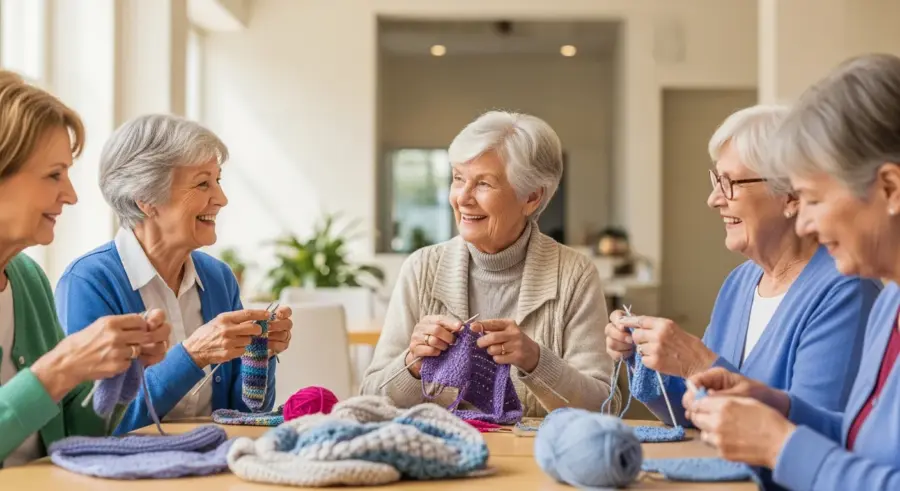
In today’s fast-paced world, it’s easy for seniors to feel disconnected, but engaging in shared activities can offer a remedy. Senior Knitting and Crochet Circles provide a fantastic opportunity to combine creativity, skill-sharing, and social interaction.
These groups not only foster the creation of beautiful handmade items but also create a supportive community where seniors can connect, share stories, and build lasting friendships. Discover how joining a Senior Knitting and Crochet Circle can enrich your life, improve your well-being, and provide a sense of purpose and belonging.
Whether you’re an experienced crafter or a complete beginner, these circles offer a welcoming environment to learn new skills, reignite old passions, and enjoy the company of like-minded individuals. Let’s explore the many benefits and joys of Senior Knitting and Crochet Circles, and how to get involved.
The Therapeutic Benefits of Knitting and Crochet
Knitting and crochet are more than just hobbies; they are therapeutic activities that offer a wide range of mental and physical health benefits for seniors. The rhythmic, repetitive motions involved in these crafts can have a calming effect on the mind, reducing stress and anxiety.
Many seniors find that focusing on the stitches helps to quiet their thoughts and promote a sense of mindfulness, similar to meditation. This can be particularly beneficial for those experiencing age-related cognitive decline or dealing with the challenges of daily life.
The repetitive hand movements in knitting and crochet can improve fine motor skills and hand-eye coordination, which are essential for maintaining independence and quality of life as we age. Engaging in these crafts can also help to alleviate symptoms of arthritis and other joint-related conditions by keeping the hands and fingers active and flexible.
Moreover, the sense of accomplishment that comes from completing a knitting or crochet project can boost self-esteem and provide a sense of purpose. Whether it’s a cozy blanket, a warm scarf, or a charming toy, creating something with your own hands can bring immense satisfaction and pride.
The act of creating something tangible can be incredibly rewarding. It allows seniors to express their creativity and contribute something beautiful to the world. This sense of purpose can combat feelings of isolation and depression, fostering a more positive outlook on life.
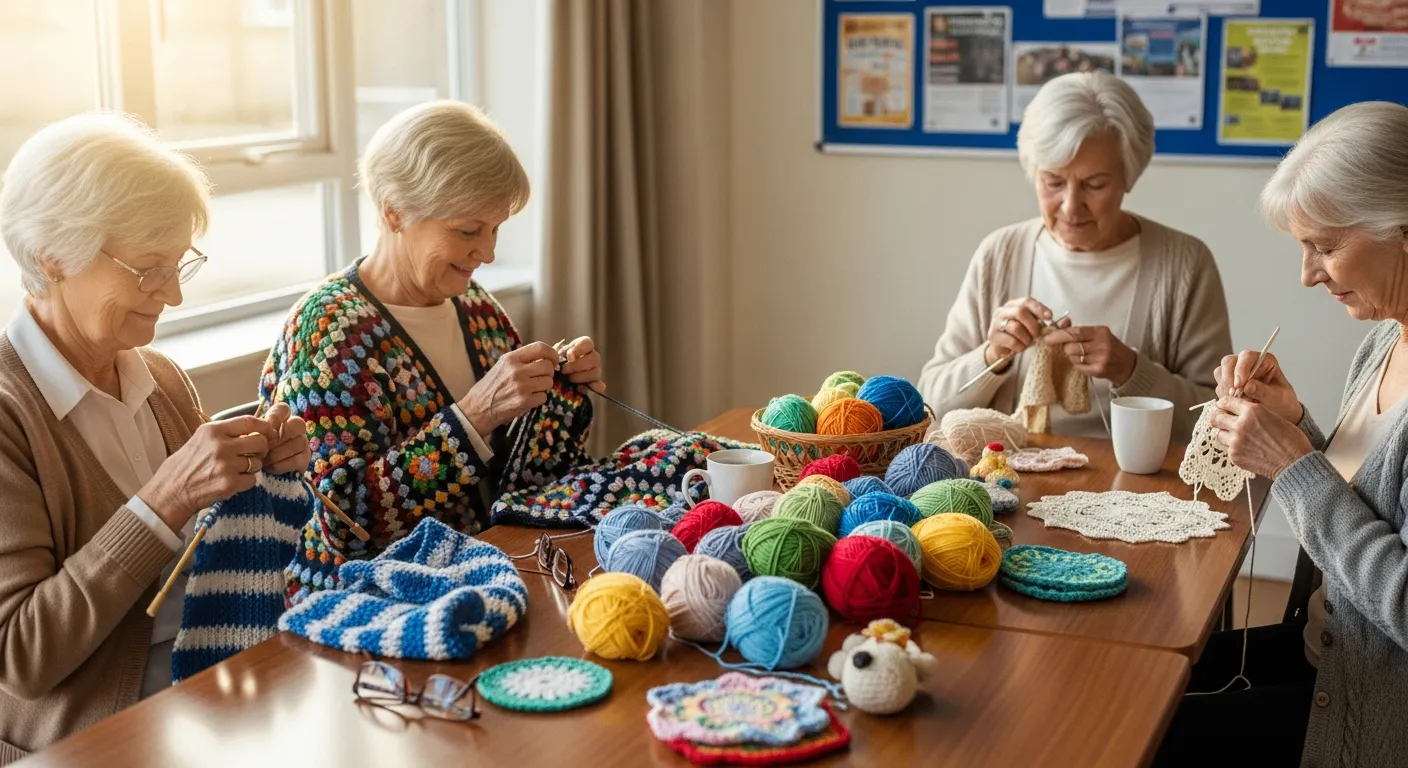
Furthermore, the focused attention required for knitting and crochet can serve as a form of cognitive exercise. This can help to maintain mental sharpness and improve memory. Regular engagement in these crafts can also promote better sleep patterns, as the calming effect helps to relax the mind before bedtime.
The benefits extend beyond the individual as well. Sharing creations with loved ones or donating them to charity provides a sense of connection and purpose. This act of giving can enhance feelings of self-worth and contribute to a more fulfilling life experience.
Studies have shown that engaging in creative activities like knitting and crochet can even lower blood pressure and reduce the risk of chronic diseases. The combination of mental stimulation, physical activity, and social interaction makes these crafts a powerful tool for promoting overall health and well-being in seniors.
The meditative aspect of these crafts can also help seniors cope with grief and loss. The repetitive motions and focused attention can provide a sense of solace and comfort during difficult times. Knitting and crochet can be a healthy and constructive outlet for processing emotions and finding inner peace.
In addition to the mental and emotional benefits, knitting and crochet can also provide physical benefits such as improved dexterity and hand strength. The small, precise movements required for these crafts help to maintain flexibility and range of motion in the fingers and hands. This can be particularly beneficial for seniors who are at risk of developing arthritis or other hand-related conditions.
The act of choosing colors, textures, and patterns can also be a stimulating experience for the senses. It allows seniors to express their personal style and preferences, fostering a sense of individuality and self-expression. This can be particularly important for seniors who may be experiencing a loss of control in other areas of their lives.
Finally, the simple act of creating something beautiful and useful can bring a sense of joy and satisfaction. Seeing the finished product of their efforts can boost self-esteem and provide a sense of accomplishment. This sense of pride can be incredibly motivating and can encourage seniors to continue engaging in creative activities.
Finding Knitting and Crochet Circles Near You
Finding a Senior Knitting and Crochet Circle in your local area is easier than you might think. Many community centers, senior centers, and libraries host regular crafting groups that welcome seniors of all skill levels.
Start by checking the activity schedules of these local institutions or visiting their websites for information on upcoming events and programs. You can also inquire at local yarn stores and craft shops, as they often have connections to knitting and crochet groups in the area.
Online resources such as Meetup.com and Ravelry can also be valuable tools for finding local crafting communities. These platforms allow you to search for groups based on your location and interests, and often provide details on meeting times, locations, and group activities.
Don’t hesitate to reach out to friends, neighbors, or family members who may already be involved in crafting activities, as they may have recommendations or be able to connect you with a local group. If you can’t find an existing circle, consider starting your own!
Local churches and religious organizations are another excellent resource for finding crafting groups. Many churches host knitting and crochet circles as part of their community outreach programs. These groups often welcome members of all faiths and backgrounds.
Another avenue to explore is your local Parks and Recreation department. They often offer a variety of programs and activities for seniors, including crafting groups. Check their website or contact them directly to inquire about knitting and crochet circles.
If you have access to a local college or university, consider checking their continuing education programs. Many colleges offer non-credit courses in knitting and crochet, which can be a great way to learn new skills and meet other crafters.
Don’t overlook the power of social media. Search for local knitting and crochet groups on Facebook or other social media platforms. These groups often organize meetups and events, providing opportunities to connect with other crafters in your area.
When searching for a group, consider what’s important to you. Do you prefer a small, intimate gathering, or a larger, more social group? Are you looking for a group that focuses on a specific type of project, such as charity knitting, or one that is more open-ended?
Don’t be afraid to try out a few different groups before finding one that feels like a good fit. Visit a meeting or two to get a sense of the group’s dynamics and see if it’s a place where you feel comfortable and welcome. The right group will be a supportive and encouraging community where you can learn, grow, and connect with others who share your passion for crafting.
If you’re having trouble finding a group that meets your needs, consider starting your own. It can be as simple as inviting a few friends or neighbors over to knit or crochet together. You can also post flyers at local community centers or libraries to attract new members.
Starting your own group can be a rewarding experience. It allows you to create a crafting community that is tailored to your specific interests and needs. It also gives you the opportunity to take on a leadership role and help others discover the joy of knitting and crochet.
Essential Supplies for Beginners
If you’re new to knitting or crochet, gathering the right supplies is the first step to getting started. For knitting, you’ll need a pair of knitting needles in a suitable size for your chosen yarn, as well as a ball of yarn in your preferred color and fiber.
For crochet, you’ll need a crochet hook in a size that corresponds to your yarn, along with a ball of yarn. A yarn needle, also known as a tapestry needle, is useful for weaving in loose ends and joining pieces together.
| Supply | Knitting | Crochet |
|---|---|---|
| Needles/Hooks | Knitting needles (various sizes) | Crochet hooks (various sizes) |
| Yarn | Worsted weight yarn (beginner-friendly) | Worsted weight yarn (beginner-friendly) |
| Scissors | Small scissors for cutting yarn | Small scissors for cutting yarn |
| Yarn Needle | Yarn needle for weaving in ends | Yarn needle for weaving in ends |
Other helpful tools include a pair of scissors for cutting yarn, stitch markers for keeping track of your progress, and a measuring tape for checking the size of your project. Consider purchasing a beginner’s kit that includes all the essential supplies, as well as a simple pattern to get you started.
When choosing yarn for your first project, opt for a smooth, light-colored yarn in a worsted weight. This type of yarn is easy to work with and allows you to see your stitches clearly. Avoid fuzzy or textured yarns, as they can be more difficult for beginners to handle.
For knitting needles, size US 8 (5mm) is a good starting point for worsted weight yarn. For crochet hooks, size H/8 (5mm) is a common choice for beginners. You can find affordable knitting needles and crochet hooks at most craft stores or online retailers.
Stitch markers are small plastic or metal rings that you can use to mark specific stitches in your project. They are particularly helpful when working on patterns that involve increases, decreases, or repeating sections. You can purchase stitch markers at most craft stores or make your own using paper clips or safety pins.
A measuring tape is essential for checking the size of your project as you work. It’s important to ensure that your project is the correct dimensions, especially if you’re making clothing or accessories. A small, retractable measuring tape is a convenient tool to have in your crafting kit.
A yarn bowl can be a helpful accessory for keeping your yarn clean and tangle-free as you work. Yarn bowls come in a variety of materials, such as ceramic, wood, and plastic. They typically have a slot or hole that you can thread your yarn through, preventing it from rolling around on the floor.
Good lighting is essential for comfortable and enjoyable crafting. Make sure you have adequate lighting in your workspace to prevent eye strain. A task lamp with a flexible arm can be a helpful addition to your crafting setup.
Finally, a comfortable chair is a must-have for long crafting sessions. Choose a chair that provides good back support and allows you to sit in a relaxed posture. Consider using a cushion or pillow to provide extra comfort and support.
Organizing your supplies can also make your crafting experience more enjoyable. Consider using a storage container or bag to keep your needles, hooks, yarn, and other tools organized and easily accessible. This will help you stay focused and prevent your supplies from getting lost or damaged.
Easy Knitting and Crochet Projects
Starting with simple projects is a great way to build your skills and confidence in knitting and crochet. For knitters, a basic garter stitch scarf is an excellent choice, as it only requires you to knit every row.
Another easy knitting project is a simple dishcloth or washcloth, which can be made using basic knit and purl stitches. For crocheters, a beginner-friendly project is a simple granny square, which can be used to create blankets, scarves, or other decorative items.
A basic crochet dishcloth or washcloth is also a great option, as it only requires you to master the single crochet stitch. Look for patterns that are clearly written and include step-by-step instructions and helpful diagrams or videos.
Many free patterns are available online, so you can experiment with different projects and techniques without spending a lot of money. As you become more comfortable with the basics, you can gradually move on to more challenging projects that involve more complex stitches and techniques.
For knitters, a simple seed stitch scarf is another great beginner project. The seed stitch is created by alternating knit and purl stitches in each row, creating a textured fabric. This project is a good way to practice your knit and purl stitches and create a cozy scarf.
Another easy knitting project is a simple hat or beanie. There are many free patterns available online for beginner-friendly hats that only require you to know how to knit and purl. This project is a great way to practice working in the round and create a useful accessory.
For crocheters, a simple chain stitch bracelet is a quick and easy project that can be completed in just a few minutes. This project is a good way to practice your chain stitch and create a fun accessory. You can embellish the bracelet with beads or buttons to add your own personal touch.
Another easy crochet project is a simple coaster. Coasters are a great way to protect your furniture from water rings and can be made using basic crochet stitches. You can find free patterns online for coasters in a variety of shapes and sizes.
As you progress in your knitting or crochet journey, you can start to explore more challenging projects, such as sweaters, blankets, and intricate lace patterns. Don’t be afraid to experiment with different techniques and stitches to expand your skills and creativity.
Remember to be patient with yourself and celebrate your progress along the way. Knitting and crochet are skills that take time and practice to master. Don’t get discouraged if your first few projects don’t turn out perfectly. The most important thing is to enjoy the process and have fun.
Consider joining a Senior Knitting and Crochet Circle for support and encouragement. These groups provide a welcoming and supportive environment where you can learn from other crafters and share your own experiences. You can also find inspiration and motivation from seeing the projects that other members are working on.
No matter what projects you choose to work on, remember to take breaks and stretch your hands and wrists regularly. Knitting and crochet can be repetitive activities that can lead to strain and discomfort if you’re not careful. Taking breaks and stretching can help to prevent injuries and keep you crafting comfortably for years to come.
Sharing Patterns and Techniques
One of the great joys of participating in a Senior Knitting and Crochet Circle is the opportunity to share patterns, techniques, and tips with fellow crafters. Whether you’re a seasoned pro or a beginner, everyone has something to contribute to the group.
Consider bringing your favorite patterns to share with the group, or demonstrating a new stitch or technique that you’ve learned. Online resources such as Ravelry and Pinterest are also great sources for finding and sharing patterns and tutorials.
- Organize a pattern swap
- Demonstrate a new stitch each month
- Share online resources and tutorials
- Create a group Pinterest board
- Offer one-on-one help to beginners
Encourage members to share their finished projects and discuss any challenges they encountered along the way. By sharing your knowledge and experiences, you can help others improve their skills and foster a supportive and collaborative crafting environment.
Organizing a pattern swap is a fun and easy way to share your favorite patterns with the group. Ask members to bring in patterns that they no longer need or want, and then allow everyone to browse and take home the patterns that interest them. This is a great way to discover new patterns and declutter your own collection.
Demonstrating a new stitch each month is a great way to introduce members to new techniques and expand their skills. Choose a stitch that is relatively easy to learn and demonstrate it step-by-step, providing clear instructions and helpful tips. You can also provide written instructions or a video tutorial for members to refer to later.
Sharing online resources and tutorials is a great way to keep members informed about the latest trends and techniques in knitting and crochet. Compile a list of your favorite websites, blogs, and YouTube channels that offer free patterns, tutorials, and other helpful resources. Share this list with the group and encourage members to explore these resources on their own.
Creating a group Pinterest board is a fun and collaborative way to share inspiration and ideas. Invite members to contribute to the board by pinning images of their favorite projects, patterns, and techniques. This will create a visual resource that everyone can use to find inspiration and discover new ideas.
Offering one-on-one help to beginners is a valuable way to support new members and help them develop their skills. If you’re an experienced knitter or crocheter, offer to mentor a beginner and provide them with personalized guidance and support. This can be a rewarding experience for both the mentor and the mentee.
Consider organizing a skill-sharing workshop where members can teach each other specific techniques or skills. For example, one member could teach the group how to knit cables, while another could teach how to crochet a specific stitch pattern. This is a great way to learn new skills and build camaraderie within the group.
Don’t be afraid to ask for help or advice from other members. Everyone has different strengths and weaknesses, and you can learn a lot from each other. If you’re struggling with a particular project or technique, don’t hesitate to ask for assistance. The members of your group are likely to be happy to help you overcome your challenges.
Remember that sharing patterns and techniques is not just about imparting knowledge; it’s also about building relationships and fostering a sense of community. By sharing your passion for knitting and crochet with others, you can create a supportive and enriching environment where everyone can learn and grow.
Donating Your Creations to Charity
Knitting and crochet can be a wonderful way to give back to your community and make a positive impact on the lives of others. Many charities and organizations accept handmade items such as blankets, scarves, hats, and toys to donate to those in need.
Consider partnering with a local hospital, homeless shelter, or women’s shelter to donate your creations to patients, residents, or clients. You can also participate in organized charity knitting or crochet projects, such as making blankets for Project Linus or hats for Knots of Love.
Check with local schools or daycare centers to see if they need handmade items for children in need, such as warm hats and mittens during the winter months. Many animal shelters also appreciate donations of knitted or crocheted blankets and toys for the animals in their care.
Donating your handmade items is a meaningful way to put your crafting skills to good use and bring comfort and joy to others. It also provides a sense of purpose and fulfillment, knowing that your creations are making a difference in the world.
Project Linus is a national organization that provides handmade blankets to children in need. You can find local chapters of Project Linus in your area and donate your knitted or crocheted blankets to them. These blankets are given to children who are seriously ill, traumatized, or otherwise in need of comfort.
Knots of Love is another national organization that provides handmade hats to people undergoing cancer treatment. Chemotherapy can cause hair loss, and these hats provide warmth and comfort to patients. You can knit or crochet hats according to Knots of Love’s guidelines and donate them to the organization.
Many local hospitals and cancer centers also accept donations of handmade hats, scarves, and blankets for their patients. Contact your local hospital or cancer center to inquire about their donation guidelines and needs. Your handmade items can provide comfort and warmth to patients who are going through a difficult time.
Homeless shelters and women’s shelters often need warm clothing items, such as hats, scarves, and mittens, for their residents. Contact your local homeless shelter or women’s shelter to inquire about their needs and donation guidelines. Your handmade items can provide warmth and dignity to people who are struggling with homelessness or domestic violence.
Animal shelters also appreciate donations of knitted or crocheted blankets and toys for the animals in their care. These items provide comfort and warmth to the animals and can help them feel more secure and loved. Contact your local animal shelter to inquire about their needs and donation guidelines.
Consider organizing a charity knitting or crochet project with your Senior Knitting and Crochet Circle. Choose a specific charity or organization to support and work together to create a batch of handmade items to donate. This is a great way to give back to your community as a group and make a larger impact.
When donating your handmade items, make sure they are clean and in good condition. Use high-quality yarn that is soft and durable. Avoid using yarn that is scratchy or irritating to the skin. Label your items with the type of yarn used and washing instructions, if possible.
Donating your handmade items is a rewarding way to use your crafting skills to make a difference in the world. It’s a way to show compassion and support for those in need and to bring comfort and joy to others. Your handmade creations can have a positive impact on the lives of many people and animals in your community.
Adapting Knitting and Crochet for Physical Limitations
Many seniors experience physical limitations that can make traditional knitting and crochet challenging, but there are ways to adapt these crafts to make them more accessible. Using ergonomic needles and hooks with comfortable grips can help to reduce strain on the hands and wrists.
Consider using lightweight yarns that are easy to handle and won’t put too much stress on your joints. Adaptive tools such as knitting looms and crochet frames can also be helpful for those with limited dexterity or mobility.
Experiment with different techniques and modifications to find what works best for you, such as using larger needles or hooks, working in shorter sessions, or taking frequent breaks. Don’t hesitate to ask for assistance from fellow crafters or occupational therapists who can provide guidance and support.
Remember, the goal is to enjoy the process of creating, so don’t be afraid to adapt your approach to suit your individual needs and abilities. Senior Knitting and Crochet Circles should be inclusive and welcoming to all, regardless of their physical limitations.
Ergonomic knitting needles and crochet hooks are designed to reduce strain and discomfort in the hands and wrists. They typically have larger, more comfortable grips that are easier to hold and manipulate. These tools can be particularly helpful for seniors who have arthritis or other hand-related conditions.
Knitting looms are a great alternative to traditional knitting needles for those who have difficulty holding or manipulating needles. Knitting looms are frames with pegs that you wrap yarn around to create knitted fabric. They are easy to use and can be a good option for seniors with limited dexterity.
Crochet frames are similar to knitting looms, but they are designed for crochet. They consist of a frame with pegs that you use to create crochet stitches. Crochet frames can be helpful for seniors who have difficulty holding or manipulating a crochet hook.
Using larger needles or hooks can make it easier to see and manipulate the stitches. Larger needles and hooks also require less tension, which can reduce strain on the hands and wrists. Experiment with different sizes to find what works best for you.
Working in shorter sessions can help to prevent fatigue and discomfort. Take frequent breaks to stretch your hands and wrists and to rest your eyes. You can also break up your crafting sessions into smaller chunks throughout the day.
Consider using a lap desk or a crafting table to provide a comfortable and supportive surface for your projects. A lap desk can be particularly helpful if you like to craft while sitting in a comfortable chair or on the couch. A crafting table can provide a dedicated workspace with ample room for your supplies.
Adaptive aids, such as needle threaders and stitch holders, can make it easier to perform certain tasks. A needle threader can help you thread yarn through the eye of a needle, while stitch holders can help you keep your stitches from unraveling when you need to set your project aside.
Don’t be afraid to modify patterns to make them easier to work. You can simplify stitch patterns, reduce the number of stitches, or choose a different yarn that is easier to handle. The goal is to find a pattern that you can enjoy working on without causing pain or discomfort.
The Social Benefits of Crafting Together
Beyond the therapeutic and creative aspects, Senior Knitting and Crochet Circles offer invaluable social benefits for seniors. These groups provide a welcoming and supportive environment where seniors can connect with others who share their interests and passions.
Crafting together offers an opportunity to engage in meaningful conversations, share stories, and build lasting friendships. Social interaction is vital for maintaining mental and emotional well-being as we age, and crafting circles provide a structured and enjoyable way to combat social isolation and loneliness.
The sense of community and belonging that comes from participating in a crafting circle can boost self-esteem, reduce stress, and improve overall quality of life. Whether you’re sharing tips and techniques, admiring each other’s creations, or simply enjoying each other’s company, the social connections forged in these groups can be incredibly rewarding.
Many seniors find that their crafting circle becomes an important part of their social support network, providing a sense of purpose and connection that enriches their lives. Senior Knitting and Crochet Circles are more than just crafting groups; they are communities where friendships blossom, skills are shared, and lives are enriched.
The regular meetings of a knitting or crochet circle provide a consistent opportunity for social interaction. This can be especially important for seniors who may have limited opportunities to socialize otherwise. The routine of attending the group can provide a sense of stability and purpose.
Crafting together can foster a sense of camaraderie and shared accomplishment. Working on projects side-by-side can create a bond between members and provide a sense of belonging. The shared experience of creating something beautiful can be incredibly rewarding.
Knitting and crochet circles can also be a source of emotional support. Members can share their joys and sorrows with each other and offer encouragement and understanding. The group can become a safe space where members feel comfortable being themselves and sharing their experiences.
The opportunity to learn new skills and share knowledge can also boost self-esteem and confidence. Seniors can feel proud of their accomplishments and gain a sense of purpose from helping others. The act of teaching and mentoring can be particularly rewarding.
Crafting circles can also provide opportunities for intergenerational interaction. Some groups welcome younger members, creating a bridge between generations. This can be a valuable experience for both seniors and younger people, allowing them to learn from each other and share their perspectives.
The social interaction in a knitting or crochet circle can also have a positive impact on cognitive function. Engaging in conversations, sharing stories, and learning new skills can help to keep the mind active and engaged. This can be particularly beneficial for seniors who are at risk of cognitive decline.
The sense of community in a crafting circle can also help to reduce stress and anxiety. Social support is a key factor in managing stress, and the connections forged in these groups can provide a buffer against the challenges of aging. The act of crafting itself can also be a calming and meditative activity.
Ultimately, Senior Knitting and Crochet Circles provide a valuable social outlet for seniors, offering opportunities for connection, support, and personal growth. These groups can help to combat social isolation, improve mental and emotional well-being, and enrich the lives of their members.
Online Knitting and Crochet Communities
If you’re unable to attend in-person knitting and crochet circles, or if you’re looking to expand your crafting community, online communities can be a great alternative. Platforms like Ravelry, Knitting Paradise, and various Facebook groups offer a virtual space for knitters and crocheters to connect, share their projects, and ask for advice.
These online communities often host virtual knit-alongs and crochet-alongs, where members work on the same project together and share their progress. Many yarn companies and independent designers also have active online communities where you can connect with fellow crafters and get inspiration for your next project.
Online communities can be particularly beneficial for seniors who have mobility issues or live in remote areas where in-person crafting groups are not readily available. They provide a convenient and accessible way to stay connected, learn new skills, and share your passion for knitting and crochet.
However, it’s important to be mindful of online safety and privacy when participating in online communities. Be cautious about sharing personal information and avoid engaging with individuals who make you feel uncomfortable or unsafe. Senior Knitting and Crochet Circles can thrive both in person and online, offering connection wherever you are.
Ravelry is one of the largest and most comprehensive online communities for knitters and crocheters. It offers a vast database of patterns, yarns, and projects, as well as forums where members can connect, ask questions, and share their experiences. Ravelry is a great resource for finding inspiration, learning new techniques, and connecting with fellow crafters from around the world.
Knitting Paradise is another popular online forum for knitters and crocheters. It offers a more casual and conversational environment than Ravelry, with a focus on sharing projects, asking for advice, and building friendships. Knitting Paradise is a great place to find support, encouragement, and inspiration from other crafters.
Facebook groups are another great way to connect with knitters and crocheters online. There are many Facebook groups dedicated to specific types of crafting, such as beginner knitting, crochet patterns, or charity knitting. These groups offer a more focused and intimate environment for sharing projects, asking questions, and connecting with like-minded individuals.
Many yarn companies and independent designers also have active online communities where you can connect with fellow cra