
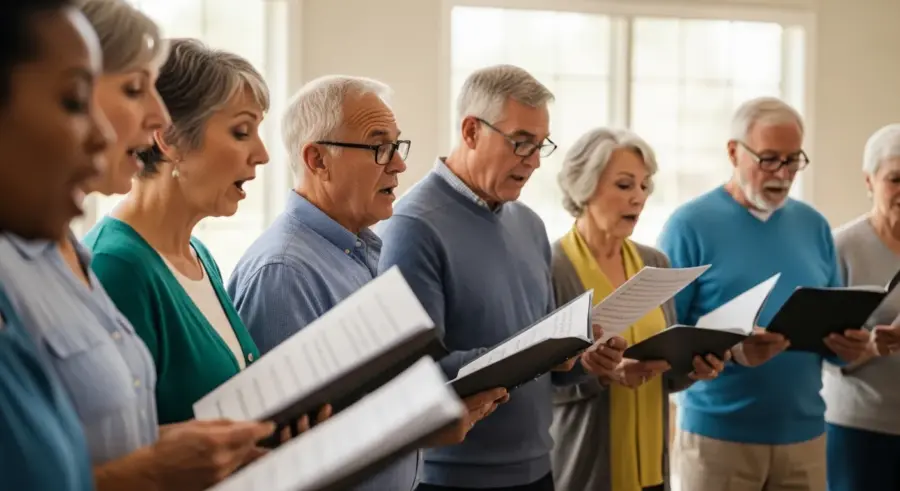
As we age, maintaining an active and fulfilling social life becomes increasingly important. Senior choir groups offer a fantastic opportunity to combine the joy of music with the benefits of social interaction, fostering a sense of community and well-being.
If you’re looking for a way to express yourself creatively, connect with others, and boost your overall health, senior choir groups might be the perfect fit. These groups provide a welcoming environment for seniors of all musical backgrounds to come together and share their love of singing.
In this article, we’ll explore the many advantages of joining senior choir groups, from the physical and mental health benefits to the social connections and performance opportunities they offer. So, get ready to discover the harmonious world of senior choir groups and how they can enrich your life!
The Benefits of Singing in a Choir for Seniors
Singing in a choir offers a multitude of benefits that extend far beyond just musical enjoyment. For seniors, these advantages can be particularly impactful, promoting physical, mental, and emotional well-being.
One of the most significant benefits is improved respiratory function. The deep breathing exercises involved in singing can strengthen lung capacity and improve oxygen circulation, which is especially beneficial for seniors with respiratory issues.
Singing releases endorphins, natural mood boosters that can help reduce stress, anxiety, and even pain. The act of creating music together fosters a sense of joy and accomplishment, contributing to a more positive outlook on life.
Choir participation can also enhance cognitive function. Learning new songs and harmonies challenges the brain, improving memory, focus, and overall mental agility.
Beyond the direct benefits of singing, participation in a choir provides a structured social activity. This can combat feelings of isolation and loneliness, which are common among seniors.

The regular rehearsals and performances offer a consistent schedule and a sense of purpose. This structure can be particularly helpful for seniors who are retired or have experienced significant life changes.
Singing in a choir can also improve posture and muscle strength. The act of standing tall and projecting your voice engages core muscles and promotes better alignment.
Furthermore, the emotional expression involved in singing can be therapeutic. It allows seniors to tap into their emotions and express themselves in a safe and supportive environment.
The challenge of learning new musical pieces keeps the mind sharp and engaged. This continuous learning process can help to stave off cognitive decline and maintain mental acuity.
Choir participation can also boost self-esteem and confidence. As seniors master new songs and perform in front of an audience, they gain a sense of accomplishment and pride.
The shared experience of creating music fosters a strong sense of community and belonging. This can lead to lasting friendships and a supportive network of peers.
Finally, singing in a choir is simply enjoyable! It’s a fun and engaging activity that can bring joy and laughter into the lives of seniors.
Finding a Senior Choir Group Near You
Locating a senior choir group in your area is easier than you might think. Many communities offer a variety of options to suit different musical tastes and skill levels.
Start by checking with your local senior center or community center. These organizations often host or have information about senior choir groups in the area, providing a convenient starting point for your search.
Another great resource is your local church or religious organization. Many churches have established choirs that welcome seniors, offering a chance to sing in a supportive and spiritual environment.
Don’t forget to explore online directories and community bulletin boards. Websites like Meetup.com or local community forums can list senior choir groups in your area, allowing you to connect with other seniors who share your passion for singing.
Contact local music schools or conservatories. They may offer outreach programs or have connections to senior choirs in the community.
Reach out to local high schools or colleges with music departments. Sometimes, they have community choirs that welcome senior participants.
Check with your local Parks and Recreation department. They often offer a variety of activities for seniors, including choir groups.
Use online search engines to look for “senior choir groups near me.” This can help you find groups that may not be listed in other directories.
Ask friends, family, and neighbors if they know of any senior choir groups in the area. Word-of-mouth can be a valuable way to find hidden gems.
Consider the type of music you enjoy singing. Some choirs focus on classical music, while others sing gospel, pop, or folk songs.
Think about the level of commitment you’re willing to make. Some choirs rehearse several times a week and perform frequently, while others are more casual.
Visit a few different choir rehearsals before making a decision. This will give you a chance to meet the members, see how the group operates, and decide if it’s a good fit for you.
Don’t be afraid to contact the choir director or a member of the group with any questions you have. They’ll be happy to provide you with more information and help you decide if the choir is right for you.
What to Expect at Your First Choir Rehearsal
Walking into your first choir rehearsal can be a bit nerve-wracking, but knowing what to expect can ease your anxiety. Most senior choir groups strive to create a relaxed and welcoming atmosphere for new members.
Typically, rehearsals begin with a warm-up session to prepare your voice and body for singing. This may involve vocal exercises, breathing exercises, and gentle stretching to loosen up your muscles.
| Rehearsal Element | Description | What to Expect |
|---|---|---|
| Warm-Ups | Vocal and physical exercises | Gentle stretching and vocal scales |
| Music Distribution | Handing out sheet music | Music provided, sometimes loaner copies |
| Section Practice | Rehearsing in smaller voice groups | Focus on specific parts (soprano, alto, etc.) |
| Full Choir Rehearsal | Singing together as a whole group | Blending voices and refining harmonies |
The director will then lead the choir through the songs they are currently working on. You will likely be assigned to a specific vocal section, such as soprano, alto, tenor, or bass, based on your vocal range.
Don’t worry if you don’t get everything right away. The director and other choir members will be there to guide you and provide support as you learn the music.
You’ll likely be introduced to basic music concepts like rhythm, pitch, and harmony. The director may explain these concepts in a simple and easy-to-understand way.
The rehearsal will likely involve a combination of individual practice and group singing. You may be asked to sing your part alone or with a small group to help the director identify any areas where you need extra help.
Be prepared to listen carefully to the director and other choir members. Pay attention to their instructions and try to follow their lead.
Don’t be afraid to ask questions if you’re unsure about something. The director and other choir members are there to help you learn and grow.
Bring a pencil to mark your music. This will help you remember important notes and instructions.
Wear comfortable clothing and shoes. You’ll be standing and singing for a significant amount of time, so it’s important to be comfortable.
Bring a water bottle to stay hydrated. Singing can be surprisingly dehydrating, so it’s important to drink plenty of water.
Most importantly, relax and have fun! Choir rehearsals are a chance to learn, grow, and connect with other people who share your love of music.
Remember that everyone in the choir is there to support each other. Don’t be afraid to make mistakes or ask for help.
No Singing Experience Required!
One of the best things about senior choir groups is that they are often open to singers of all skill levels. You don’t need to be a professional musician to join and enjoy the experience.
Many senior choir groups welcome beginners and provide instruction and support to help them develop their singing skills. The focus is on having fun and making music together, not on perfection.
If you’re hesitant because you think you can’t sing, don’t let that stop you. Singing is a skill that can be learned and improved with practice, and a supportive choir environment can help you gain confidence in your voice.
Even if you’ve never sung in a choir before, give it a try. You might be surprised at how much you enjoy it and how much you can improve with a little guidance and encouragement.
Many choirs offer beginner-friendly sections or workshops. These are designed to help new singers learn the basics of vocal technique and music reading.
The director will often provide individual attention and guidance to new members. They may offer tips on breathing, posture, and vocal projection.
Don’t be afraid to sing out, even if you’re not sure you’re hitting the right notes. The more you practice, the better you’ll become.
Listen carefully to the other singers in your section. This will help you blend your voice with theirs and create a harmonious sound.
Practice your part at home between rehearsals. This will help you learn the music more quickly and feel more confident during rehearsals.
Consider taking voice lessons to improve your singing skills. A vocal coach can help you identify and correct any bad habits and develop your full potential.
Remember that singing is a journey, not a destination. Be patient with yourself and celebrate your progress along the way.
The most important thing is to have fun and enjoy the experience of making music with others. Let go of your inhibitions and embrace the joy of singing!
The supportive environment of a senior choir is perfect for overcoming self-doubt. You’ll find encouragement and acceptance, regardless of your starting point.
Performance Opportunities with Senior Choirs
While the primary focus of senior choir groups is often on the joy of singing, many groups also offer performance opportunities. These performances can range from small, informal gatherings to larger, more formal concerts.
Some senior choirs perform at local community events, such as festivals, parades, and holiday celebrations. These performances provide a chance to share your music with a wider audience and contribute to the cultural life of your community.
- Local community centers
- Retirement homes
- Holiday concerts
- Fundraising events
- Church services
Other choirs perform at retirement homes or assisted living facilities, bringing joy and entertainment to residents who may not be able to attend other events. These performances can be particularly rewarding, as they provide a direct connection with those who appreciate the music the most.
Participating in performances can be a great way to challenge yourself, build confidence, and share your love of music with others. The sense of accomplishment that comes from a successful performance can be incredibly fulfilling.
The performance repertoire can vary widely, from classical pieces to popular songs. This allows seniors to explore different musical genres and showcase their versatility.
Choirs often collaborate with other community groups for performances. This can create unique and memorable experiences for both the performers and the audience.
Some choirs travel to perform at regional or national events. This can be a wonderful opportunity to see new places and meet other singers from around the country.
The performances are often professionally recorded or videotaped. This provides a lasting memento of the choir’s accomplishments.
Family and friends are always invited to attend the performances. This allows seniors to share their passion for music with their loved ones.
The costumes and staging for the performances are often elaborate and visually appealing. This adds to the overall sense of excitement and celebration.
The performances are a culmination of all the hard work and dedication that the choir members have put in throughout the year. It’s a chance to shine and share their talent with the world.
The positive feedback and appreciation from the audience can be incredibly rewarding. It reinforces the value of the choir’s work and motivates them to continue singing.
The shared experience of performing together creates a strong bond among the choir members. It’s a memory that they will cherish for years to come.
The Social Connection of Singing Together
Beyond the musical and physical benefits, senior choir groups offer a valuable opportunity for social connection. Loneliness and social isolation can be significant challenges for seniors, and choir groups provide a supportive and engaging environment to combat these issues.
Singing together creates a sense of camaraderie and shared purpose. Choir members often form close bonds, supporting each other through life’s challenges and celebrating each other’s successes.
The social interaction in a choir extends beyond rehearsals and performances. Many groups organize social events, such as potlucks, outings, and holiday parties, to foster a sense of community and belonging.
These social connections can be especially important for seniors who may have lost loved ones or who live far from family. Choir groups can provide a sense of family and a network of friends who share a common interest.
Choir members often support each other through difficult times. They may offer rides to appointments, help with errands, or simply provide a listening ear.
The shared experience of learning and performing music creates a strong bond between choir members. They share a common goal and work together to achieve it.
Choir groups often provide opportunities for seniors to volunteer their time and talents. This can be a rewarding way to give back to the community and make a difference in the lives of others.
The social interaction in a choir can help to improve seniors’ communication skills. They learn to listen to each other, express their opinions, and work together to solve problems.
Choir groups can also help to reduce stress and anxiety. The act of singing together can be very therapeutic and can help seniors to relax and feel more connected to others.
The social connections formed in a choir can help to improve seniors’ overall quality of life. They feel more connected, engaged, and supported.
Many choirs organize trips to see other musical performances. This provides an opportunity to experience different types of music and culture together.
The friendships formed in a choir can last a lifetime. These are relationships built on shared passion and mutual support.
The sense of belonging that comes from being part of a choir can be incredibly powerful. It can help seniors to feel more connected to their community and to the world around them.
Tips for a Successful Choir Experience
To make the most of your senior choir experience, there are a few things you can keep in mind. First, be open to learning and trying new things.
Even if you’ve been singing for years, there’s always something new to learn about vocal technique, music theory, or performance skills. Embrace the opportunity to grow and expand your musical horizons.
Attend rehearsals regularly and be prepared to participate. The more you engage with the music and the other choir members, the more rewarding the experience will be.
Don’t be afraid to ask questions or seek help when you need it. The director and other choir members are there to support you, and they want you to succeed.
Practice your part at home between rehearsals. This will help you learn the music more quickly and feel more confident during rehearsals.
Listen carefully to the director’s instructions and try to follow them as closely as possible. They have years of experience and know what it takes to create a great sound.
Be respectful of the other choir members and their opinions. Everyone has something to contribute, and it’s important to create a supportive and collaborative environment.
Take care of your voice by drinking plenty of water and avoiding smoking and alcohol. A healthy voice is essential for singing your best.
Get enough sleep. Being well-rested will help you focus during rehearsals and perform at your best.
Dress comfortably for rehearsals and performances. You’ll be standing and singing for a significant amount of time, so it’s important to be comfortable.
Bring a pencil to mark your music. This will help you remember important notes and instructions.
Most importantly, have fun! Singing in a choir should be an enjoyable experience. Relax, let go, and embrace the joy of making music with others.
Participate in social events organized by the choir. This is a great way to build relationships with other members and feel more connected to the group.
Addressing Common Concerns
Some seniors may have concerns about joining a choir, such as physical limitations or transportation issues. Fortunately, many senior choir groups are accommodating and can provide support to address these challenges.
If you have physical limitations, such as difficulty standing or holding sheet music, talk to the director. Many choirs can provide chairs or music stands to make you more comfortable.
If transportation is a problem, consider carpooling with other choir members or asking a friend or family member to drive you. Some communities also offer transportation services for seniors.
Don’t let these concerns prevent you from experiencing the joy of singing in a choir. With a little planning and support, you can overcome these challenges and participate fully in the group.
Many choirs are wheelchair accessible. Be sure to inquire about accessibility when you contact the choir.
Some choirs offer large-print music for seniors with vision problems. Ask if this is available.
If you have hearing loss, consider using a hearing aid or asking the director to speak louder. You can also sit near the front of the rehearsal space to hear better.
If you have memory problems, don’t be afraid to ask for help learning the music. The director and other choir members can provide support and encouragement.
If you’re concerned about the cost of joining a choir, ask if there are any scholarships or financial assistance programs available. Many choirs offer these programs to make participation more accessible.
If you’re worried about fitting in, remember that senior choirs are typically very welcoming and inclusive. Everyone is there to share their love of music and support each other.
If you have any other concerns, don’t hesitate to talk to the director or another choir member. They’ll be happy to address your concerns and help you feel more comfortable.
The benefits of joining a senior choir far outweigh any potential concerns. Don’t let your worries hold you back from experiencing the joy of singing and the camaraderie of a supportive group.
Remember that many choirs are flexible and understanding. They are often willing to work with seniors to accommodate their individual needs and limitations.
The Enduring Power of Music
Music has a unique ability to connect people, evoke emotions, and enhance our lives. Senior choir groups harness this power, providing a space for seniors to express themselves, connect with others, and experience the joy of singing.
Whether you’re a seasoned singer or a complete beginner, joining a senior choir group can be a transformative experience. It’s an opportunity to improve your physical and mental health, build meaningful relationships, and share your love of music with the world.
So, if you’re looking for a way to enrich your life and connect with others, consider joining a senior choir group. You might just discover a hidden talent and a newfound passion for singing.
The benefits of singing for seniors are numerous. Embrace the opportunity to harmonize your voice and build community through senior choir groups!
Music transcends age, background, and ability. It’s a universal language that speaks to the soul.
The act of singing can be a powerful form of self-expression. It allows seniors to communicate their emotions and experiences in a creative and meaningful way.
Music can also be a source of comfort and solace. It can help seniors to cope with stress, anxiety, and grief.
The memories associated with music can be particularly powerful for seniors. Songs can evoke vivid memories of the past and help them to connect with their personal history.
Music can also be a way to connect with younger generations. Sharing your favorite songs with grandchildren or other young people can create a special bond.
The joy of singing can be contagious. When you sing with others, you share that joy and spread it to those around you.
Music can also be a way to celebrate life and all its beauty. It can help seniors to appreciate the present moment and find joy in the simple things.
The enduring power of music lies in its ability to connect us to ourselves, to each other, and to the world around us. It’s a gift that can enrich our lives at any age.
Senior choir groups provide a unique opportunity to experience the transformative power of music. They offer a supportive and engaging environment where seniors can share their love of singing and connect with others.
Conclusion
Senior choir groups offer a wealth of benefits for older adults, encompassing physical, mental, and social well-being. From improved respiratory function and mood to enhanced cognitive function and social connection, the advantages are undeniable.
If you’re seeking a fulfilling and engaging activity that combines the joy of music with the benefits of community, consider joining a senior choir group. It’s a chance to harmonize your voice, build lasting friendships, and enrich your life in countless ways.
So, take the leap and explore the world of senior performing arts. Discover the harmonious blend of voices and the strong bonds of community that await you in senior choir groups!
Embrace the opportunity to share your love of music and connect with others. Senior choir groups are waiting to welcome you with open arms and open hearts!
Don’t hesitate to reach out to local choirs and inquire about joining. The experience can be truly life-changing.
Remember that it’s never too late to pursue your passions. Singing in a choir can be a wonderful way to rediscover your love of music and connect with others who share your interests.
The benefits of joining a senior choir are well-documented. Take the first step towards a more fulfilling and connected life by exploring the possibilities today.
The world of senior choir groups awaits you. Embrace the opportunity to harmonize, connect, and thrive!