
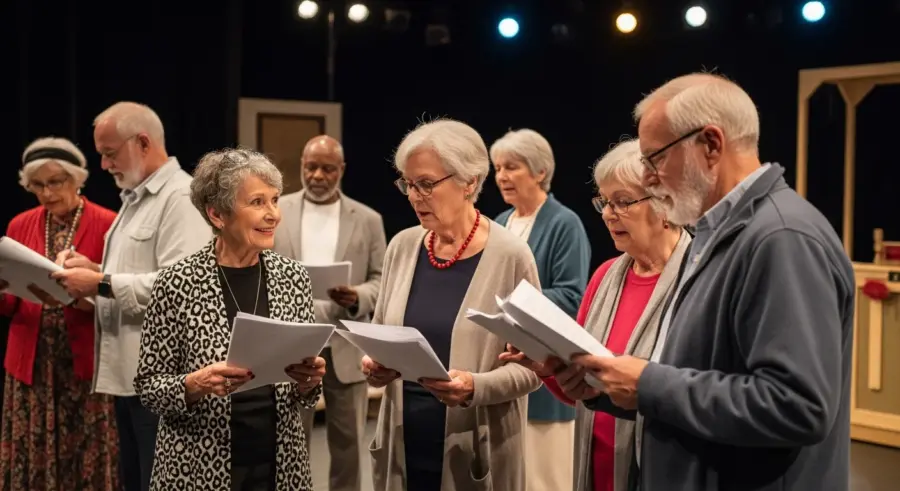
As we age, maintaining an active social life and engaging in stimulating activities becomes increasingly important. Senior theatre groups offer a fantastic avenue for older adults to express their creativity, connect with others, and stay mentally and physically active.
These groups provide a supportive and inclusive environment where seniors can explore their talents, learn new skills, and build lasting friendships. Whether you’re a seasoned performer or have never set foot on a stage, senior theatre groups welcome individuals of all experience levels.
Participating in theatre offers numerous benefits for seniors, from boosting cognitive function to improving physical health and emotional well-being. If you’re looking for a fun and engaging way to stay connected and express yourself, consider joining a senior theatre group.
The Benefits of Theatre for Seniors
Theatre participation offers a wide array of benefits that extend far beyond the stage, especially for seniors. Engaging in dramatic arts can significantly enhance cognitive function, memory, and overall mental acuity.
The process of memorizing lines, understanding character motivations, and coordinating movements challenges the brain and keeps it active. This mental stimulation can help to slow cognitive decline and improve problem-solving skills.
Acting requires physical activity, from rehearsing scenes to performing on stage, which can improve mobility, balance, and coordination. Theatre also encourages vocal projection and articulation, which can help maintain speech clarity.
Beyond the physical aspects, theatre provides a powerful outlet for emotional expression and creativity. Seniors can explore different characters and emotions, which can help them process their own experiences and develop a deeper understanding of themselves and others.
The cognitive benefits of theatre extend to improved attention span and concentration. The focus required to stay in character and follow the plot can enhance these crucial mental skills.

Furthermore, participation in theatrical productions can foster a sense of accomplishment and boost self-esteem. Overcoming the challenges of learning lines, rehearsing scenes, and performing in front of an audience can be incredibly empowering.
Social interaction is another significant benefit, as theatre groups provide opportunities to connect with like-minded individuals and build strong relationships. This social engagement can combat feelings of loneliness and isolation, which can be particularly important for seniors.
Improved mood and reduced stress levels are also associated with theatre participation. The creative expression and social interaction can contribute to a greater sense of well-being and overall happiness.
The physical activity involved in rehearsals and performances can improve cardiovascular health and muscle strength. Even simple movements on stage can contribute to increased physical fitness.
Theatre can also enhance communication skills, both verbal and non-verbal. Actors learn to express themselves clearly and effectively, which can improve their interactions in other areas of their lives.
The collaborative nature of theatre fosters teamwork and cooperation. Working together towards a common goal can strengthen social bonds and promote a sense of community.
Finally, participating in theatre can provide a sense of purpose and meaning in life. Contributing to a creative endeavor and sharing it with others can be incredibly fulfilling.
Types of Senior Theatre Groups and Performances
Senior theatre groups come in many forms, each offering unique opportunities for participation and performance. Some groups focus on traditional plays and musicals, while others specialize in creating original works that reflect the experiences and perspectives of older adults.
You might find groups that perform classic dramas, comedies, or musicals, providing a chance to bring beloved stories to life. Alternatively, some groups focus on improvisational theatre, which encourages spontaneity and creativity through unscripted scenes and games.
Many senior drama clubs develop their own scripts, often drawing inspiration from personal stories, historical events, or social issues that are relevant to their lives. These original productions can be incredibly powerful and meaningful, allowing seniors to share their unique voices and perspectives with the community.
Performances can range from small, intimate settings like community centers and retirement homes to larger venues like local theatres. The scale and scope of the productions often depend on the resources and capabilities of the group, but the focus is always on creating an enjoyable and enriching experience for both the performers and the audience.
Some senior theatre groups specialize in specific genres, such as Shakespearean plays or musical revues. This allows members to focus on their particular interests and develop expertise in a certain area of theatre.
Other groups take a more experimental approach, exploring different forms of performance art, such as storytelling, poetry slams, and movement theatre. This can be a great way to challenge creative boundaries and push artistic limits.
Many senior theatre groups also offer workshops and classes in various aspects of theatre, such as acting, directing, playwriting, and stagecraft. These educational opportunities can help members develop their skills and deepen their understanding of the art form.
The types of performances also vary widely, from full-length plays and musicals to shorter skits and scenes. Some groups focus on producing polished, professional-quality productions, while others prioritize participation and enjoyment over perfection.
Some senior theatre groups also collaborate with other organizations, such as schools, community centers, and hospitals, to bring their performances to a wider audience. This can be a great way to give back to the community and share the joy of theatre with others.
The choice of material often reflects the interests and experiences of the group members. Many senior theatre groups choose to perform plays that address issues relevant to older adults, such as aging, retirement, and health care.
Original plays are often based on the personal stories of the group members, providing a unique and powerful form of self-expression. These plays can be incredibly moving and inspiring, offering insights into the lives and experiences of older adults.
Ultimately, the type of senior theatre group and the performances they produce depend on the interests, skills, and resources of the members. The most important thing is to find a group that is welcoming, supportive, and committed to creating a positive and enriching experience for all involved.
Finding a Theatre Group in Your Area
Locating a senior theatre group in your area might be easier than you think; it just takes a bit of research. Start by checking with your local senior centers, community centers, and recreational departments, as they often host or have information about theatre programs for older adults.
You can also search online for “senior theatre groups” or “theatre for seniors” along with your city or town name. Local community theatres and colleges sometimes have outreach programs or partnerships with senior communities, so it’s worth exploring those options as well.
| Resource | Description | How to Use |
|---|---|---|
| Senior Centers | Offer a variety of activities, including theatre programs. | Visit or call your local senior center to inquire about theatre groups. |
| Community Centers | Host theatre workshops and performances. | Check the community center’s website or activity calendar for theatre-related events. |
| Online Directories | List senior theatre groups and related resources. | Use search engines to find online directories specific to senior activities. |
| Local Theatres | May have outreach programs for seniors. | Contact local theatres to ask about senior programs or partnerships. |
Networking with friends, family, and neighbors can also be a great way to discover hidden gems in your community. Don’t hesitate to ask around and see if anyone knows of any senior theatre groups or acting opportunities in the area.
Another valuable resource is your local library. Libraries often have information about community events and activities, including theatre programs for seniors. They may also have bulletin boards where local groups can post announcements.
Consider contacting local retirement communities and assisted living facilities. Many of these facilities have their own theatre groups or partner with local organizations to provide theatre opportunities for their residents.
If you’re comfortable using social media, try searching for senior theatre groups on platforms like Facebook and Meetup. These platforms can be a great way to connect with local groups and find out about upcoming events.
Don’t be afraid to attend a few different groups before deciding which one is the best fit for you. Each group has its own unique personality and focus, so it’s important to find one that aligns with your interests and goals.
When you contact a potential theatre group, ask about their rehearsal schedule, performance schedule, and membership requirements. Find out what types of plays they typically perform and what roles are available for new members.
It’s also a good idea to ask about the group’s philosophy and values. Are they focused on producing high-quality performances, or are they more interested in providing a social and recreational outlet for their members?
Ultimately, the best way to find a senior theatre group in your area is to do your research, network with others, and try out a few different options until you find the perfect fit. The rewards of participating in theatre are well worth the effort.
Getting Involved in Theatre Production
Participating in a theatre production goes beyond acting; there are numerous roles you can explore based on your interests and skills. Many senior theatre groups need assistance with backstage tasks such as set design, costume creation, and stage management.
If you have a knack for visual arts, you could help design and build the sets, creating the perfect backdrop for the performance. Perhaps you enjoy sewing or have an eye for fashion; costume design and creation could be your niche.
Stage managers are essential for keeping the production running smoothly, coordinating cues, and ensuring that everything is in place for each scene. If you’re organized and detail-oriented, this could be a rewarding role for you.
Publicity and marketing are also crucial aspects of any theatre production, so if you have experience in these areas, you could help promote the show and attract an audience. There’s a place for everyone in theatre, regardless of their background or experience.
Lighting and sound design are also essential components of a successful theatre production. If you have technical skills or an interest in electronics, you could help create the perfect atmosphere for the performance.
Props management is another important role, ensuring that all the necessary items are available for each scene. This requires attention to detail and organizational skills.
Front-of-house duties, such as ticket sales, ushering, and program distribution, are also essential for creating a positive experience for the audience. If you enjoy interacting with people, this could be a great way to get involved.
Directing is another option for those with leadership skills and a passion for storytelling. Directors work with the actors and the production team to bring the play to life.
Playwriting is a creative outlet for those who enjoy writing and have a story to tell. Senior theatre groups often welcome original scripts written by their members.
Even if you don’t have any specific skills or experience, you can still get involved by volunteering to help with various tasks, such as painting sets, sewing costumes, or running errands. Every contribution is valuable and appreciated.
The key is to find a role that matches your interests and abilities and that allows you to contribute to the success of the production. Theatre is a collaborative art form, and everyone plays an important part.
By getting involved in theatre production, you can learn new skills, meet new people, and contribute to a creative and rewarding endeavor. There’s a place for everyone in the theatre, regardless of their age or experience.
Developing Your Acting Skills
If you’re interested in acting but feel a bit rusty or inexperienced, there are plenty of ways to develop your skills and confidence. Many senior theatre groups offer workshops and classes that cover the basics of acting, such as voice projection, character development, and stage presence.
These workshops provide a supportive and encouraging environment where you can learn from experienced instructors and fellow participants. You can also explore online resources like tutorials and acting exercises to practice at home.
- Attend acting workshops
- Practice voice exercises
- Study character development
- Join an improv group
- Watch and learn from other actors
Improvisation is a fantastic way to improve your spontaneity and quick thinking, which are valuable skills for any actor. Don’t be afraid to step outside your comfort zone and try new things; the more you practice, the more confident you’ll become.
Voice exercises can help you improve your projection, articulation, and vocal range. Practicing regularly can make a big difference in your ability to be heard and understood on stage.
Character development involves understanding your character’s motivations, background, and personality. The more you know about your character, the more believable your performance will be.
Watching other actors perform, both live and on screen, can be a great way to learn new techniques and approaches. Pay attention to how they use their voice, body language, and facial expressions to convey emotion and tell a story.
Reading plays is also a valuable way to improve your understanding of dramatic structure and character development. Choose a variety of plays from different genres and time periods to broaden your knowledge.
Consider taking private acting lessons if you want to receive personalized instruction and feedback. A qualified acting coach can help you identify your strengths and weaknesses and develop a plan to improve your skills.
Don’t be afraid to experiment and take risks. Acting is all about exploring different possibilities and finding what works best for you. The more you experiment, the more confident and creative you’ll become.
Remember that practice makes perfect. The more you act, the better you’ll become. Look for opportunities to perform, whether it’s in a senior theatre group, a community theatre, or even just for friends and family.
Most importantly, have fun! Acting should be an enjoyable and rewarding experience. If you’re not having fun, you’re doing it wrong.
The Joy of Performing for an Audience
There’s something truly special about performing for an audience, whether it’s a small group of friends and family or a packed theatre. The energy exchange between the performers and the audience creates a unique and unforgettable experience.
Sharing your talents and stories with others can be incredibly rewarding, and the applause and appreciation you receive can boost your confidence and self-esteem. The sense of accomplishment that comes from successfully completing a performance is unparalleled.
Knowing that you’ve entertained, moved, or inspired someone through your performance is a feeling like no other. Theatre provides a platform for connection, empathy, and shared experiences, which can enrich the lives of both the performers and the audience.
Many seniors find that performing helps them to feel more alive, engaged, and connected to their community. The joy of performing is a gift that keeps on giving, long after the curtain has closed.
The connection with the audience is a vital part of the theatrical experience. Their reactions, laughter, and tears provide feedback and validation for the performers.
The shared experience of witnessing a live performance creates a sense of community among the audience members as well. They are all experiencing the same emotions and sharing the same story.
Performing can also be a powerful way to express yourself and share your unique perspective with the world. It allows you to connect with others on a deeper level and communicate ideas and emotions that might be difficult to express in other ways.
The process of preparing for a performance can also be incredibly rewarding. The rehearsals, the collaboration with other actors, and the development of your character can be a transformative experience.
Overcoming stage fright and performing in front of an audience can be a major accomplishment. It can boost your confidence and self-esteem and help you to overcome other challenges in your life.
The memories and friendships you make through theatre can last a lifetime. The shared experiences and the bonds you form with your fellow actors can be incredibly meaningful.
Performing is a way to stay active, engaged, and connected to your community. It’s a fun and rewarding way to express yourself, learn new skills, and make a difference in the world.
So, if you’ve ever dreamed of performing on stage, don’t let anything hold you back. Find a senior theatre group in your area and experience the joy of performing for an audience.
Building Social Connections Through Theatre
One of the most significant benefits of joining senior theatre groups is the opportunity to build meaningful social connections. Theatre provides a shared purpose and a collaborative environment where seniors can bond over their love of the arts.
Working together on a production requires teamwork, communication, and mutual support, which can lead to strong friendships and a sense of belonging. Rehearsals, performances, and social events provide ample opportunities to interact with like-minded individuals and form lasting relationships.
Many seniors find that their theatre group becomes a second family, offering companionship, encouragement, and a sense of community. These social connections can combat feelings of loneliness and isolation, which are common challenges for older adults.
The shared laughter, camaraderie, and emotional support that come from being part of a theatre group can significantly improve seniors’ overall well-being and quality of life. Theatre is more than just a hobby; it’s a community.
The collaborative nature of theatre fosters a sense of shared purpose and accomplishment. Working together to create something beautiful and meaningful can be incredibly rewarding.
The social interaction involved in theatre can improve communication skills and build confidence in social situations. Learning to work effectively with others is a valuable life skill.
The shared experiences of rehearsals, performances, and social events create lasting memories and strengthen bonds between group members. These memories can be cherished for years to come.
The support and encouragement you receive from your fellow actors can help you to overcome challenges and achieve your goals. Knowing that you have a supportive community behind you can make all the difference.
The sense of belonging that comes from being part of a theatre group can combat feelings of isolation and loneliness. Knowing that you are part of something bigger than yourself can be incredibly empowering.
The friendships you make in theatre can extend beyond the stage. Many senior theatre groups organize social events outside of rehearsals and performances, such as potlucks, movie nights, and trips to other theatre productions.
The opportunity to connect with people of different backgrounds and experiences can broaden your perspective and enrich your life. Learning from others is a valuable way to grow and develop as a person.
Ultimately, the social connections you build through theatre can enhance your overall well-being and quality of life. Theatre is more than just a hobby; it’s a community that can provide support, friendship, and a sense of belonging.
Overcoming Challenges and Embracing the Stage
Joining a theatre group can seem daunting, especially if you’re new to acting or haven’t performed in a while. It’s natural to feel nervous or self-conscious, but remember that everyone starts somewhere.
Senior theatre groups are typically very welcoming and supportive, creating a safe space for individuals to explore their talents and overcome their fears. Don’t let age or perceived limitations hold you back; theatre is for everyone, regardless of their background or experience.
Embrace the challenge, step outside your comfort zone, and allow yourself to be vulnerable. The rewards of participating in theatre far outweigh the initial discomfort, and you might just surprise yourself with what you’re capable of.
Remember that the goal is to have fun, connect with others, and express your creativity. With a little courage and an open mind, you can embrace the stage and discover the joy of theatre.
One of the biggest challenges is often overcoming self-doubt. Many seniors may feel that they are too old or not talented enough to participate in theatre. However, these are just limiting beliefs that can be overcome with encouragement and support.
Another challenge is memorizing lines. This can be particularly difficult for seniors who may have memory challenges. However, there are many strategies that can help, such as breaking the lines down into smaller chunks, using mnemonic devices, and practicing regularly.
Stage fright is another common challenge. Many people feel nervous or anxious when performing in front of an audience. However, there are techniques that can help, such as deep breathing, visualization, and positive self-talk.
Physical limitations can also be a challenge. Seniors may have mobility issues or other physical limitations that make it difficult to move around on stage. However, many senior theatre groups are willing to make accommodations to ensure that everyone can participate.
Time commitment can also be a challenge. Rehearsals and performances can take up a significant amount of time. However, many senior theatre groups are flexible and willing to work around their members’ schedules.
The key to overcoming these challenges is to focus on the positive aspects of participating in theatre. Remember the joy of performing, the camaraderie of working with others, and the sense of accomplishment that comes from creating something beautiful.
Don’t be afraid to ask for help and support. Your fellow actors, the director, and the other members of the production team are there to help you succeed.
Embrace the challenge and allow yourself to grow and learn. You may be surprised at what you are capable of achieving. The stage is waiting for you!
Senior Theatre Groups: A Creative Outlet for All
Senior theatre groups offer a unique and enriching experience for older adults, providing a creative outlet, a social network, and a sense of purpose. Whether you’re interested in acting, stage management, or simply being part of a supportive community, there’s a place for you in the world of theatre.
The benefits of participating in theatre extend far beyond the stage, enhancing cognitive function, physical health, and emotional well-being. So, if you’re looking for a fun and engaging way to stay active, connected, and creative, consider joining a senior theatre group in your area.
Take a leap of faith, explore your talents, and discover the joy of performing. Senior theatre groups are a testament to the power of creativity and community, proving that age is just a number when it comes to pursuing your passions.
Embrace the opportunity to express yourself, connect with others, and make lasting memories on and off the stage. The world of senior theatre awaits, ready to welcome you with open arms.
Senior theatre groups provide a platform for seniors to share their stories, experiences, and perspectives with the world. This can be incredibly empowering and fulfilling.
The creative process involved in theatre can stimulate the mind and keep seniors mentally sharp. Learning lines, developing characters, and working with others on a production can be a challenging and rewarding experience.
The physical activity involved in theatre can help seniors stay active and maintain their physical health. Rehearsals, performances, and set construction can provide a good workout.
The social interaction involved in theatre can help seniors combat loneliness and isolation. Working with others on a common goal can create strong bonds and friendships.
The opportunity to perform in front of an audience can boost seniors’ confidence and self-esteem. Receiving applause and appreciation can be incredibly rewarding.
Senior theatre groups provide a safe and supportive environment for seniors to explore their creativity and express themselves. There is no pressure to be perfect, and everyone is encouraged to participate at their own level.
The skills and experiences you gain in theatre can be applied to other areas of your life. Improved communication skills, increased confidence, and a greater sense of creativity can be valuable assets in any situation.
Senior theatre groups are a testament to the power of creativity and community. They provide a valuable service to seniors and to the community as a whole.
Conclusion
Senior theatre groups provide a wonderful opportunity for older adults to engage their minds, bodies, and spirits in a creative and supportive environment. The benefits of participating in theatre are numerous, ranging from improved cognitive function and physical health to enhanced social connections and emotional well-being.
If you’re looking for a way to stay active, connected, and creative in your senior years, consider joining a theatre group in your community. Whether you’re a seasoned performer or a complete beginner, you’ll find a welcoming and inclusive space where you can express yourself, learn new skills, and build lasting friendships.
Don’t let age or perceived limitations hold you back; theatre is for everyone, and the rewards are immeasurable. Embrace the opportunity to explore your talents, connect with others, and experience the joy of performing.
Senior theatre groups are a testament to the power of creativity and community, proving that it’s never too late to pursue your passions and make a difference in the world. Take the stage and let your light shine.
The stage is a place where seniors can continue to learn, grow, and contribute to society. It’s a place where they can share their stories, express their emotions, and connect with others in a meaningful way.
The benefits of senior theatre groups extend beyond the individual participants. They also enrich the community by providing entertainment, education, and cultural enrichment.
Senior theatre groups challenge stereotypes about aging and demonstrate that seniors are active, engaged, and capable of contributing to society in meaningful ways. They showcase the talent and creativity of older adults.
The memories created in senior theatre groups can last a lifetime. The friendships forged, the skills learned, and the joy of performing can enrich the lives of seniors for years to come.